Saints in art: how to recognize them
In a church, a museum or a book of hours, the saints do not wear name tags. They are recognized by their attributes: an object, an animal or a garment that tells their story. Here is a guide to identifying them, with the artworks that made them famous.
The method in five questions
For centuries, most of the faithful could not read. Artists therefore gave each saint signs that were easy to remember, and they recur from one country and one period to another. To identify a figure, ask yourself these questions in order.
- How are they dressed? A toga and bare feet mean an apostle or a figure from the Gospel. A miter and crozier, a bishop. A brown habit with a cord, a Franciscan. A white and black habit, a Dominican. Armor, a soldier saint.
- Are they holding a palm? Then this is a martyr. It remains to find out which one.
- Which object belongs to them alone? This is the attribute that gives the name: Peter's keys, Barbara's tower, Sebastian's arrows. It often recalls the instrument of martyrdom or an episode of the saint's life.
- Which animal is with them? Jerome's lion, John the Baptist's lamb, Roch's dog, Anthony's pig.
- What is happening around them? A scene, a landscape or another figure completes the identification. And sometimes their name is simply written in the halo or at the bottom of the picture.
Instruments of martyrdom
-
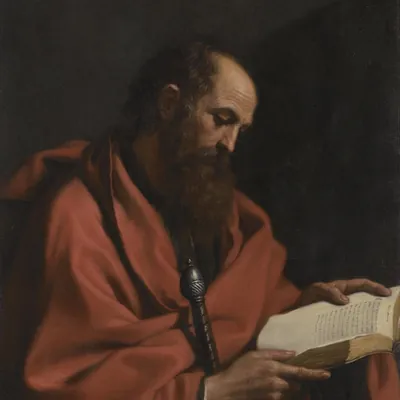 Saint Paul the Apostle, Saint Michael the Archangel
The sword
The weapon of Saint Paul's martyrdom, or the sign of soldier and knight saints.
-
 Saint Sebastian, Saint Ursula
The arrows
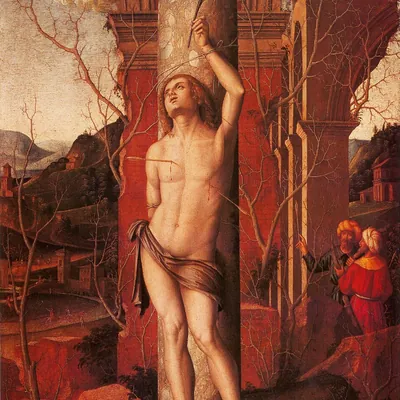
The martyrdom of Saint Sebastian, Saint Ursula and King Edmund.
-
 Saint Lucy of Syracuse, Saint Apollonia of Alexandria
The martyr's palm
The sign of all martyrs: the victory of those who gave their lives.
-
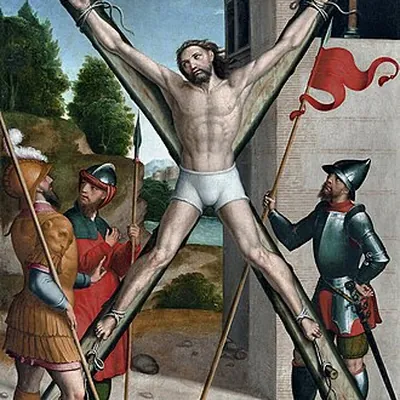 Saint Andrew the Apostle, Saint Peter the Apostle
The X-shaped cross
The diagonal cross of Saint Andrew's martyrdom.
-
 Saint Bartholomew the Apostle, Saint Peter of Verona
The knife
The knife of Saint Bartholomew, flayed alive, and that of Peter of Verona.
-
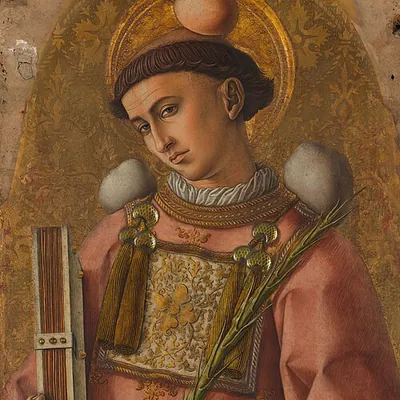 Saint Stephen, Deacon and First Martyr, Saint Jerome
The stones
The stoning of Saint Stephen and the penitential stone of Saint Jerome.
Objects and symbols
-
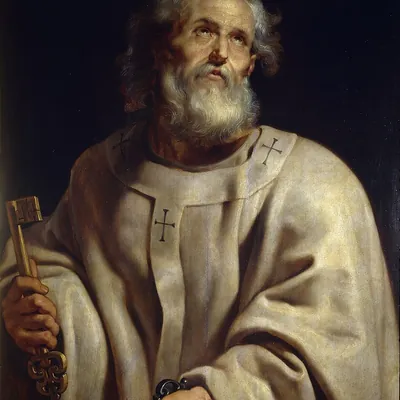 Saint Peter the Apostle, Saint Zita of Lucca
The keys
The sign of Saint Peter, to whom Jesus entrusted the keys of the Kingdom.
-
 Saint Barbara, Virgin and Martyr
The tower
The tower with three windows where Saint Barbara was locked away by her father.
-
 Saint Jerome, Saint Mary Magdalene
The skull
Meditation on death and penance: Jerome, Mary Magdalene, Francis.
-
 Saint James the Greater, Saint Roch of Montpellier
The scallop shell
The badge of Saint James and of pilgrims to Compostela.
-
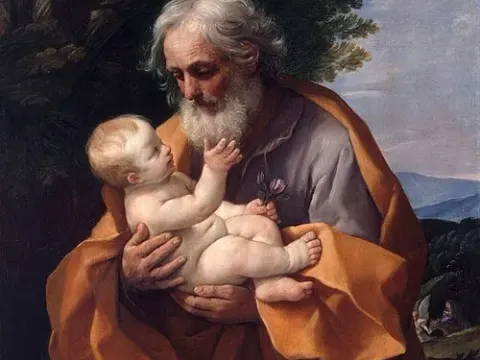 Saint Joseph, Saint Christopher
The Child Jesus in their arms
Joseph, Christopher and Anthony of Padua, the saints who carry the Child.
-
 Saint Veronica
The Veil of Veronica
The cloth on which the face of Christ on his way to Calvary remained imprinted.
-
 Saint Martin of Tours
The shared cloak
Saint Martin's gesture at Amiens, the image of charity.
-
 Saint Augustine of Hippo, Saint Margaret Mary Alacoque
The heart
The burning heart of Augustine and the Sacred Heart of Margaret Mary.
-
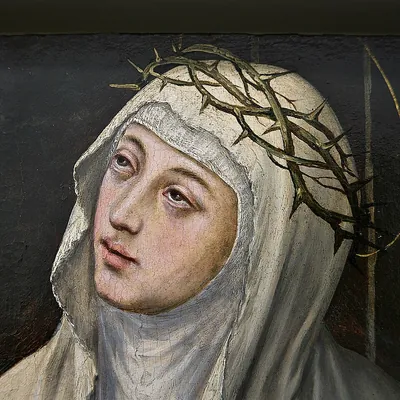 Saint Catherine of Siena, Saint Louis IX
The crown of thorns
Catherine of Siena, Rose of Lima, and Saint Louis, who acquired the relic.
-
 Saint Leonard of Noblac, Saint Juliana of Nicomedia
The chains
Prisoners set free by Saint Leonard, and the devil in chains.
-
 Saint Louis IX, Saint Stephen of Hungary
The royal crown
Saint Louis, Saint Stephen of Hungary, Saint Wenceslaus, and the saintly queens.
-
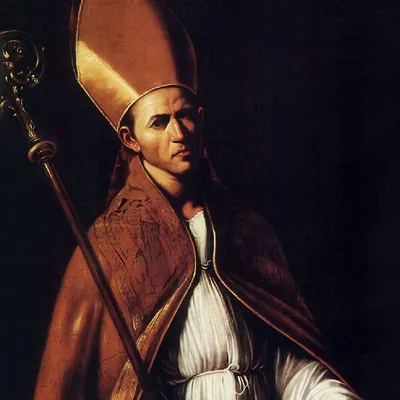 Saint Augustine of Hippo, Saint Martin of Tours
The miter and crozier
The insignia of bishops and abbots, and how to tell apart the saints who wear them.
-
 Saint Clare of Assisi, Saint Norbert
The monstrance and the chalice
The Eucharist carried by Clare, Norbert, Tarcisius and Barbara.
-
 Saint Joan of Arc, Saint Ursula
The banner
The banner of Joan of Arc, of Ursula and of the knightly saints.
Animals
-
 Saint Jerome, Saint Mark the Evangelist
The lion
The companion of Saint Jerome and the symbol of Mark the Evangelist.
-
 Saint Michael the Archangel, Saint George
The dragon
Evil overcome by Saint Michael, Saint George, Saint Margaret and Saint Martha.
-
 Saint John the Baptist, Saint Agnes of Rome
The lamb
The Lamb of God announced by John the Baptist, and the lamb of Saint Agnes.
-
 Saint Hubert of Liège, Saint Eustace
The stag
The cross-bearing stag of Saint Hubert and Saint Eustace, and the doe of Saint Giles.
-
 Saint Paul of Thebes, the First Hermit, Saint Anthony the Great
The raven
The bird that feeds hermits and guards martyrs.
-
 Saint Gregory the Great, Saint Scholastica
The dove
The Holy Spirit inspiring Saint Gregory, the soul of Saint Scholastica.
-
 Saint Roch of Montpellier, Saint Dominic
The dog
The companion of Saint Roch and the torch-bearing dog of Saint Dominic.
Flowers and plants


Signs on the body

Great themes
-
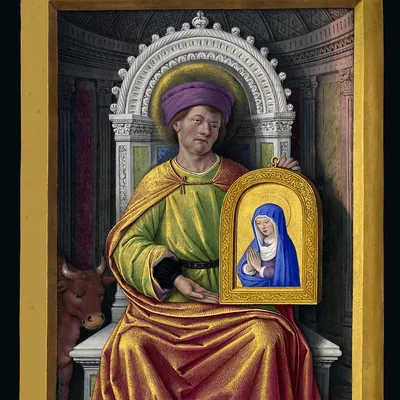 Theme
The Four Evangelists and Their Symbols
Matthew, Mark, Luke and John, and the four living creatures that accompany them.
-
 Theme
The Twelve Apostles and Their Attributes
Keys, cross, shell, knife, halberd: one attribute for each apostle.
- Theme
The Doctors of the Church in Art
The great teachers of the faith, from Saint Augustine to Saint Teresa of Ávila.
-
 Theme
The Patron Saints Against the Plague
Sebastian, Roch, Charles Borromeo: the saints of the great epidemics.
-
 Theme
The Virgin Martyrs and Their Attributes
Lucy, Agnes, Barbara, Cecilia, Margaret, Apollonia: the palm and a sign of their own.
- Theme
Saints and Animals
Lion, dog, stag, hind, raven, lamb: creation reconciled.
-
 Theme
Hermits and Penitents
Anthony tempted by demons, Jerome in the desert, the penitent Magdalene.
- Theme
Soldier Saints and Knights
Michael, Martin, Maurice, Demetrius, Florian, Joan of Arc.
-
 Theme
Recognizing a Religious Order by Its Habit
Franciscans, Dominicans, Benedictines, Carmelites, Carthusians, Jesuits.
-
 Theme
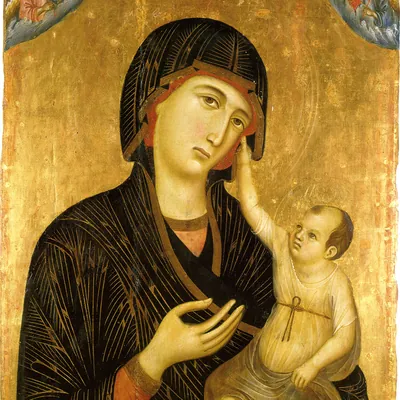
The Virgin Mary in Art
The blue mantle, the lily, the stars: the great images of Mary.
The saints seen by the great painters
-
 Painter
Caravaggio and the Saints
Light falling on saints of the common people, from Rome to Malta.
-
 Painter
Georges de La Tour and the Saints
The Lorraine painter of silent nights and the Albi apostles.
-
 Painter
Zurbarán and the Saints
The painter of the monks of Seville and of women saints in festive dress.
- Painter
Rubens and the Saints
The master of the Flemish Baroque, painter of the Counter-Reformation.
Who holds what: index of saints and their attributes
- Saint Agnes of Rome: the sword, the martyr's palm, the lamb
- Saint Aloysius Gonzaga: the lily
- Saint Ambrose of Milan: the miter and crozier
- Saint Andrew the Apostle: the x-shaped cross
- Saint Anthony of Padua: the lily, the child jesus in their arms
- Saint Anthony the Great: the raven
- Saint Apollonia of Alexandria: the martyr's palm, eyes on a dish
- Saint Augustine of Hippo: the arrows, the heart, the miter and crozier
- Saint Barbara, Virgin and Martyr: the martyr's palm, the tower, the monstrance and the chalice
- Saint Bartholomew the Apostle: the knife
- Saint Benedict of Nursia: the raven
- Saint Bernard of Clairvaux: the dog
- Saint Bruno: the skull
- Saint Casimir: the lily, the royal crown
- Saint Catherine of Siena: the lily, the stigmata, the heart, the crown of thorns
- Saint Cecilia, Virgin and Martyr of Rome: the martyr's palm, the roses
- Saint Charles Borromeo: the skull
- Saint Christopher: the child jesus in their arms
- Saint Clare of Assisi: the monstrance and the chalice
- Saint Dominic: the lily, the dog
- Saint Dorothy of Caesarea: the roses
- Saint Edmund the Martyr: the arrows, the royal crown
- Saint Edward the Confessor: the royal crown
- Saint Elizabeth of Hungary: the roses
- Saint Elizabeth of Portugal: the royal crown, the roses
- Saint Eustace: the stag
- Saint Francis Borgia: the skull
- Saint Francis of Assisi: the skull, the stigmata
- Saint Gemma Galgani: the stigmata
- Saint George: the dragon
- Saint Giles: the arrows, the stag
- Saint Gregory the Great: the dove
- Saint Hubert of Liège: the keys, the stag, the dog
- Saint Ignatius of Antioch: the lion
- Saint James the Greater: the sword, the scallop shell
- Saint James the Just, Brother of the Lord: the stones
- Saint Januarius (San Gennaro), Bishop and Martyr: the miter and crozier
- Saint Jerome: the lion, the skull, the stones
- Saint Joan of Arc: the sword, the banner
- Saint John Eudes: the heart
- Saint John the Baptist: the lamb, the dove, the banner
- Saint John, Apostle and Evangelist: the monstrance and the chalice
- Saint Joseph: the lily, the child jesus in their arms
- Saint Juliana of Nicomedia: the chains
- Saint Kateri Tekakwitha: the lily
- Saint Leonard of Noblac: the chains
- Saint Louis IX: the crown of thorns, the royal crown
- Saint Lucy of Syracuse: the martyr's palm, eyes on a dish
- Saint Margaret Mary Alacoque: the heart
- Saint Margaret of Antioch: the martyr's palm, the dragon
- Saint Mark the Evangelist: the lion
- Saint Martha: the keys, the dragon
- Saint Martin of Tours: the sword, the shared cloak, the miter and crozier
- Saint Mary Magdalene: the skull
- Saint Maurice: the sword, the banner
- Saint Michael the Archangel: the sword, the dragon
- Saint Norbert: the miter and crozier, the monstrance and the chalice
- Saint Odile of Hohenbourg: eyes on a dish
- Saint Patrick: the miter and crozier
- Saint Paul of Thebes, the First Hermit: the raven
- Saint Paul the Apostle: the sword
- Saint Peter of Verona: the knife
- Saint Peter the Apostle: the keys, the x-shaped cross, the chains
- Saint Pio of Pietrelcina (Padre Pio): the stigmata
- Saint Remigius of Reims: the dove, the miter and crozier
- Saint Rita of Cascia: the stigmata, the crown of thorns, the roses
- Saint Roch of Montpellier: the scallop shell, the dog
- Saint Rosalia: the roses
- Saint Rose of Lima: the crown of thorns, the roses
- Saint Scholastica: the dove
- Saint Sebastian: the arrows
- Saint Servatius: the keys
- Saint Stephen of Hungary: the royal crown
- Saint Stephen, Deacon and First Martyr: the martyr's palm, the stones
- Saint Tarcisius: the monstrance and the chalice
- Saint Teresa of Avila: the arrows
- Saint Thecla of Iconium: the lion
- Saint Thérèse of Lisieux: the roses
- Saint Thomas Aquinas: the monstrance and the chalice
- Saint Thomas Becket: the sword, the miter and crozier
- Saint Ursula: the arrows, the banner
- Saint Veronica: the veil of veronica
- Saint Vincent de Paul: the chains
- Saint Vincent of Saragossa: the martyr's palm, the raven
- Saint Wenceslaus: the royal crown, the banner
- Saint Zita of Lucca: the keys
Frequently asked questions
How do you recognize a saint in a painting?
First look at the clothing (monk, bishop, soldier, apostle in a toga), then at the object the figure holds: that is the attribute. A palm means a martyr, and a particular object (keys, a tower, a wheel, arrows) gives the name. The setting and the other figures in the scene complete the identification.
What is an attribute in iconography?
It is an object, an animal or a sign associated with a saint, which makes it possible to recognize them. It often recalls their martyrdom (Saint Paul's sword), an episode of their life (Saint Martin's cloak) or the meaning of their name (the eyes of Saint Lucy, whose name evokes light).
Why do saints have a halo?
The halo, or nimbus, is a circle of light around the head that signals holiness. Borrowed from ancient art, it was adopted by Christian art as early as the 4th century. Christ has a halo marked with a cross; the blessed sometimes have simple rays.
What does the palm held by some saints mean?
The palm marks the martyrs, those who died for their faith. It is a sign of victory, inspired by the Book of Revelation, where the elect hold palms in their hands.