Saint Paul, first known as Saul, was a Jewish Pharisee from Tarsus who persecuted the first Christians until an encounter with the risen Christ on the road to Damascus turned his life around. Known as "the Apostle to the Gentiles," he traveled across Asia Minor and Greece to bring the Gospel to non-Jews, founded communities, and wrote them letters that make up a large part of the New Testament. Put to death in Rome under Nero, he is celebrated on June 29 together with Saint Peter, and his conversion is celebrated on January 25.
Who was Saint Paul?
Paul was born at the beginning of the Christian era in Tarsus, a major city of Cilicia, into a Jewish family of the tribe of Benjamin that held Roman citizenship. He bore the Hebrew name Saul and the Latin name Paul. He learned the trade of tentmaking, which he practiced all his life so as not to be a burden to the communities he served (Acts 18:3).
Trained in Jerusalem under the famous teacher Gamaliel, he became a Pharisee full of zeal for the Law (Philippians 3:5-6). He spoke Greek, knew the Scriptures in depth, and belonged to two worlds at once: the world of Judaism and the world of the Greek cities of the Roman Empire.

The road to Damascus
Paul himself tells us that he persecuted "the Church of God beyond measure" (Galatians 1:13). The Acts of the Apostles show him guarding the cloaks of those who stoned Stephen, then setting out for Damascus with orders to arrest the disciples there. On the way, a light from heaven flashed around him; he fell to the ground and heard a voice: "Saul, Saul, why are you persecuting me?" When he asked who was speaking, the voice answered: "I am Jesus, whom you are persecuting" (Acts 9:4-5).
Blinded, he was led by the hand into Damascus, where a disciple named Ananias laid hands on him. He recovered his sight and was baptized.
Paul does not describe this as a "conversion" in the sense of changing religion. He understood himself as a Jew to whom God had revealed his Son, and who was called to proclaim him among the nations (Galatians 1:15-16). The encounter overturned his life: the one he had fought against became the center of everything. "For to me, to live is Christ," he would write to the Philippians (Philippians 1:21).
The Apostle to the Gentiles
For some fifteen years, Paul covered thousands of miles on foot and by sea. With Barnabas, then Silas, Timothy, Luke and others, he preached first in the synagogues and then to the pagans, founding communities in Philippi, Thessalonica, Corinth and Ephesus. He knew prison, flogging, shipwreck and hunger, which he lists in his Second Letter to the Corinthians (2 Corinthians 11:23-28).
At the Council of Jerusalem, he argued forcefully that non-Jews could become Christians without adopting every practice of the Law of Moses. It was a decisive step toward the universal openness of the Church.
The letters of Saint Paul
To stay in touch with the communities he had founded, Paul wrote to them. Thirteen letters in the New Testament bear his name. Scholars agree in attributing at least seven of them directly to him, including the First Letter to the Thessalonians, written around 50, which is probably the oldest Christian writing that has come down to us.
These letters contain some of the best-known pages of the Bible: the hymn to love (1 Corinthians 13), often read at weddings; the account of the Last Supper (1 Corinthians 11); the oldest testimony to the appearances of the risen Lord (1 Corinthians 15); and the great reflection on faith and grace in the Letter to the Romans. They shaped the thought of Saint Augustine, Saint Thomas Aquinas and all of Christian theology.
Martyrdom in Rome
Arrested in Jerusalem around 57-58, Paul appealed to the emperor as a Roman citizen. He was taken to Rome by sea, was shipwrecked on Malta, and then lived two years in the capital under guard, welcoming those who came to see him. The Acts of the Apostles do not tell what happened next.
According to a very ancient tradition, already echoed by Saint Clement of Rome at the end of the first century, he died a martyr under Nero. As a Roman citizen, he is said to have been beheaded, at the place called Aquae Salviae, today the Abbey of Tre Fontane. His tomb on the road to Ostia has been venerated since antiquity, and the Basilica of Saint Paul Outside the Walls stands above it.

Why is Saint Paul the patron saint of missionaries and Malta?
Paul is the missionary par excellence: no one in the early Church traveled so far or founded so many communities to bring the Gospel to those who had never heard it. Missionaries, evangelists and all who share their faith naturally turn to him.
Malta honors him as its father in the faith. According to the Acts of the Apostles (Acts 27-28), the ship carrying him to Rome ran aground on the island after a storm of fourteen days, and he stayed there three months before continuing his journey. The Maltese have kept the memory of his shipwreck ever since.
What his holiness teaches us
Saint Paul shows that no one is too far away to be reached by God: the former persecutor became the most ardent of missionaries. His life was marked by a passion for Christ, tireless energy and deep tenderness toward the communities he called his children. He did not hide his weaknesses; in them he discovered that the grace of God is enough (2 Corinthians 12:9). Catholics pray to him for missionaries, for Christian unity, and for all who try to proclaim the Gospel today.
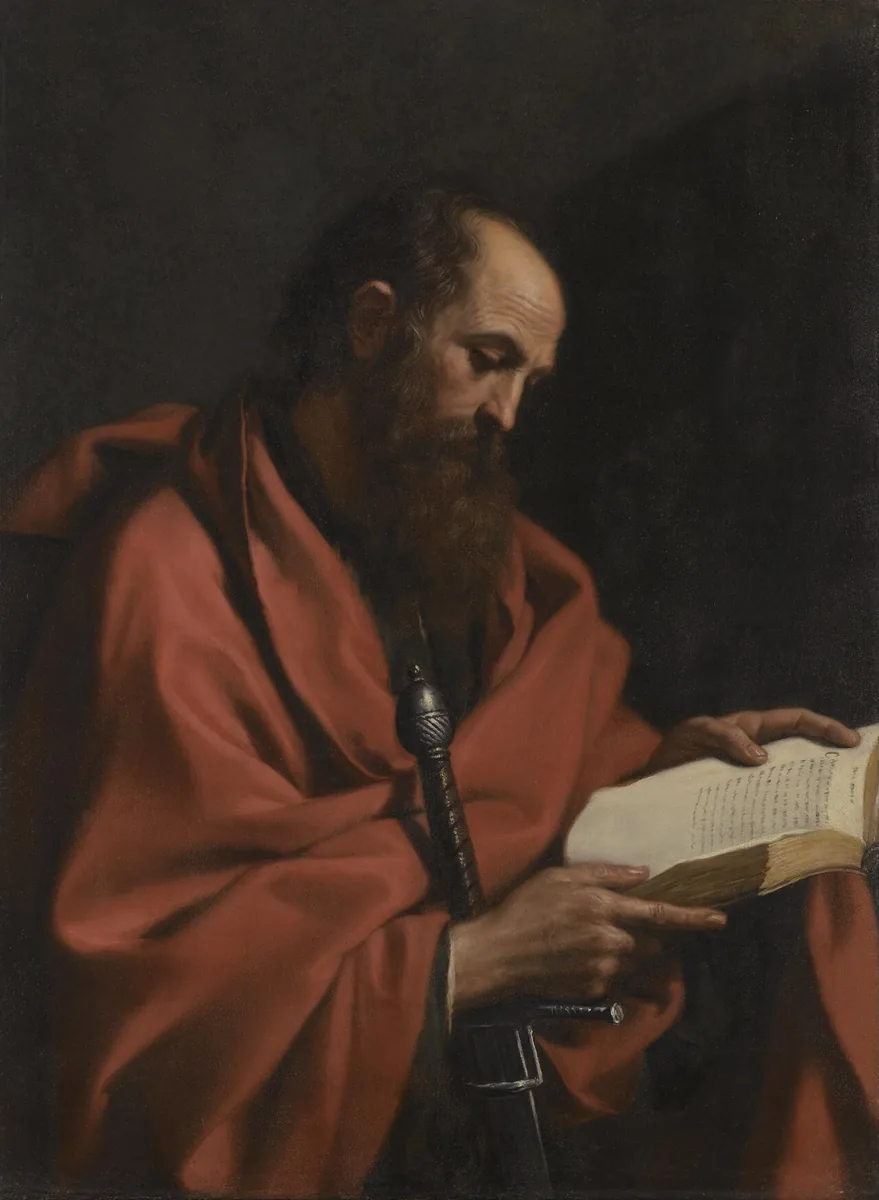
Symbols and how to recognize Saint Paul in art
- The sword: the instrument of his martyrdom by beheading, his most common attribute.
- The book or scroll: his letters, which form a large part of the New Testament.
- The fall from a horse: the classic way painters show the road to Damascus, although the Bible never mentions a horse.
- A bald forehead and a dark beard: the traditional features given to him in Christian art, often beside Saint Peter.
Where to pray to Saint Paul
- Rome: the Basilica of Saint Paul Outside the Walls, over his tomb, and the Abbey of Tre Fontane, the traditional place of his martyrdom.
- Damascus (Syria): the Chapel of Saint Ananias and the "Street called Straight" mentioned in the Acts of the Apostles.
- Malta: Saint Paul's Bay and Saint Paul's Grotto in Rabat, linked to the apostle's shipwreck.
- Tarsus (Turkey): the Church of Saint Paul, now a museum, in his hometown.
Discover also
- Saint Stephen, the first martyr, whose death Paul approved before his conversion.
- Saint Barnabas, who welcomed him and went with him on his first journey.
- Saint Timothy, his disciple and coworker, to whom he wrote two letters.
- Saint Luke, companion of his journeys and author of the Acts of the Apostles.
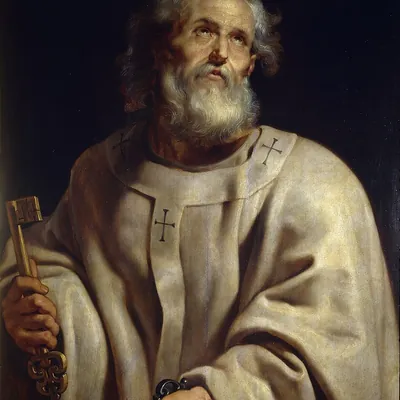
- Saint Peter, with whom he shares his feast day on June 29.