Schism: definition
A schism is a break in communion with the Church, in particular the refusal to submit to the pope or to remain in communion with the members of the Church united to him. It is distinct from heresy, which concerns the content of the faith.
A tear
The word comes from the Greek schisma, a tear. The Catechism defines schism as "the refusal of submission to the Supreme Pontiff or of communion with the members of the Church subject to him." One can therefore be schismatic while keeping the essentials of the faith: it is unity that is wounded.
As early as the 3rd century, Saint Cyprian of Carthage devoted a treatise to the unity of the Church, and Saint Augustine long opposed the Donatist schism in North Africa. The Creed professes a Church that is "one": the division of Christians is experienced as a scandal.
The two great schisms
In 1054, the papal legates and the Patriarch of Constantinople, Michael Cerularius, excommunicated each other. The rupture between the Latin Church and the Eastern Churches, called Orthodox, deepened over the centuries, fed by disagreements over the authority of the pope and the Filioque. In 1965, Pope Saint Paul VI and Patriarch Athenagoras lifted these excommunications.
The Great Western Schism, from 1378 to 1417, was of a different nature: Latin Christendom was divided between two, then three rival popes, without any disagreement about the faith. Saint Catherine of Siena supported the pope in Rome, while Saint Vincent Ferrer at first followed the pope in Avignon before abandoning him. The Council of Constance restored unity by electing Martin V.
Toward unity
The Catholic Church recognizes that the Orthodox Churches have kept true sacraments and apostolic succession. She prays for Christian unity every year, from January 18 to 25, and pursues ecumenical dialogue.
Saints to know
-
 September 16
Saint Cyprian of Carthage
bishop of Carthage, Father of the Church and martyr under Emperor Valerian
Author of a treatise on the unity of the Church in the 3rd century.
-
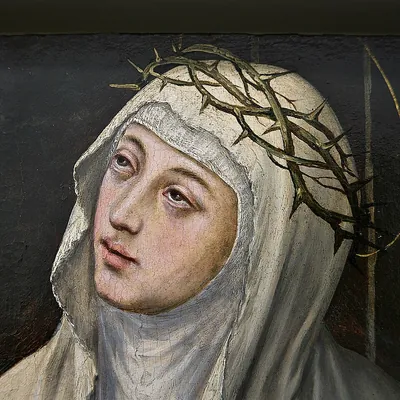 April 29
Saint Catherine of Siena
Dominican tertiary and mystic from Siena, Doctor of the Church, patron saint of Italy and co-patron of Europe
She fought for the unity of the Church at the start of the Great Western Schism.
-
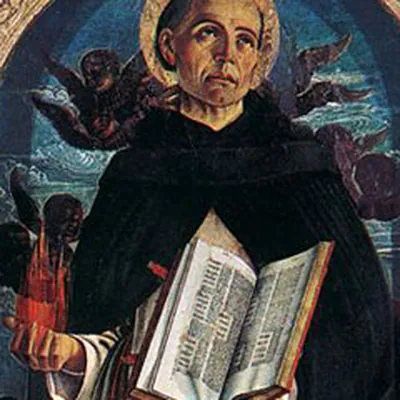 April 5
Saint Vincent Ferrer
Dominican priest from Valencia, great itinerant preacher of the late Middle Ages, who died in Vannes
Involved in the debates of the Great Schism, he worked toward its resolution.
-
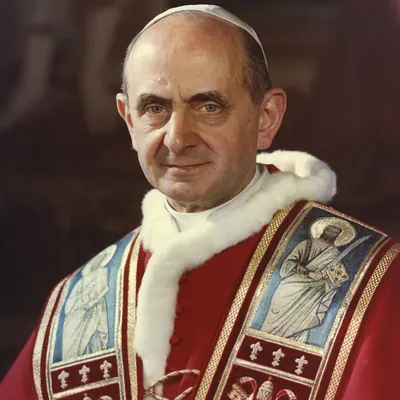 May 29
Saint Paul VI
pope from 1963 to 1978, who brought the Second Vatican Council to its close
In 1965, together with Patriarch Athenagoras, he lifted the excommunications of 1054.
Frequently asked questions
What is the difference between schism and heresy?
Schism is a break in communion with the pope and the Church; heresy is the obstinate denial of a truth of faith. The two can go together, but not necessarily.
What happened in 1054?
The papal legates and the Patriarch of Constantinople excommunicated each other, which became the symbol of the separation between Catholics and Orthodox.
Are the Orthodox schismatics?
Today the Catholic Church speaks of separated sister Churches: she recognizes their sacraments and their bishops, and seeks full communion with them.