Ten Commandments: definition
The Ten Commandments, or Decalogue, are the ten words that God gave to Moses on Mount Sinai, engraved on two tablets of stone. They sum up our duties toward God and toward our neighbor, and Jesus confirmed them by fulfilling them in the twofold commandment of love.
At Sinai
The word Decalogue comes from Greek and means "ten words." The Book of Exodus tells how, after freeing his people from Egypt, God gives them these words on Mount Sinai, through Moses. The text appears twice in the Bible, in chapter 20 of Exodus and chapter 5 of Deuteronomy. It begins with a reminder of liberation: "I am the Lord your God, who brought you out of the land of Egypt, out of the house of slavery."
So the commandments are not first of all prohibitions: they are the charter of freedom of a people who have been saved, the path for remaining free.
The list in the Catholic tradition
The catechism formulation states them this way: worship one God; do not take his name in vain; keep holy the Lord's Day; honor your father and mother; do not kill; do not commit adultery; do not steal; do not bear false witness; do not covet your neighbor's wife; do not covet your neighbor's goods.
The first three concern the love of God, the other seven the love of neighbor: this is why we speak of the two tablets of the Law. Catholics and Lutherans follow the numbering of Saint Augustine; the Orthodox and most Protestants count differently, making the prohibition of images a separate commandment and combining the two prohibitions of coveting.
Fulfilled by Christ
When a scholar of the Law asks him which is the greatest commandment, Jesus answers: "You shall love the Lord your God with all your heart, with all your soul, and with all your mind," then "You shall love your neighbor as yourself." He does not abolish the commandments, he brings them to their perfection, which the Beatitudes describe.
Still today, the Decalogue serves as the basis for the examination of conscience before confession, and the Catechism of the Catholic Church builds its whole section on the moral life around it. The Apostles' Creed, the Our Father and the Ten Commandments, together with the sacraments, formed the foundation of the catechism taught to children for centuries.
Saints to know
-
 August 28
Saint Augustine of Hippo
bishop of Hippo, Father and Doctor of the Church, author of the Confessions
His division of the commandments is the one followed by the Catholic tradition.
-
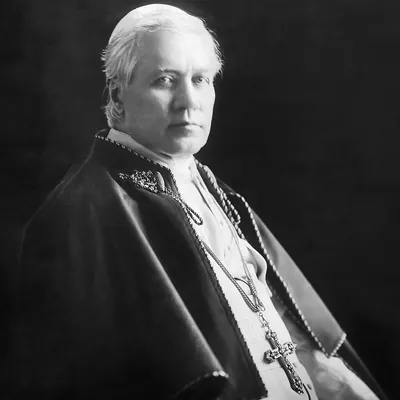 August 21
Saint Pius X
pope from 1903 to 1914, former country priest, apostle of frequent Communion and of First Communion for children
The pope of the catechism, he wanted every child to learn the truths of the faith and the commandments.
-
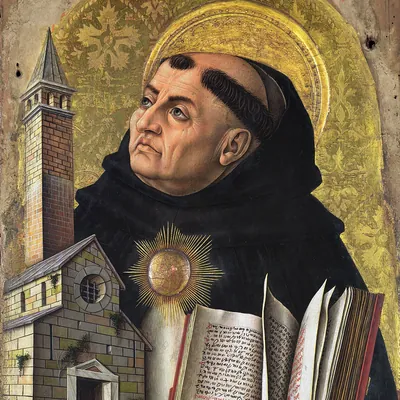 January 28
Saint Thomas Aquinas
Dominican friar, theologian and philosopher, Doctor of the Church, author of the Summa Theologiae
He preached a series of sermons on the Ten Commandments in Naples.
Frequently asked questions
What are the Ten Commandments in order?
In the Catholic tradition: one God, do not take his name in vain, keep Sunday holy, honor your parents, do not kill, do not commit adultery, do not steal, do not lie, do not covet your neighbor's wife, do not covet your neighbor's goods.
What is the greatest commandment?
Jesus answers: to love God with all your heart, and the second is like it: to love your neighbor as yourself.
Are the Ten Commandments still valid?
Yes. Jesus said he had come not to abolish the Law but to fulfill it. The Church teaches that the Ten Commandments express fundamental duties that hold always and everywhere.