Grace: definition
Grace is the free gift God gives to human beings so that they can respond to his call and share in his divine life. It cannot be earned: it is received at Baptism, nourished by the sacraments and prayer, and it makes us able to live as children of God.
A gift, not a wage
The word comes from the Latin gratia, favor, which also gave us "gratuitous" and "gratitude." The Catechism defines it as "favor, the free and undeserved help that God gives us to respond to his call." In the Gospel, the angel greets Mary as "full of grace," and Saint Paul writes: "By grace you have been saved" (Ephesians 2:8).
Grace does not abolish freedom: it heals and supports it. God always takes the initiative, but he awaits a response. This is what Saint Augustine, nicknamed "the Doctor of Grace," defended against the monk Pelagius, who thought that man could become good by his own strength alone.
The different kinds of grace
Sanctifying, or habitual, grace is the life of God present in the soul. It is given at Baptism and lost through mortal sin; the sacrament of confession restores it. A person is then said to be "in a state of grace."
Actual graces are help given at particular moments: a light to understand, strength to resist a temptation, the impulse to be converted. We also speak of sacramental graces, proper to each sacrament, and of charisms, special gifts granted for the good of all.
"Everything is grace"
The saints lived by this conviction. Saint Thérèse of Lisieux summed up her life with the words "Everything is grace," which Bernanos took up at the end of The Diary of a Country Priest. For her, even trials could become a path to God.
To "give thanks" is the everyday echo of grace (in French, "rendre grâce"): we can do so with a prayer of thanksgiving, and the word "Eucharist" itself means thanksgiving.
Saints to know
-
 August 28
Saint Augustine of Hippo
bishop of Hippo, Father and Doctor of the Church, author of the Confessions
Nicknamed "the Doctor of Grace" for defending the primacy of God's gift.
-
 October 1
Saint Thérèse of Lisieux
Carmelite of Lisieux known as the Little Flower, Doctor of the Church and patron saint of missions, teacher of the Little Way of trust
She summed up her spiritual life in these words: "Everything is grace."
-
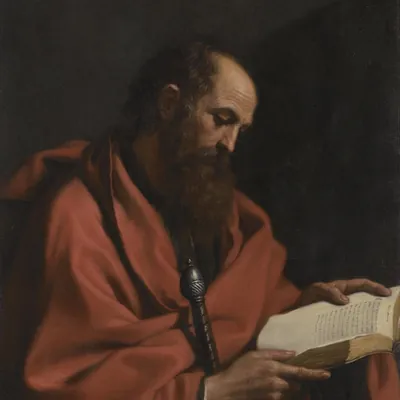 June 29
Saint Paul the Apostle
Apostle to the Gentiles, converted on the road to Damascus, author of New Testament letters
Converted by pure grace on the road to Damascus, he became its herald.
Frequently asked questions
Can you lose grace?
Yes: mortal sin causes the loss of sanctifying grace. But God never withholds his forgiveness from those who ask for it, and confession restores it.
What is the difference between grace and a miracle?
Grace is an inner gift that transforms the heart, often with nothing visible. A miracle is an extraordinary and visible sign of God's action.
What does "being in a state of grace" mean?
It means living in friendship with God, without mortal sin on one's conscience. It is the condition required to receive Communion.