Council: definition
A council is an assembly of bishops gathered to deal with questions of faith, morals or discipline. An ecumenical council brings together the bishops of the whole world in communion with the pope; its decisions bind the whole Church.
The model of Jerusalem
The word comes from the Latin concilium, "assembly." The Acts of the Apostles recount the first meeting of this kind, around the year 49: in Jerusalem, the apostles and elders decide that converted pagans do not have to follow the whole law of Moses. Their letter begins with the words: "It has seemed good to the Holy Spirit and to us."
The Catholic Church recognizes twenty-one ecumenical, that is, universal, councils. There are also regional or provincial councils, which bind only part of the Church.
The great councils
The Council of Nicaea, in 325, affirms that the Son is "consubstantial with the Father" and lays the foundation of the Creed. The Council of Ephesus, in 431, proclaims Mary Mother of God. At Chalcedon, in 451, the letter of Saint Leo the Great on the two natures of Christ is received by the Fathers with the cry "Peter has spoken through Leo."
The Council of Trent (1545-1563) responds to the Protestant Reformation; Saint Charles Borromeo and Saint Pius V were the great architects of its implementation. Vatican I (1869-1870) defines papal infallibility.
Vatican II
The last council, Vatican II, was opened by Saint John XXIII in 1962 and closed by Saint Paul VI in 1965. It renewed the liturgy, allowed Mass in the vernacular, recalled the universal call to holiness and the role of the laity, and opened the Church to dialogue with other Christians and with the modern world.
Saints to know
-
 November 10
Saint Leo the Great
pope from 440 to 461, Father and Doctor of the Church, defender of the faith at the Council of Chalcedon
His teaching was recognized as the faith of Peter at the Council of Chalcedon.
-
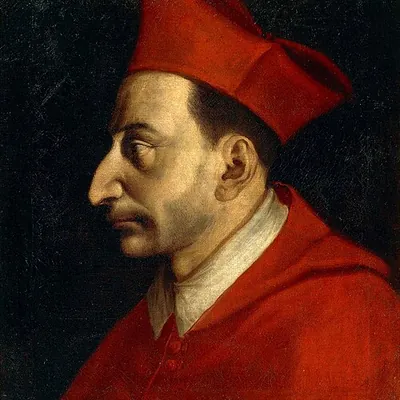 November 4
Saint Charles Borromeo
cardinal and Archbishop of Milan, great reformer of the Church after the Council of Trent, patron saint of bishops and seminarians
From Rome, he helped bring the Council of Trent to its conclusion, then implemented it in Milan.
-
 October 11
Saint John XXIII
pope from 1958 to 1963, known as Good Pope John, who opened the Second Vatican Council
He opened the Second Vatican Council on October 11, 1962.
-
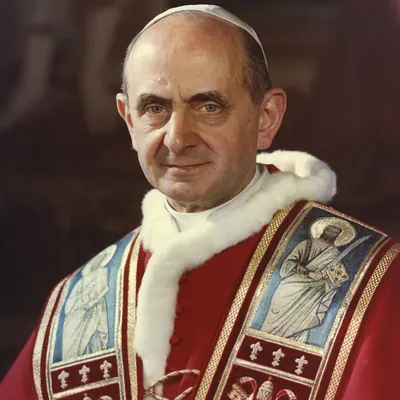 May 29
Saint Paul VI
pope from 1963 to 1978, who brought the Second Vatican Council to its close
He guided and closed the Second Vatican Council.
Frequently asked questions
What is the difference between a council and a synod?
An ecumenical council has authority to teach and decide together with the pope. The Synod of Bishops, established by Paul VI in 1965, is a consultative assembly that advises the pope.
How many councils have there been?
Twenty-one ecumenical councils according to the Catholic Church, from Nicaea in 325 to Vatican II in 1965.
Who convenes a council?
The pope alone convenes, presides over and approves an ecumenical council. Its decrees have the force of law only after his approval.