Pope: definition
The pope is the Bishop of Rome, successor of the apostle Peter and shepherd of the whole Catholic Church. He safeguards the unity of believers in faith and communion. Since May 8, 2025, the pope has been Leo XIV.
Where does the pope come from?
The word comes from the Greek pappas, "father." The pope's mission comes from the words of Jesus to Simon: "You are Peter, and on this rock I will build my Church." Saint Peter, head of the college of Apostles, died a martyr in Rome, and his tomb lies beneath Saint Peter's Basilica. The bishops of Rome who succeed him receive the same charge: to strengthen their brothers in the faith.
His titles express his mission: Bishop of Rome, Vicar of Christ, Successor of the Prince of the Apostles, and above all "Servant of the Servants of God," an expression Saint Gregory the Great loved to use.
What does the pope do?
The pope governs the Church together with the bishops, who form a college with him. He appoints bishops, creates cardinals, carries out canonizations, convokes councils and publishes encyclicals. For this he relies on the Roman Curia, the administration of the Holy See.
According to the First Vatican Council (1870), the pope is infallible when he solemnly defines, ex cathedra, a truth of faith or morals. This privilege is very rarely used: it does not cover his personal opinions or his decisions of government.
Saintly popes
A great number of popes are honored as saints, especially among those of the first centuries, many of whom died as martyrs. Among the best known: Saint Leo the Great, who confronted Attila, Saint Pius X, the pope of children's Communion, as well as Saint John XXIII, Saint Paul VI and Saint John Paul II, popes of the Second Vatican Council and its implementation.
Saints to know
-
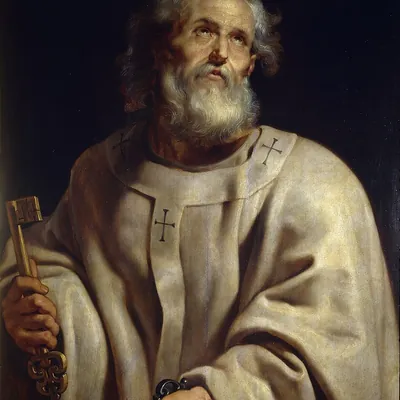 June 29
Saint Peter the Apostle
fisherman from Galilee, leader of the twelve apostles and first bishop of Rome, martyred under Nero
The first pope, chosen by Jesus as the foundation rock of his Church.
-
 September 3
Saint Gregory the Great
pope from 590 to 604, monk, Father and Doctor of the Church, apostle of the English
Pope from 590 to 604, he called himself "Servant of the Servants of God."
-
 November 10
Saint Leo the Great
pope from 440 to 461, Father and Doctor of the Church, defender of the faith at the Council of Chalcedon
The first pope called "the Great," defender of the faith at the Council of Chalcedon.
-
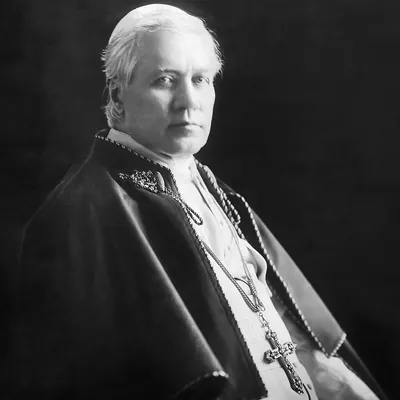 August 21
Saint Pius X
pope from 1903 to 1914, former country priest, apostle of frequent Communion and of First Communion for children
A former country parish priest who became pope in 1903.
-
 October 22
Saint John Paul II
Karol Wojtyła, pope from 1978 to 2005, the first Polish pope in history
Pope from 1978 to 2005, one of the longest pontificates in history.
Frequently asked questions
How is the pope elected?
By the cardinals under 80 years of age, gathered in conclave in the Sistine Chapel. A two-thirds majority is required, and white smoke announces the election.
How many popes have there been?
Leo XIV, elected on May 8, 2025, is counted as the 267th pope since Saint Peter.
Can a pope resign?
Yes, canon law provides for it, as long as the renunciation is made freely. Benedict XVI did so in 2013, as did Saint Celestine V in 1294.