Incarnation: definition
The Incarnation is the mystery by which the Son of God became man in Jesus Christ, conceived by the Holy Spirit and born of the Virgin Mary. Jesus is both true God and true man, one single Person in two natures.
The Word became flesh
The word comes from the Latin caro, carnis, flesh: to become incarnate is to take on flesh. It renders a sentence from the prologue of the Gospel according to Saint John: "The Word became flesh and dwelt among us" (John 1:14). The Word, that is, the eternal Word of God, the second Person of the Trinity, became a real man, with a body, a soul, a history, a family.
God does not pretend to be a man, nor does he turn into a man by ceasing to be God. He takes on all of our humanity, except sin. Why? The Creed answers: "for us men and for our salvation."
True God and true man
It took several centuries and several councils to formulate this mystery precisely. In 451, the Council of Chalcedon affirmed that Christ is one Person in two natures, divine and human, "without confusion or separation." This text draws on a letter of Saint Leo the Great, which the bishops welcomed by exclaiming: "Peter has spoken through Leo."
Mary, the mother of Jesus, is therefore truly "Mother of God": she did not give birth to the divinity, but she brought into the world a Person who is God. This is what the Hail Mary proclaims.
Celebrating the Incarnation
Two feasts celebrate this mystery. The Annunciation, on March 25, recalls the moment when the Virgin Mary agrees to become the mother of the Savior: it is then that the Son of God is conceived. Christmas, nine months later, celebrates his birth in Bethlehem.
Three times a day, the Angelus prayer recalls the Incarnation. At Mass, during the Creed, all bow at the words "and by the Holy Spirit was incarnate of the Virgin Mary, and became man."
Saints to know
-
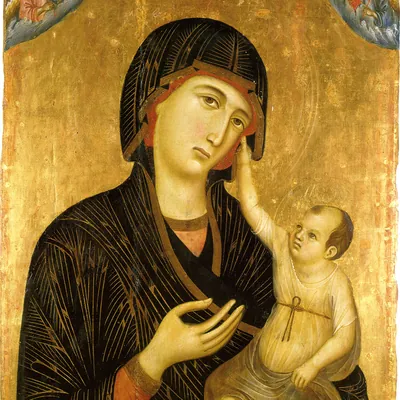 August 15
The Blessed Virgin Mary
mother of Jesus and Mother of God, honored by the Church as the first of the saints
Through her "yes" to the angel Gabriel, she becomes the mother of the Son of God made man.
-
 November 10
Saint Leo the Great
pope from 440 to 461, Father and Doctor of the Church, defender of the faith at the Council of Chalcedon
His letter on the two natures of Christ inspired the Council of Chalcedon in 451.
-
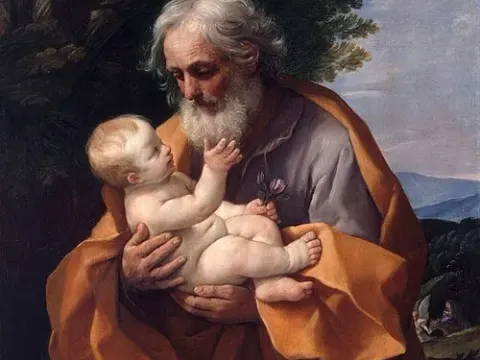 March 19
Saint Joseph
husband of the Virgin Mary, foster father of Jesus and patron of the universal Church
Husband of Mary, he welcomes and protects the Word made flesh in his childhood.
Frequently asked questions
What is the difference between the Incarnation and the Nativity?
The Incarnation is the fact that God becomes man; it begins at the conception of Jesus, celebrated on March 25. The Nativity is his birth, celebrated at Christmas.
Was Jesus really a man?
Yes: he was hungry, he grew tired, he wept for his friend Lazarus and he truly died on the cross. At the same time, he is truly God.
Why did God become man?
The Catechism answers: to save us by reconciling us with God, to make us know his love, to be our model of holiness, and to make us partakers of the divine nature.