Soul: definition
The soul is the spiritual principle of the human being, what gives a person life and makes him or her a person able to think, to love and to know God. According to the Church, each soul is created directly by God, is immortal and forms a single being with the body.
One word, several meanings
The word for soul in Latin is anima, breath. The Bible opens with this image: God forms man from the dust of the ground and "breathed into his nostrils the breath of life." In the Psalms, "my soul" often means the whole person in what is most intimate: "My soul thirsts for God, for the living God." In the Magnificat, Mary sings: "My soul proclaims the greatness of the Lord."
The Catechism defines it as "the innermost aspect of man, that which is of greatest value in him, that by which he is most especially in God's image."
Soul and body
For the Catholic faith, the soul is not locked inside the body as in a prison. The Catechism says that the soul is "the form" of the body: it is thanks to the soul that the body is a living, human body. Man, then, is not a soul that happens to have a body, but a unity of soul and body.
The Church also teaches that each soul is created immediately by God, not produced by the parents, and that it does not perish at death. Separated from the body, it waits to be reunited with it on the day of the resurrection of the body.
Caring for the soul
The saints readily speak of the "life of the soul," nourished by prayer, the sacraments and grace. Saint Teresa of Avila compares the soul to a crystal castle with many dwelling places, at the center of which God lives. Saint John of the Cross describes the night the soul passes through in order to be united with God.
The "salvation of souls" is the Church's reason for being: the Code of Canon Law ends by recalling that it must always be the supreme law.
Saints to know
-
 October 15
Saint Teresa of Avila
Spanish Carmelite nun, reformer of Carmel, mystic and first woman proclaimed a Doctor of the Church
In The Interior Castle, she compares the soul to a castle with seven dwelling places, inhabited by God.
-
 December 14
Saint John of the Cross
Spanish Carmelite, reformer with Teresa of Ávila, mystical poet and Doctor of the Church
He described the "dark night" the soul passes through on its way to God.
-
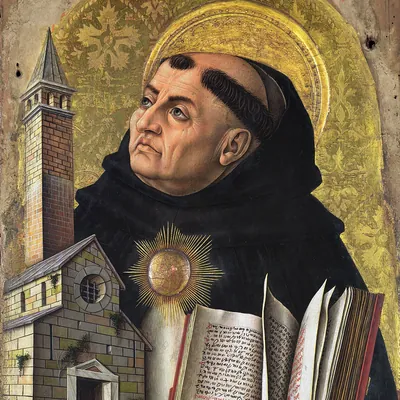 January 28
Saint Thomas Aquinas
Dominican friar, theologian and philosopher, Doctor of the Church, author of the Summa Theologiae
Following Aristotle, he explained that the soul is the form of the body.
Frequently asked questions
Do animals have souls?
In the old sense of a principle of life, Christian philosophy says yes. But only the human soul is spiritual and immortal, created to know and love God.
What happens to the soul after death?
It is judged immediately, at the particular judgment, and goes to heaven, purgatory or hell. At the end of time, it will be reunited with its risen body.
When is the soul created?
The Church teaches that God creates each soul directly. She protects human life from conception, which she regards as the beginning of the person.