Purgatory: definition
Purgatory is the state of purification through which those pass, after death, who die in God's friendship but are not yet fully purified. They are assured of their salvation and will enter heaven; the prayers of the living can help them.
A purification before heaven
The word comes from the Latin purgare, to purify. The Catechism explains that those who die "in God's grace and friendship, but still imperfectly purified," undergo purification after death, "so as to achieve the holiness necessary to enter the joy of heaven." Purgatory is therefore not a temporary hell: it is the antechamber of heaven, where one is already saved.
It should not be imagined as a place whose length is measured in earthly days. It is a state in which love is purified of whatever selfishness remains, like gold passed through fire. The Church defined its doctrine at the Councils of Florence, in the 15th century, and of Trent, in the 16th.
Why pray for the dead
The Bible reports that Judas Maccabeus had a sacrifice offered for soldiers who had died, "that they might be delivered from their sin" (2 Maccabees 12:46). From the first centuries, Christians prayed for their dead, especially during Mass. Thanks to the communion of saints, the living can help the departed through prayer, almsgiving, indulgences and above all by having Masses offered.
On November 2, All Souls' Day, the Church prays for all the souls in purgatory, on the day after All Saints' Day. You can do so every day with a prayer for the dead.
What the saints say
Saint Catherine of Genoa left a famous Treatise on Purgatory. In it she describes souls who suffer from not yet seeing God, but who are at the same time in great joy, because they know they are going to see him. Saint Padre Pio constantly recommended praying for the souls in purgatory, and Saint Thérèse of Lisieux hoped, by entrusting herself entirely to God's mercy, to go straight to heaven.
Saints to know
-
 September 15
Saint Catherine of Genoa
fifteenth-century laywoman and mystic of Genoa, servant of the sick and source of the Treatise on Purgatory
A mystic, author of a famous Treatise on Purgatory.
-
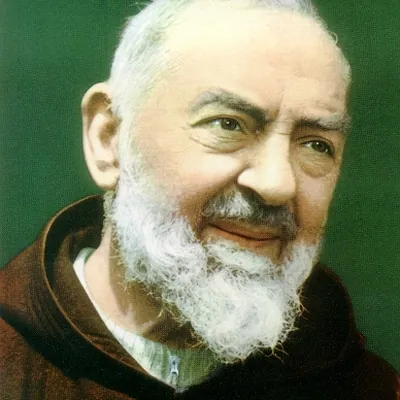 September 23
Saint Pio of Pietrelcina (Padre Pio)
Italian Capuchin priest, confessor and stigmatic of San Giovanni Rotondo
He tirelessly urged people to pray and offer Masses for the souls in purgatory.
-
 October 1
Saint Thérèse of Lisieux
Carmelite of Lisieux known as the Little Flower, Doctor of the Church and patron saint of missions, teacher of the Little Way of trust
She hoped to go straight to heaven by abandoning herself to God's mercy.
Frequently asked questions
How long does purgatory last?
There is no way to know. Purgatory is outside earthly time, and the Church has never given a length.
Is purgatory in the Bible?
The word does not appear there, but the Church relies on the prayer for the dead in the Book of Maccabees and on words of Saint Paul about being saved "as through fire" (1 Corinthians 3:15).
Do Protestants believe in purgatory?
Generally not: most Protestant churches rejected it in the 16th century. The Orthodox pray for the dead, without using the word purgatory.