Icon: definition
An icon is a sacred image painted on wood according to precise rules, depicting Christ, the Virgin Mary, the angels or the saints. Born in the Christian East, it is not simply a painting: it is a window opened onto the mystery of God, before which we pray.
An image for prayer
The word comes from the Greek eikôn, image. Saint Paul calls Christ "the image of the invisible God": because God became man, it became possible to depict him. This is the foundation of the icon, which flows directly from the Incarnation.
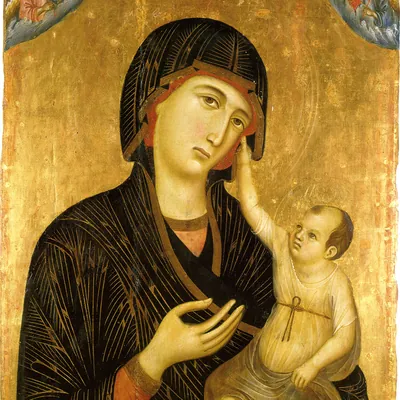
The icon follows codes: grave and peaceful faces, a gold background evoking divine light, a reverse perspective that seems to come toward the viewer. The painter, called an iconographer, works in prayer and fasting; this is why people like to say that he "writes" an icon, as one writes the Gospel in colors.
The iconoclast controversy
In the 8th and 9th centuries, Byzantine emperors banned images, which they considered idolatrous: this was iconoclasm. Saint John Damascene then came to their defense: we do not venerate the wood and paint, but the person depicted. In 787, the Second Council of Nicaea proved him right and affirmed that the honor paid to the image passes to the one it represents. The Eastern Churches still celebrate this "Triumph of Orthodoxy."
Icons and the saints
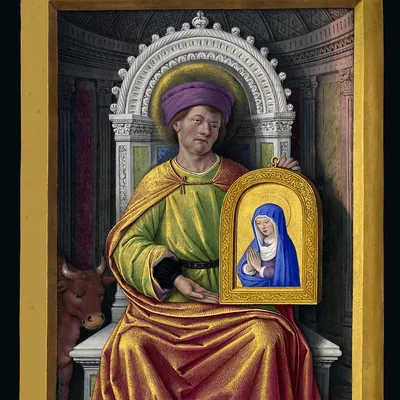
An ancient tradition attributes to Saint Luke, the Evangelist who tells of the childhood of Jesus, the first icon of the Virgin Mary. Many Marian images venerated in the West, such as Our Lady of Perpetual Help, are in the Byzantine style. Today, icons are loved by Latin Catholics as well as by the Eastern Churches; people pray before them by lighting a small oil lamp or a candle.
Saints to know
-
 December 4
Saint John Damascene
Christian monk and theologian from Damascus, defender of the holy icons and Doctor of the Church
Great defender of images during the iconoclast crisis.
-
 October 18
Saint Luke the Evangelist
physician and companion of Saint Paul, author of the third Gospel and of the Acts of the Apostles, patron saint of physicians and artists
Tradition attributes to him the first icon of the Virgin.
-
 August 15
The Blessed Virgin Mary
mother of Jesus and Mother of God, honored by the Church as the first of the saints
After Christ, the Mother of God is the figure most often depicted in icons.
Frequently asked questions
What is the difference between an icon and a religious painting?
A religious painting expresses the artist's personal vision; an icon follows a tradition set by the Church and aims to lead to prayer rather than to aesthetic emotion.
Can Catholics pray before an icon?
Yes. The Second Council of Nicaea, recognized by the whole Church, teaches that holy images may be venerated, because the honor paid to the image goes to the person depicted.
Why do we say an icon is "written"?
Because in Greek the same verb means to write and to paint, and because the icon is considered a Word of God conveyed through an image.