Indulgence: definition
An indulgence is, according to the Catechism of the Catholic Church, a remission before God of the temporal punishment due to sins whose guilt has already been forgiven. It is granted by the Church under certain conditions, for oneself or for a deceased person.
Understanding the punishment due to sin
Sin has two consequences. It breaks friendship with God: this is the guilt, forgiven through confession. But it also leaves traces, a disordered attachment that must be purified, here below or in purgatory: this is the temporal punishment. An indulgence removes all or part of this punishment, thanks to the merits of Christ and the saints, which the Church dispenses by virtue of the communion of saints.
An indulgence is partial when it removes part of the punishment, plenary when it removes it entirely. You can gain it for yourself or offer it for a deceased person, but not for another living person.
The conditions for a plenary indulgence
You must carry out the prescribed work, for example half an hour of adoration, reading the Bible, the Stations of the Cross, praying the Rosary as a family or in church, or a jubilee pilgrimage. Three conditions are added: going to confession, receiving Communion and praying for the pope's intentions, for example with an Our Father and a Hail Mary. Finally, you must be detached from all sin, even venial sin.
From November 1 to 8, a plenary indulgence applicable to the dead is granted to those who visit a cemetery and pray for them. Another, linked to Saint Francis of Assisi, is attached to the Portiuncula on August 2.
A turbulent history
At the end of the Middle Ages, indulgences gave rise to serious abuses, especially when they were tied to gifts of money. It was the preaching of indulgences that provoked Luther's protest in 1517. The Council of Trent condemned these abuses and, in 1567, Saint Pius V forbade any granting of indulgences tied to an alms. Today, an indulgence can never be bought.
Saints to know
-
 October 4
Saint Francis of Assisi
founder of the Friars Minor, poet of the Canticle of the Creatures, patron saint of Italy and of ecology
According to tradition, he obtained the Portiuncula indulgence, gained on August 2.
-
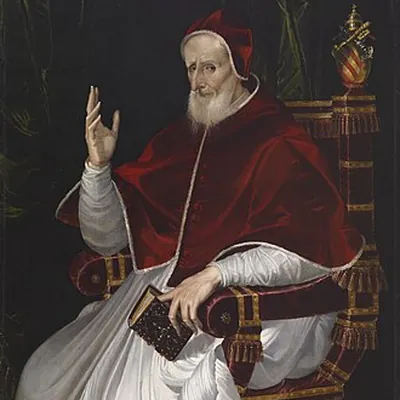 April 30
Saint Pius V
Dominican pope from 1566 to 1572, who put the Council of Trent into practice
In 1567 he forbade tying indulgences to gifts of money.
Frequently asked questions
What is the difference between a plenary and a partial indulgence?
A plenary indulgence removes all the temporal punishment due to forgiven sins; a partial indulgence removes only part of it.
Can you gain an indulgence for a deceased person?
Yes, all indulgences can be applied to the dead by way of suffrage, that is, by entrusting them to God's mercy. They cannot be applied to another living person.
How many plenary indulgences can you gain per day?
Only one plenary indulgence can be gained per day, except at the moment of death. Partial indulgences can be received several times.
Related terms
Prayer and Devotions: other terms
- Acts of Faith, Hope and Charity
- Eucharistic Adoration
- Blessing
- Divine Mercy Chaplet
- Consecration
- Devotion
- Holy Water
- Ex-voto
- Examination of Conscience
- Fasting
- Lectio Divina
- Litany
- Miraculous Medal
- Mysteries of the Rosary
- Novena
- Mental Prayer
- Ejaculatory prayer
- Procession
- Spiritual retreat
- Complete Rosary
- Sacred Heart
- Scapular
- Triduum