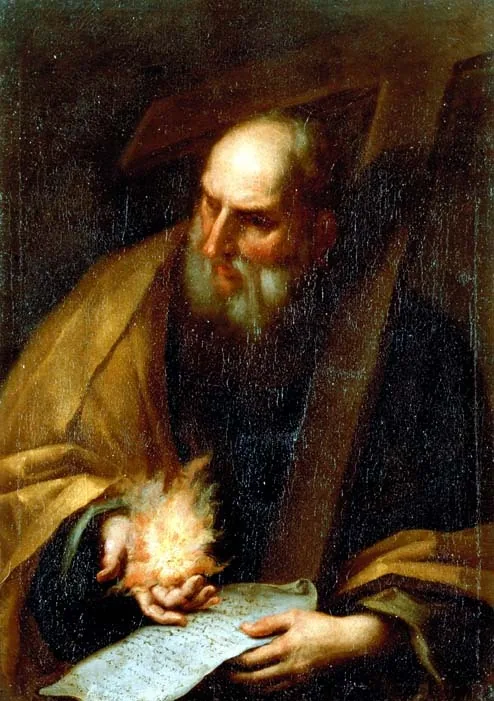
Saint Barnabas is one of the great figures of the early Church. A Jew of the tribe of Levi from Cyprus, he was the one who welcomed Saint Paul after his conversion, introduced him to the apostles and set out with him on the first missionary journey. The Acts of the Apostles describe him as "a good man, full of the Holy Spirit and of faith." Although he was not one of the Twelve, the Church gives him the title of apostle and celebrates him on June 11.
Who was Saint Barnabas?
His birth name was Joseph. The apostles nicknamed him Barnabas, a name the Book of Acts translates as "son of encouragement" or "son of consolation" (Acts 4:36). He belonged to a family of Levites settled in Cyprus, an island that was then home to a large Jewish community. He first appears in the community of Jerusalem, shortly after Pentecost: he sold a field he owned and laid the money at the feet of the apostles, for the needs of all.
Everything we know about him with certainty comes from the New Testament: the Acts of the Apostles, and several mentions in the letters of Saint Paul. The rest, including his death, belongs to tradition. An ancient letter, the Epistle of Barnabas, bears his name, but it was written later and historians do not attribute it to him.
The man who opened the door to Paul
When Saul, the former persecutor, arrived in Jerusalem after his conversion on the road to Damascus, the disciples were afraid of him. Barnabas was the one who took him in, brought him to the apostles and told them how the Lord had appeared to him (Acts 9:27). This act of trust, at a time when no one yet believed in Saul's sincerity, ranks among the most decisive in Christian history.
A few years later, the Church of Jerusalem learned that the Gospel had been proclaimed to the Greeks of Antioch, a great city of Syria. It sent Barnabas there. Acts reports that when he saw the work of God's grace, he rejoiced and encouraged everyone to remain faithful to the Lord. He then went to look for Saul in Tarsus, and the two taught together in Antioch for a whole year. It was there, the text specifies, that the disciples were first called Christians (Acts 11:26). During a famine, they took together to Jerusalem the aid collected by the community.

The first missionary journey
During a liturgy in Antioch, the Holy Spirit asked that Barnabas and Saul be set apart for a mission. The community prayed, fasted, laid hands on them and sent them off. They began with Cyprus, the homeland of Barnabas, traveling from Salamis to Paphos, where the Roman proconsul Sergius Paulus embraced the faith. From that moment on, Acts calls Saul by his Roman name, Paul, and he gradually takes the lead.
The two missionaries then crossed to Asia Minor, in present-day Turkey. At Lystra, after the healing of a lame man, the crowd took them for gods: Barnabas for Zeus, Paul for Hermes. They tore their garments to stop the sacrifice the people wanted to offer them (Acts 14:8-18). The journey was a mix of success and persecution; everywhere, they founded communities and appointed elders.

The Council of Jerusalem and the parting from Paul
Back in Antioch, Paul and Barnabas faced a question that divided the young Church: should Gentile converts be required to be circumcised and to keep the whole Law of Moses? They went up to Jerusalem, told what God had done among the nations, and obtained from the apostles and elders that the Gentiles be welcomed without this burden (Acts 15). That decision opened the Church to the whole world.
Soon afterward, the two companions parted. Barnabas wanted to take along again his cousin John Mark, who had left them partway through the first journey; Paul refused. The disagreement was sharp enough that each went his own way: Paul with Silas, Barnabas with Mark to Cyprus (Acts 15:36-40). Events proved Barnabas's patience right: Mark later became a valued co-worker of Paul himself, and tradition attributes to him the second Gospel.

The death of Barnabas according to tradition
After Cyprus, Acts says nothing more about him. Paul still mentions him as a worker for the Gospel who earned his own living (1 Corinthians 9:6). According to tradition, Barnabas died a martyr at Salamis, stoned to death. The Church of Cyprus tells that in 488, under Emperor Zeno, his tomb was found near the city, with a copy of the Gospel of Matthew laid on his chest. This discovery is said to have helped the Church of Cyprus have its independence recognized, since it could claim to have been founded by an apostle.
Why is Saint Barnabas the patron saint of Cyprus?
Barnabas was born into a Jewish family of Cyprus, began his first mission on the island, returned there with Mark and, according to tradition, died and was buried at Salamis. The Church of Cyprus honors him as its founder. Beyond the island, he is a model for all who accompany others: educators, leaders, mentors. He believed in Paul when everyone distrusted him, and in Mark when Paul no longer wanted him. He also knew how to step aside, leaving first place to his companion. His generosity and his joy at the good done by others make him the saint of trust and of second chances.
To pray with him, read the prayer to Saint Barnabas, or follow the novena to Saint Barnabas, from June 2 to 10, ending on the eve of his feast.
Symbols and how to recognize Saint Barnabas in art
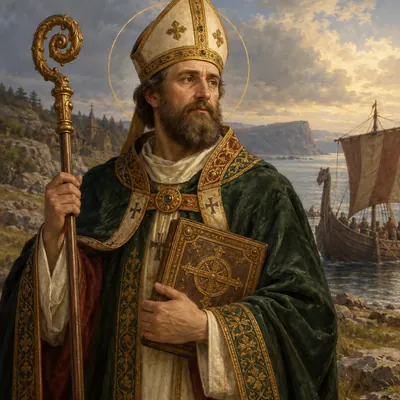
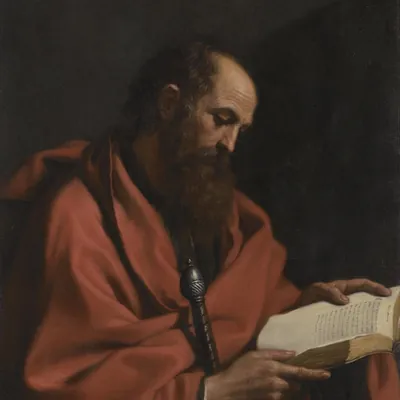
Barnabas is usually shown as a bearded man in the robes of an apostle. He often holds a book of the Gospels, sometimes open, a reminder of the Gospel of Matthew said to have been found on his chest in his tomb. In Renaissance art, he appears alongside Paul in scenes from Acts, such as Raphael's tapestry cartoons, or laying the Gospel on the sick, as in Veronese's painting.
Where to pray to Saint Barnabas
- Salamis (Cyprus): the Monastery of Saint Barnabas and the chapel of his tomb, near the ruins of the ancient city.
- Antioch (today Antakya, Turkey): the city where he taught with Paul and where the name "Christians" was born.
- Milan (Italy): an ancient Milanese tradition venerates him as the first to preach the Gospel in the city, though history does not confirm it.
- Parishes and churches named after him, especially in Italy, England and Cyprus, as well as throughout the English-speaking world.
Discover also
- Saint Paul, whom he welcomed in Jerusalem and accompanied on his first journey.
- Saint Mark, his cousin, whom he refused to give up on.
- Saint Silas, who took his place at Paul's side.
- Saint Luke, author of the Acts of the Apostles, which tell his story.
- Saint Stephen, first martyr of the Jerusalem community.