Patronage: definition
Patronage is the special protection a saint exercises, through his or her prayer before God, over a person, a profession, a place, a country or a life situation. We say, for example, that Saint Joseph is the patron of workers or that Saint Rita is the patron of impossible causes.
A bond of protection and trust
The word comes from the Latin patronus, protector. In ancient Rome, the patron defended his clients, who remained attached to him. The Church took up this image to say that the saints, close to God, watch over those who entrust themselves to them. Patronage is not a power belonging to the saint: it is a form of intercession, since every good comes from God.
The saint who exercises this patronage is called a patron saint. The page devoted to that term explains how to choose your own; here, we look rather at how these bonds between a saint and an area of life come about.
How does a patronage come about?
Most often, it flows from the saint's life. Saint Luke, whom Saint Paul calls "the beloved physician," watches over doctors; Saint Barbara, whom legend associates with lightning, over firefighters. Sometimes the link comes from the account of the saint's death or a detail of his or her iconography, sometimes from a miracle obtained in a specific circumstance.
Patronages of situations were born from the trust of the faithful: people pray to Saint Anthony of Padua to find a lost object and to Saint Rita for hopeless causes. No decree fixed these customs: they spread by word of mouth, as graces were received.
Official patronages
The pope sometimes confirms a patronage by a solemn act. Pius IX proclaimed Saint Joseph patron of the universal Church in 1870, and John Paul II declared Saint Francis of Assisi patron of ecologists in 1979. Paul VI made Saint Benedict patron of Europe in 1964.
Finally, churches are placed under the patronage of a saint or a mystery, and the parish then celebrates its patronal feast. All the major patronages are gathered on the page of patron saints by profession and situation.
Saints to know
-
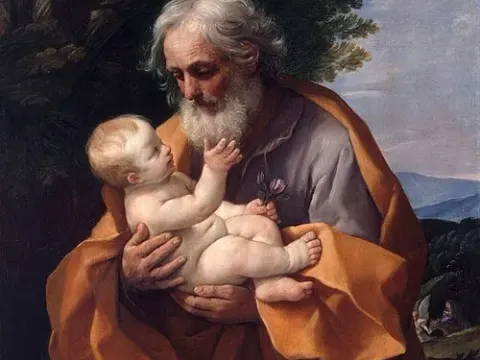 March 19
Saint Joseph
husband of the Virgin Mary, foster father of Jesus and patron of the universal Church
Proclaimed patron of the universal Church by Pius IX in 1870.
-
 October 4
Saint Francis of Assisi
founder of the Friars Minor, poet of the Canticle of the Creatures, patron saint of Italy and of ecology
Declared patron of ecology by John Paul II in 1979.
-
 May 22
Saint Rita of Cascia
wife, mother and widow who became an Augustinian nun in Cascia, invoked for desperate and impossible causes
Her trust amid trials made her the patron saint of impossible causes.
-
 June 13
Saint Anthony of Padua
Franciscan friar born in Lisbon, preacher and Doctor of the Church, invoked to find lost things
Invoked all over the world to find lost things.
Frequently asked questions
What is the difference between patronage and patron saint?
Patronage refers to the bond of protection itself; the patron saint is the saint who exercises it. We say that Saint Christopher is the patron of travelers, or that travelers are under his patronage.
Can a saint have several patronages?
Yes, and it is common. Saint Joseph watches over the Church, fathers, workers and the dying all at once.
Why is a youth club called a "patronage" in France?
In the 19th century, French parishes founded youth works placed under the protection of a saint, which came to be called patronages. In France the word still refers to these places of activities for children.
Related terms
Holiness and Veneration of the Saints: other terms
- Guardian Angel
- Apparition
- Archangel
- Attributes of the Saints
- Halo
- Beatification
- Blessed
- Canonization
- Communion of Saints
- Confessor
- Incorrupt Body
- Doctor of the Church
- Hagiography
- Martyr
- Martyrology
- Miracle
- Mysticism
- Fathers of the Church
- Postulator
- Canonization process
- Relics
- Saint
- Servant of God
- Stigmata
- Wonderworker
- Venerable
- Heroic virtue