Canonization process: definition
The canonization process is the inquiry conducted by the Church to establish whether a deceased Christian lived the virtues to a heroic degree or died a martyr, and whether miracles have been obtained through his or her intercession. It takes place first in the diocese, then in Rome, and can lead to beatification and then canonization.
Why speak of a process?
The word is legal, because the procedure is: evidence is gathered, witnesses are questioned under oath, documents are examined. The goal is not to judge the deceased, but to verify rigorously the reputation for holiness the faithful attribute to him or her. One also speaks of a "cause" of beatification and canonization.
The current rules date from the constitution Divinus perfectionis Magister, published by John Paul II in 1983, supplemented by the instruction Sanctorum Mater of 2007.
The diocesan phase
In principle, a cause cannot be opened until five years after death. A group of faithful, a parish or a congregation requests it, represented by a postulator. If the local bishop accepts, the deceased becomes a Servant of God. A diocesan tribunal then hears witnesses, gathers the writings and studies the candidate's life.
The pope can waive the five-year waiting period: John Paul II did so for Mother Teresa, and Benedict XVI for John Paul II himself.
The Roman phase
The file then goes to the Dicastery for the Causes of Saints. A summary called the positio is drawn from it and examined by historians, theologians, and then cardinals and bishops. If heroic virtues or martyrdom are recognized, the pope declares the candidate Venerable.
Miracles are the subject of a separate inquiry: a board of doctors first verifies that a healing is inexplicable according to the current state of science, then theologians establish that it is due to the candidate's intercession. The pope makes the final decision.
Saints to know
-
 October 22
Saint John Paul II
Karol Wojtyła, pope from 1978 to 2005, the first Polish pope in history
Author of the 1983 reform, he himself was canonized only nine years after his death.
-
 September 5
Saint Teresa of Calcutta (Mother Teresa)
religious sister and founder of the Missionaries of Charity, servant of the poorest of the poor in Calcutta
Her cause opened in 1999, two years after her death, thanks to a papal dispensation.
-
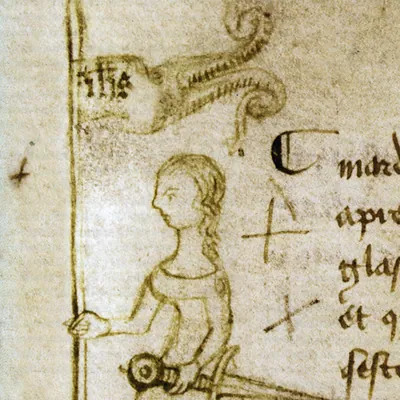 May 30
Saint Joan of Arc
peasant girl from Lorraine, military leader and martyr, secondary patron saint of France
Rehabilitated in 1456 by a nullity trial, she was not canonized until 1920.
Frequently asked questions
How long does a canonization process take?
There is no fixed length. The fastest causes take about ten years, but many last decades, even centuries.
What is the devil's advocate?
It is the nickname of the promoter of the faith, once charged with raising every objection against a cause. His role was reduced in 1983, but a promoter of the faith still presides over the theologians' examination.
Who pays for a canonization process?
Those who promote the cause: a diocese, a congregation or an association. The Holy See has set rules to regulate these costs and to help the poorest causes.