Wonderworker: definition
A wonderworker (or thaumaturge) is a saint who worked many miracles during his or her lifetime or through intercession after death. The word thaumaturge, of Greek origin, means "worker of wonders."
Origin of the word
Thaumaturge comes from the Greek thauma, wonder, and ergon, work. In antiquity, the word could refer to a magician. Christians took it up in a completely different sense: the wonderworking saint has no power of his own; he obtains graces from God through his prayer and faith. Jesus had promised his disciples that they would do even greater works than his.
The first to bear this nickname was Saint Gregory the Wonderworker, bishop of Neocaesarea in the 3rd century, to whom tradition attributes many marvels.
The great wonderworking saints
Saint Martin of Tours was already famous in his lifetime for his healings. Saint Anthony of Padua was canonized less than a year after his death, so many were the miracles at his tomb; he is still called the saint of miracles. Saint Francis of Paola was summoned to France by King Louis XI, who hoped to be healed by him.
Closer to our time, Saint Padre Pio was surrounded by accounts of healings and conversions, as was Saint Vincent Ferrer in the 15th century. The Church regards these testimonies with caution: only miracles examined according to precise criteria are officially recognized.
The healing kings
In the Middle Ages, the kings of France and England were credited with the gift of healing scrofula, known as the King's Evil, a disease of the skin and glands, by touching the sick after their coronation with the words: "The king touches you, God heals you." Saint Louis practiced this rite. The historian Marc Bloch studied it in a famous book, "The Royal Touch" (Les Rois thaumaturges).
Saints to know
-
 June 13
Saint Anthony of Padua
Franciscan friar born in Lisbon, preacher and Doctor of the Church, invoked to find lost things
The saint of miracles, canonized eleven months after his death.
-
 April 2
Saint Francis of Paola
hermit from Calabria, founder of the Order of Minims, who died in France at the court of the kings
A Calabrian hermit whose reputation as a wonderworker caught the attention of Louis XI.
-
 November 11
Saint Martin of Tours
Roman soldier who became a monk and bishop of Tours, apostle of the countryside of Gaul, patron saint of soldiers
His healings made him the most popular saint of Gaul.
-
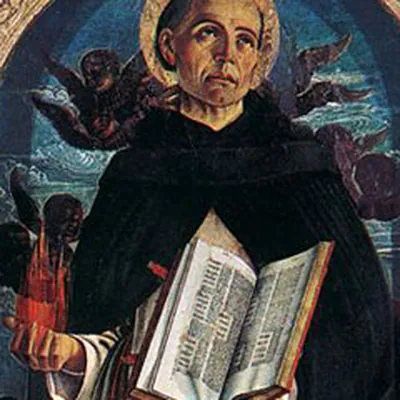 April 5
Saint Vincent Ferrer
Dominican priest from Valencia, great itinerant preacher of the late Middle Ages, who died in Vannes
A Dominican preacher to whom countless wonders are attributed.
Frequently asked questions
What is the difference between a wonderworker and a magician?
A magician claims to act by his own power or by occult forces. The Christian wonderworker prays, and it is God who acts, often through a healing or a conversion.
Are all saints wonderworkers?
No. Every canonized saint has one or more recognized miracles, but the title of wonderworker is reserved for those whose wonders were especially numerous.
Who is the best-known wonderworking saint?
In the West, Saint Anthony of Padua and Saint Martin are probably the most popular. In the East, it is Saint Nicholas of Myra, called the Wonderworker, whose cult spread throughout Europe.
Related terms
Holiness and Veneration of the Saints: other terms
- Guardian Angel
- Apparition
- Archangel
- Attributes of the Saints
- Halo
- Beatification
- Blessed
- Canonization
- Communion of Saints
- Confessor
- Incorrupt Body
- Doctor of the Church
- Hagiography
- Martyr
- Martyrology
- Mysticism
- Patronage
- Fathers of the Church
- Postulator
- Canonization process
- Relics
- Patron saint
- Servant of God
- Stigmata
- Venerable
- Heroic virtue