Altar: definition
The altar is the table on which the priest celebrates the sacrifice of the Mass. It is both the altar of sacrifice and the table of the Lord's Supper, and it represents Christ himself at the center of the church.
A table and a sacrifice
The word comes from the Latin altare, linked to the idea of being raised up. In the Old Testament, Noah, Abraham and Moses build altars to offer sacrifices. Christ fulfills all these sacrifices by offering himself on the cross, and the Mass makes this one sacrifice present under the signs of bread and wine. The Christian altar is therefore both the altar of the cross and the table of the Last Supper.
That is why the priest kisses the altar at the beginning and end of Mass, and why it is incensed at solemn celebrations: in it, Christ is honored.
Relics beneath the altar
From antiquity, the Eucharist was celebrated on the tombs of the martyrs. The Book of Revelation shows "under the altar the souls of those who had been slain for the word of God." From this comes the tradition, still in force, of placing relics of saints beneath a fixed altar when it is dedicated. In Rome, an altar in Saint Peter's Basilica holds the remains of Saint Leo the Great.
A fixed altar is consecrated by the bishop, who anoints it with sacred chrism and burns incense on it. It is covered with at least one white cloth, and a cross and candles accompany it during the celebration.
High altar and side altars
The high altar is the main altar, in the sanctuary. Large churches also have side altars in their chapels, dedicated to the Virgin or to saints. Since the Second Vatican Council, a single main altar is preferred, often facing the people, to signify the unity of Christ and his Church.
Saints to know
-
 November 10
Saint Leo the Great
pope from 440 to 461, Father and Doctor of the Church, defender of the faith at the Council of Chalcedon
His remains rest beneath an altar in Saint Peter's Basilica.
-
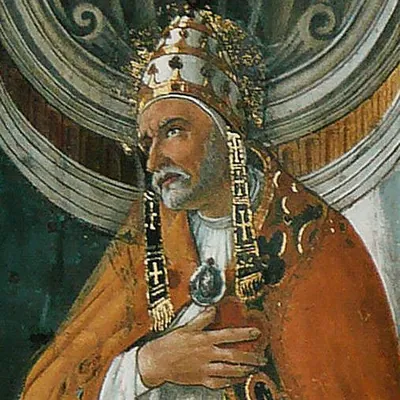 August 7
Pope Saint Sixtus II
bishop of Rome in 257-258, peacemaker between the Churches, martyred with his deacons under Valerian
Martyred pope in 258, surprised by soldiers in an underground cemetery in Rome.
Frequently asked questions
What is the difference between the altar and the ambo?
The altar is the table of the Eucharist; the ambo is the lectern from which the word of God is proclaimed. They are the two "tables" of the Mass.
Why are relics placed in the altar?
To recall that the saints, especially the martyrs, united their lives to the sacrifice of Christ, in continuity with the practice of the first Christians, who celebrated on their tombs.
Can Mass be celebrated without an altar?
In case of necessity, yes, on a suitable table covered with a cloth, for example at a camp or on mission, but Mass is normally celebrated on a dedicated altar.