Monstrance: definition
The monstrance is the liturgical object, often shaped like a radiant sun, in which a large consecrated host is exposed for the adoration of the faithful. It is also used to carry the Blessed Sacrament in procession and to give Benediction.
An object for showing
The word comes from the Latin monstrare (French uses ostendere), both meaning to show. The monstrance is made to let people see the consecrated host, in which Catholics recognize the real presence of Christ. At the center, a small glass case called a lunette holds the host in clear view; around it, golden rays represent Christ, sun of justice and light of the world.
It is placed on the altar, surrounded by candles, during times of adoration. At the end, the priest, his shoulders covered with a veil, takes it in his hands and traces the sign of the cross over the assembly with it: this is Benediction of the Blessed Sacrament, accompanied by incense and hymns.
Born with Corpus Christi
The monstrance appeared in the Middle Ages, as the desire to gaze upon the host grew. In 1264, Pope Urban IV extended to the whole Church the feast of Corpus Christi, born in Liège at the request of a nun, Juliana of Cornillon. People began carrying the Blessed Sacrament in procession through the streets, and a worthy object was needed to present it. The first monstrances looked like towers or reliquaries; the sunburst shape prevailed in the Baroque era.
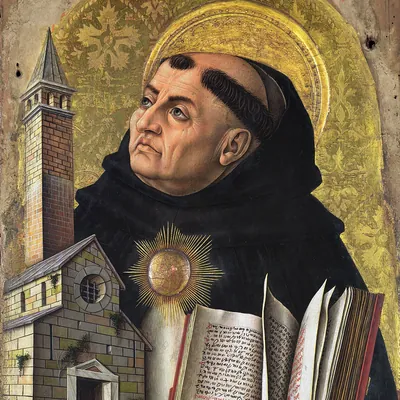
To compose the office of this feast, the pope called on Saint Thomas Aquinas, author of the hymn Tantum ergo, still sung during Benediction.
The saints and the monstrance
According to tradition, Saint Clare of Assisi, though ill, drove back the soldiers attacking her monastery of San Damiano by having herself carried before them with the Blessed Sacrament; this is why she is often depicted holding a monstrance. Saint Peter Julian Eymard devoted his life to the adoration of Christ exposed, and many shrines, such as Paray-le-Monial, offer adoration day and night.
Saints to know
-
 August 11
Saint Clare of Assisi
follower of Saint Francis, founder of the Order of Poor Ladies, the Poor Clares, patron saint of television
She is depicted holding a monstrance, in memory of the attackers she drove back.
-
 January 28
Saint Thomas Aquinas
Dominican friar, theologian and philosopher, Doctor of the Church, author of the Summa Theologiae
Author of the hymns of Corpus Christi, including the Tantum ergo.
-
 August 2
Saint Peter Julian Eymard
French priest, founder of the Congregation of the Blessed Sacrament, known as the Apostle of the Eucharist
Apostle of adoration of the Blessed Sacrament exposed.
Frequently asked questions
What is the difference between a monstrance and a ciborium?
The ciborium is a covered cup that holds many hosts for Communion and is kept in the tabernacle; the monstrance displays only one large host, for adoration.
Who can handle the monstrance?
Exposition and Benediction are reserved to a priest or deacon. In their absence, an appointed lay person may expose and repose the Blessed Sacrament, but without giving the blessing.
Can you pray before a monstrance at home?
No, exposition of the Blessed Sacrament takes place in a church or chapel, under the responsibility of a minister. At home, you can pray turned toward the nearest tabernacle or before a cross.