Eucharist: definition
The Eucharist is the sacrament of the Body and Blood of Christ, present under the appearance of the bread and wine consecrated during Mass. Instituted by Jesus at the Last Supper, the night before he died, it is for the Church "the source and summit of the Christian life."
Giving thanks
The word comes from the Greek eucharistia, thanksgiving. On the evening of Holy Thursday, Jesus takes bread, gives thanks, breaks it and gives it to his disciples, saying: "This is my body, which is given for you." Then he does the same with the cup of wine: "This cup is the new covenant in my blood." He adds: "Do this in remembrance of me."
From the earliest times, Christians gathered on Sundays for "the breaking of the bread." Around 150, Saint Justin already describes a celebration very close to our Mass: readings, prayers of the faithful, the offering of bread and wine, a great prayer of thanksgiving and Communion.
The Real Presence
The Church believes that, through the words of consecration, the bread and wine truly become the Body and Blood of Christ, even though their appearance does not change. This change is called transubstantiation. Christ is wholly present, body, soul and divinity, and remains so after Mass: this is why consecrated hosts are kept in the tabernacle and why there is Eucharistic adoration.
In the 13th century, Saint Juliana of Cornillon obtained the institution of the feast of Corpus Christi, and Saint Thomas Aquinas composed its hymns, including the Pange lingua and the Tantum ergo, still sung today.
Receiving Communion
To receive Communion, one must be baptized, believe in the Real Presence and not be conscious of an unconfessed grave sin. The Church also asks the faithful to fast for one hour beforehand. Communion may be received in the hand or on the tongue. The sick who cannot come to church receive Communion at home, and the dying receive it as Viaticum.
The young Saint Tarcisius, who was carrying the Eucharist to Christians imprisoned in Rome, chose to die rather than hand it over to those who wanted to profane it.
Saints to know
-
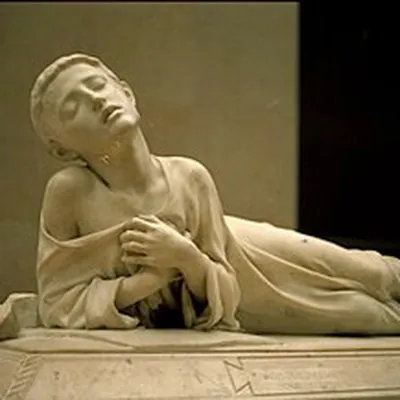 August 15
Saint Tarcisius
Roman martyr of the 3rd century who died protecting the Eucharist, patron saint of altar servers
Martyr of the Eucharist, patron saint of altar servers.
-
 April 5
Saint Juliana of Cornillon
thirteenth-century Augustinian sister of Liège whose vision led to the establishment of the feast of Corpus Christi
She is at the origin of the feast of Corpus Christi, first celebrated in Liège.
-
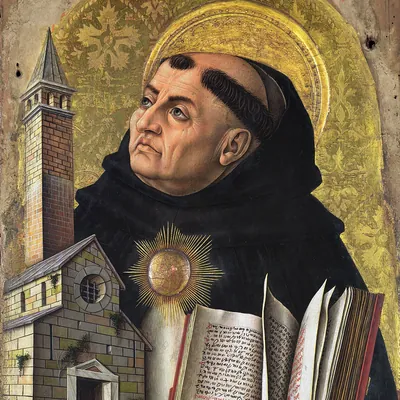 January 28
Saint Thomas Aquinas
Dominican friar, theologian and philosopher, Doctor of the Church, author of the Summa Theologiae
He composed the office for Corpus Christi and the hymn Adoro te devote.
-
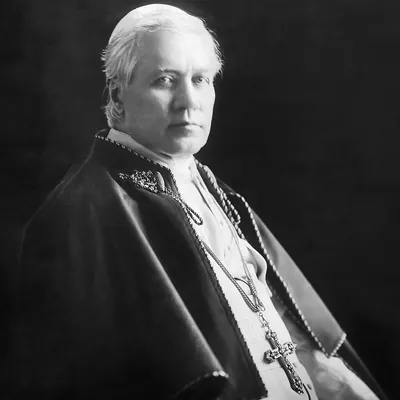 August 21
Saint Pius X
pope from 1903 to 1914, former country priest, apostle of frequent Communion and of First Communion for children
He encouraged frequent Communion and opened Communion to young children.
Frequently asked questions
What is the difference between the Eucharist and Communion?
The Eucharist refers to the sacrament and to the whole celebration. Communion is the moment when we receive the Body of Christ, as well as the union with God and with others that it brings about.
Can you receive Communion more than once a day?
Yes, a second time on the same day, provided it is during a Mass in which you are taking part.
Can a non-Catholic receive Communion?
In principle no, because Communion expresses a unity of faith. Exceptions exist, especially for Orthodox Christians who ask for it, and in certain grave cases for other Christians.