Basilica: definition
A basilica is a church to which the pope has granted this title of honor because of its spiritual, historical or artistic importance. There are four major basilicas, all in Rome, and more than a thousand minor basilicas around the world.
Where does the word basilica come from?
The word comes from the Greek basilikē, "royal." In the Roman Empire, the basilica was a large rectangular public building, divided into aisles by columns, where justice was administered and business conducted. When Emperor Constantine gave peace to the Church in the 4th century, Christians adopted this plan for their first large churches, able to hold crowds.
Over time, the word took on a legal meaning: today, a basilica is not an architectural form but a title. A small country church can be a basilica, while a huge parish church may not be one.
Major basilicas and minor basilicas
The four major basilicas are Saint John Lateran, the pope's cathedral, Saint Peter's Basilica, built over the apostle's tomb, Saint Mary Major and Saint Paul Outside the Walls. Each has a Holy Door that is opened during jubilee years.
All the others are minor basilicas. The pope grants this title to churches that stand out for a pilgrimage, the relics of a saint or their beauty. A minor basilica often displays two insignia: the ombrellino, a kind of umbrella striped in yellow and red, and the tintinnabulum, a small bell carried in procession, both recalling its bond with the Church of Rome.
Basilicas in the footsteps of the saints
Many basilicas keep the memory of a saint: the Basilica of Saint Martin in Tours holds the tomb of the bishop of Tours, the Basilica of Lisieux welcomes the pilgrims of Saint Thérèse, and the Basilica of Fourvière watches over Lyon. People come to pray, go to confession and attend Mass, as in any church, but also to seek the intercession of the saint honored there. You will find many more among our places of worship.
Saints to know
-
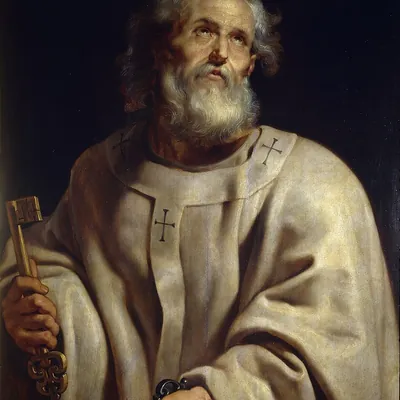 June 29
Saint Peter the Apostle
fisherman from Galilee, leader of the twelve apostles and first bishop of Rome, martyred under Nero
Saint Peter's Basilica in Rome rises above his tomb.
-
 November 11
Saint Martin of Tours
Roman soldier who became a monk and bishop of Tours, apostle of the countryside of Gaul, patron saint of soldiers
His basilica in Tours was one of the great pilgrimages of Gaul.
-
 October 1
Saint Thérèse of Lisieux
Carmelite of Lisieux known as the Little Flower, Doctor of the Church and patron saint of missions, teacher of the Little Way of trust
The Basilica of Lisieux, consecrated in 1954, is dedicated to the Little Flower.
-
 October 4
Saint Francis of Assisi
founder of the Friars Minor, poet of the Canticle of the Creatures, patron saint of Italy and of ecology
His two-level basilica in Assisi holds his tomb.
Frequently asked questions
What is the difference between a basilica and a cathedral?
The cathedral is the bishop's church, where his chair is; a basilica is a church honored with a title by the pope. The same church can be both, like the Cathedral Basilica of Saint-Denis.
How many major basilicas are there?
Four, all in Rome: Saint John Lateran, Saint Peter's, Saint Mary Major and Saint Paul Outside the Walls.
Who can make a church a basilica?
Only the pope, through the Dicastery for Divine Worship, at the request of the local bishop.