Chalice: definition
The chalice is the cup, usually of precious metal, in which the priest consecrates the wine during Mass. Through the words of consecration, this wine becomes the Blood of Christ, poured out for many.
The cup of the Last Supper
The word comes from the Latin calix, cup. On the evening of Holy Thursday, Jesus takes the cup and says to his apostles: "Drink from it, all of you, for this is my blood of the covenant, which is poured out for many for the forgiveness of sins." The chalice at every Mass points back to this gesture. In Gethsemane, Jesus also speaks of the cup of his Passion: "My Father, if it be possible, let this cup pass from me."
During Mass, the priest pours wine and a few drops of water into the chalice, symbolizing the union of our humanity with the divinity of Christ. He elevates it after the consecration so that the congregation may adore.
A consecrated object
The chalice must be made of a noble, durable material that does not deteriorate; if it is not gold, the inside of the cup is often gilded. It is blessed before its first use. It goes with the paten, the small plate on which the host rests, and with linens: the purificator to wipe it, the pall to cover it, and the corporal on which it is placed.
At ordination, the bishop hands the paten and chalice to the new priest. Many priests receive their chalice from their family or parish and keep it all their lives.
The chalice in the lives of the saints
According to Saint Gregory the Great, Saint Benedict escaped monks who wanted to poison him: when he blessed the cup, it shattered. Saint John the Apostle is often shown with a chalice from which a serpent emerges, recalling a similar legend. The chalice is also one of the attributes of priest saints and of the doctors of the Eucharist.
Saints to know
-
 July 11
Saint Benedict of Nursia
father of Western monasticism, author of the Benedictine Rule and patron saint of Europe
The poisoned cup offered to him shattered when he blessed it.
-
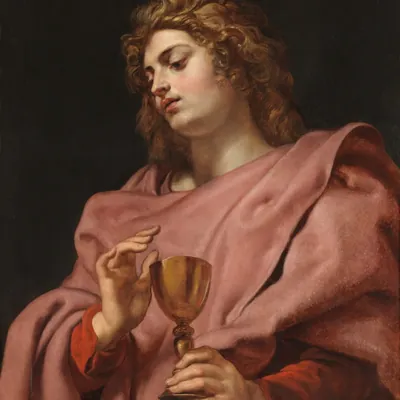 December 27
Saint John, Apostle and Evangelist
apostle of Jesus, son of Zebedee, evangelist, recognized by tradition as the beloved disciple
Shown with a chalice from which a serpent emerges; according to legend, he drank a poisoned cup unharmed.
-
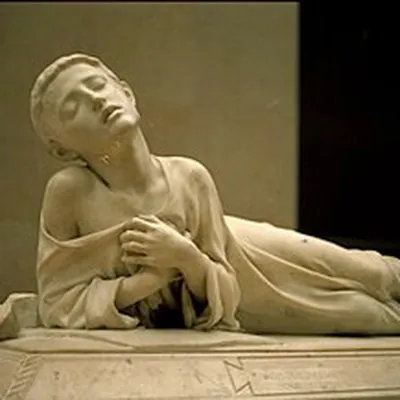 August 15
Saint Tarcisius
Roman martyr of the 3rd century who died protecting the Eucharist, patron saint of altar servers
This young Roman died defending the Eucharist he was carrying.
Frequently asked questions
What is the difference between a chalice and a ciborium?
The chalice holds the wine that becomes the Blood of Christ; the ciborium, which has a lid, holds the consecrated hosts for communion and is kept in the tabernacle.
Can the faithful drink from the chalice?
Yes, communion under both kinds is permitted in circumstances set by the bishop; in many English-speaking dioceses it is offered regularly at Sunday Mass.
What is the Holy Grail?
In medieval legends, it is the cup of the Last Supper; the Church does not pronounce on these traditions, but at every Mass the chalice truly contains the Blood of Christ.