Saint Rimbert, also called Rembert, was a monk from Flanders who became archbishop of Hamburg and Bremen in 865, after the death of Saint Ansgar, the "Apostle of the North," whose disciple and companion he had been. He carried on the mission to the Danes and the Swedes, with more toil than success, and left behind the Life of Saint Ansgar, a precious source on Scandinavia in the Viking Age. He died in Bremen on June 11, 888, and his feast day is kept on that date.
Who was Saint Rimbert?
Rimbert was born around 830 in Flanders, near the monastery of Torhout, where he was brought up. It was there that Ansgar, a monk who had come from Corbie and Corvey and was himself a missionary in Denmark and Sweden, noticed the boy and advised that he be trained. The young man became his disciple and then his faithful companion: he followed him to Hamburg and Bremen and went with him on his journeys, to synods as well as to imperial assemblies.
He lived at a time when Viking raids were striking the coasts of northern Europe, and when the Carolingian Church was trying to proclaim the Gospel to the Scandinavian peoples, who were still pagan. The mission was hard, often threatened, and its fruits remained fragile.
Heir of the Apostle of the North
Elected without delay when Ansgar died, Rimbert received an immense see. The archdiocese of Hamburg-Bremen was meant to serve as the base for the mission to Denmark, Sweden and the lands of the North. Rimbert traveled to Scandinavia several times, but he did not succeed in extending his master's work in a lasting way. The Christian communities that Ansgar had founded, such as the one at Birka in Sweden, remained small and under threat.
For Rimbert, succeeding Ansgar meant more than taking over an office. It meant continuing the work of a man he had known closely for years, whom he regarded as his father in the faith.
This is perhaps the most touching side of his story. Rimbert took up a great work begun by someone else, gave himself to it for more than twenty years, and saw little visible result. He did not abandon it. The conversion of Scandinavia would take place only much later, but the seeds sown by Ansgar and tended by Rimbert were part of that long history.
A bishop of the Carolingian Empire
Rimbert was also a pastor within the Carolingian Empire, involved in the life of the wider Church. He took part in the synod of Worms in 868 and in the assembly of Frankfurt in 873. In 888, shortly before his death, he obtained for Bremen the right to mint coins and to collect customs duties, which strengthened the resources of the archdiocese for a long time to come.
The Life written about him after his death presents him as a charitable pastor, particularly concerned for Christians who had been taken captive. In an age of raids and slave markets, this care for prisoners was a very concrete form of the Gospel.
The biographer of Saint Ansgar
Rimbert's most lasting work is a book. Between 870 and 880 he wrote the Vita Anskarii, the life of his master. In it he tells of Ansgar's journeys to Denmark and Sweden, his hopes, his failures, the dangers of the mission and his deep inner life.
Written by a direct witness, this text is one of the main sources on ninth-century Scandinavia: its kings, its trading towns and its beliefs, even though it sees everything through the eyes of a churchman. Historians of the Viking Age still read it closely, and it has been translated into English.
Why pray to Saint Rimbert?
Saint Rimbert has no widely known patronage. Yet his life speaks clearly to certain situations. He is the saint of quiet faithfulness. He did not have the brilliance of his master, and the mission he received did not bear all the hoped-for fruit in his lifetime. But he held firm, kept alive the memory of the man who had formed him, and handed it on to later generations. Scandinavian Christianity owes him, in part, the knowledge of its own beginnings.
You can pray to him for successors and for anyone who takes up the work of another: a new pastor, a new head of a school or a community, a son or daughter continuing a family's work. He is also a companion for those who labor without seeing results, for missionaries in difficult lands, and for Christians held captive or persecuted.
Symbols and how to recognize Saint Rimbert in art
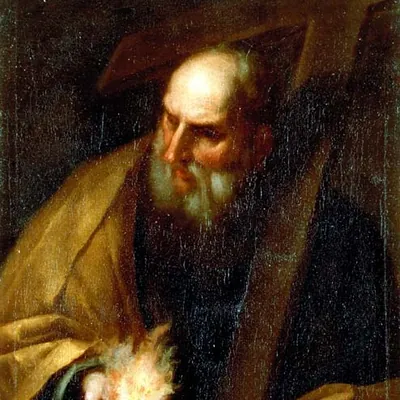
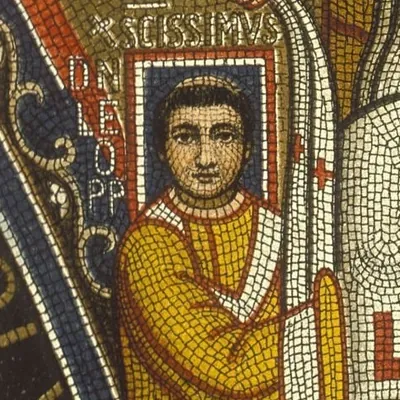
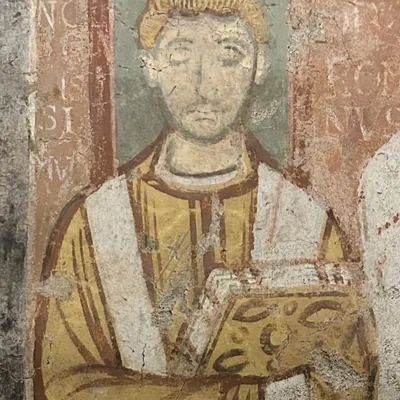
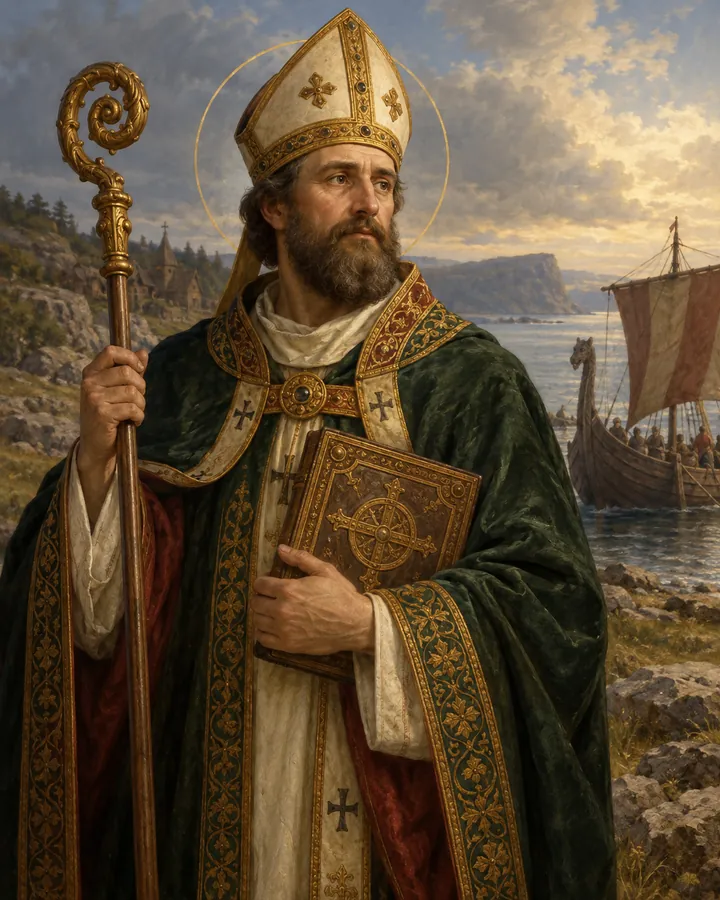
Images of Saint Rimbert are rare. When he is depicted, it is as an archbishop, with miter and crosier. A book in his hands can recall his Life of Saint Ansgar. In Bremen, he belongs to the line of the city's holy bishops, alongside Saint Willehad and Saint Ansgar.
Where to pray to Saint Rimbert
- Bremen (Germany): the city of his see and of his death, where he was buried.
- Torhout (West Flanders, Belgium): the place of his childhood and training.
- Hamburg (Germany): the other see of his archdiocese, cradle of the mission to the North.
Discover also
- Saint Ansgar, his master, the Apostle of the North.
- Saint Adalard of Corbie, founder of Corvey, from where Ansgar set out.
- Saint Willehad, first bishop of Bremen.
- Saint Nicholas I, the pope who confirmed the union of Hamburg and Bremen.
- Saint Willibrord, another great missionary to the peoples of the North.