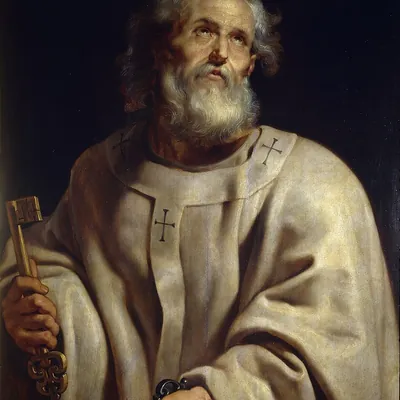
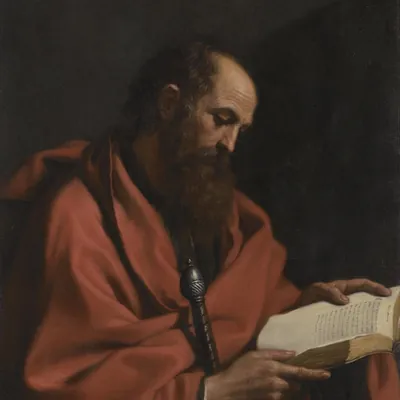
Saint Silas, also called Silvanus, was a Christian of the first community in Jerusalem and the companion of Saint Paul on his second missionary journey. The Acts of the Apostles presents him as a prophet and one of the leaders of the Church. With Paul he was beaten and imprisoned at Philippi, then proclaimed the Gospel in Macedonia and Greece. The letters of the New Testament also show him at the side of Paul and of Peter. The Catholic Church celebrates him on July 13.
Who was Saint Silas?
Everything we know about Silas comes from the New Testament. The name Silas appears only in the Acts of the Apostles. The letters of Paul and the First Letter of Peter speak of a "Silvanus," the Latin form of the same name, and most commentators see them as the same person. According to Acts, Silas, like Paul, was a Roman citizen.
Silas first appears in chapter 15 of Acts, at the gathering known as the Council of Jerusalem, around the year 49. The apostles and elders had decided not to impose all the prescriptions of the law of Moses on Christians who came from paganism. To carry this decision to the Church of Antioch, they chose two "leading men among the brothers," Judas called Barsabbas and Silas. Acts adds that both were prophets, and that they encouraged and strengthened the community with many words.
The companion of Saint Paul
After a disagreement with Barnabas, Paul chose Silas to set out again on mission. They first went through Syria and Cilicia, strengthening the churches. Joined by Timothy, they crossed into Europe and arrived at Philippi, in Macedonia. This is where the most famous episode of his life takes place.
Paul had freed a young slave girl who had a spirit of divination. Her owners, deprived of their income, had Paul and Silas arrested. The two men were beaten with rods and thrown into prison, their feet fastened in the stocks.
Singing hymns at midnight
About midnight, Acts tells us, Paul and Silas were praying and singing hymns to God, and the other prisoners were listening to them. Suddenly a violent earthquake shook the prison: the doors flew open and the chains fell off. The jailer, thinking the prisoners had escaped, was about to kill himself, but Paul stopped him. The jailer then asked, "What must I do to be saved?" He washed their wounds and was baptized with his whole household. The next morning, when the magistrates wanted to release them quietly, Paul and Silas declared that they were Roman citizens who had been beaten without trial, and the officials came to apologize.
This scene of two prisoners singing in the dark has inspired Christians of every age. It is one of the clearest images in the New Testament of praise that does not wait for circumstances to improve.
Thessalonica, Berea and Corinth
The mission continued in Thessalonica, where the preaching stirred up a riot, and then in Berea, where the listeners examined the Scriptures every day to check what they heard. When Paul had to leave for Athens, Silas and Timothy stayed behind for a time, then rejoined him in Corinth. In the Second Letter to the Corinthians, Paul recalls that Christ was proclaimed among them "by me and Silvanus and Timothy." The two letters to the Thessalonians open with the names of all three: "Paul, Silvanus and Timothy."

Silvanus at the side of Peter
The First Letter of Peter ends with these words: "Through Silvanus, a faithful brother as I consider him, I have written briefly to you." If this Silvanus is indeed Paul's companion, then Silas served both great apostles, perhaps as the bearer or the secretary of the letter.
What tradition says
The New Testament says nothing about the end of his life. Later traditions count him among the seventy disciples sent out by Jesus and present him as bishop of Corinth, where he is said to have died after working many miracles. These accounts cannot be verified. He is celebrated on July 13 in the Catholic Church and on July 30 in the Eastern Churches.
What is Saint Silas the patron of?
Silas has no widely established official patronage. He is the saint of faithfulness in the background. He was not a founder but a companion: he carried the decisions of the Church, shared beatings and prison, and sang God's praise in the middle of the night. He can be prayed to for those who assist pastors, for missionaries, for prisoners and for anyone going through a time of trial.
Symbols and how to recognize Saint Silas in art
- Chains or the stocks: he is most often shown with Paul in the prison at Philippi.
- Light breaking into the prison: a reminder of the earthquake that opened the doors.
- A scroll: in Eastern icons, where he is honored as an apostle among the seventy.

Where to pray to Saint Silas
No major shrine holds relics of Saint Silas. Pilgrims following in the footsteps of Saint Paul in Greece visit the archaeological site of Philippi, where a spot is traditionally pointed out as the prison of Paul and Silas, as well as Thessalonica, Berea (Veria) and Corinth. Above all, Silas can be honored wherever the Acts of the Apostles is read and prayed.
To pray with him, see the prayer to Saint Silas and the novena to Saint Silas.
Discover also
- Saint Paul, with whom he shared mission and prison.
- Saint Timothy, another companion on the second journey.
- Saint Barnabas, Paul's first companion.
- Saint Luke, author of the Acts of the Apostles, who tells his story.
- Saint Peter, who calls Silvanus "a faithful brother."