Hail, Holy Queen (Salve Regina)
The Salve Regina, "Hail, Holy Queen," is one of the four great Marian antiphons. Monks and nuns sing it every evening after the last office of the day, before the great silence of the night.
It is a prayer of exiles: it speaks of "this valley of tears" and asks Mary to show us Jesus at the end of our life.
The text of the prayer
Hail, holy Queen, Mother of mercy,
our life, our sweetness and our hope.
To thee do we cry, poor banished children of Eve.
To thee do we send up our sighs, mourning and weeping in this valley of tears.
Turn then, most gracious advocate, thine eyes of mercy toward us,
and after this our exile show unto us the blessed fruit of thy womb, Jesus.
O clement, O loving, O sweet Virgin Mary.
In Latin
Salve, Regina, Mater misericordiae,
vita, dulcedo et spes nostra, salve.
Ad te clamamus, exsules filii Evae.
Ad te suspiramus, gementes et flentes in hac lacrimarum valle.
Eia ergo, advocata nostra, illos tuos misericordes oculos ad nos converte.
Et Iesum, benedictum fructum ventris tui, nobis post hoc exsilium ostende.
O clemens, o pia, o dulcis Virgo Maria.
Origin and history
The text dates from the eleventh century. It is often attributed to Hermann of Reichenau (Hermannus Contractus), a disabled monk of the abbey of Reichenau on Lake Constance, known for his hymns.
Tradition says that Saint Bernard of Clairvaux, hearing it sung in the cathedral of Speyer, added the three final invocations: "O clement, O loving, O sweet Virgin Mary." The Cistercians and the Dominicans spread it throughout Europe.
When and how to say it
In the evening, before going to sleep, outside the Easter season. It is also said at the end of the rosary. The Gregorian chant melody, simple and very beautiful, is easy to learn.
Saints related to this prayer
-
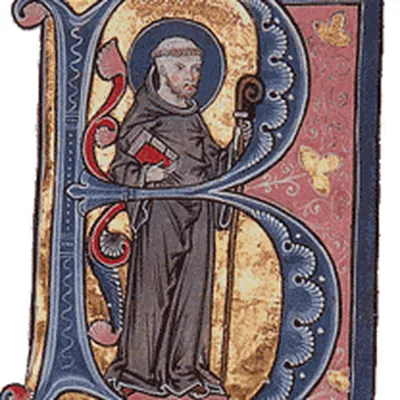 August 20
Saint Bernard of Clairvaux
Cistercian monk, founder and abbot of Clairvaux, Doctor of the Church known as the Mellifluous Doctor
-
 August 8
Saint Dominic
Castilian priest, founder of the Order of Preachers, known as the Dominicans
-
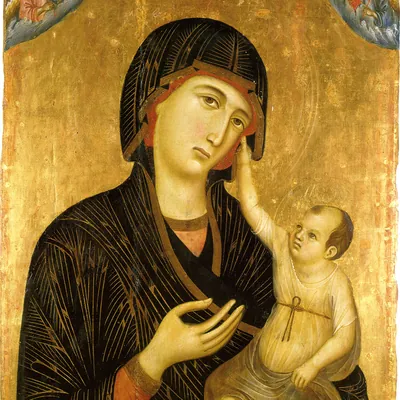 August 15
The Blessed Virgin Mary
mother of Jesus and Mother of God, honored by the Church as the first of the saints
Frequently asked questions
When is the Salve Regina sung?
In the evening, after Compline, from Pentecost to Advent. Other Marian antiphons take its place in the other seasons of the year, such as the Regina Caeli during the Easter season.
Does it have to be said in Latin?
No, the English version has the same value. Many people like to sing it in Latin because the Gregorian melody is so well known.
Other classic prayers
- Our Father (The Lord's Prayer)
- Hail Mary
- Glory Be
- Apostles' Creed
- The Angelus
- The Memorare
- Regina Caeli
- Act of Contrition
- Guardian Angel Prayer
- Come, Holy Spirit
- We Fly to Thy Patronage (Sub Tuum Praesidium)
- Magnificat
- Grace Before Meals
- How to Pray the Rosary
- Litany of the Blessed Virgin Mary (Litany of Loreto)
- Veni Creator Spiritus (Come, Creator Spirit)
- Anima Christi (Soul of Christ)
- Te Deum
- Prayer of Abandonment of Charles de Foucauld
- Peace Prayer (attributed to Saint Francis)
- Chaplet of Divine Mercy
- Act of Faith
- Act of Hope
- Act of Love (Act of Charity)
- Prayer to Saint Michael the Archangel
- Prayer to Saint Joseph by Pope Leo XIII
- Eternal Rest (Prayer for the Dead)
- O Mary, Conceived Without Sin (Miraculous Medal)
- Let Nothing Disturb You (Saint Teresa of Avila)
- Take, Lord, Receive (Suscipe of Saint Ignatius)
- Act of Spiritual Communion (Saint Alphonsus Liguori)
- O My Queen, O My Mother (Consecration to Mary)
- Tantum Ergo
- Prayer of Saint Nicholas of Flüe
- Morning Offering
- De Profundis (Psalm 130)
- Stations of the Cross (Way of the Cross)
- Stabat Mater
- Litany of the Saints