Liturgical season
The Season of Advent
Advent 2026 begins on Sunday, November 29, 2026 and lasts until December 24. The four Sundays of Advent: November 29, December 6, December 13 (Gaudete) and December 20, 2026. The Sunday readings follow Year B.
Four weeks to prepare for Christmas. Advent opens the liturgical year and holds a double waiting: for the birth of Jesus in Bethlehem and for his return at the end of time.
- Length
- Four Sundays, from late November to December 24
- Color
- Violet, rose on the 3rd Sunday
- Upcoming dates
- from Sunday, November 29, 2026 to Thursday, December 24, 2026
- from Sunday, November 28, 2027 to Friday, December 24, 2027
- from Sunday, December 3, 2028 to Sunday, December 24, 2028

What does Advent mean?
The word comes from the Latin adventus, coming. During Advent, the Church remembers the long waiting of the people of Israel, who hoped for a Messiah, and it looks to the future: Christ will come again. The first two weeks look mainly toward that return; the last two prepare directly for Christmas.
It is a season of quiet joy rather than penance. The Gloria is no longer sung at Sunday Mass, so that it bursts out all the more on Christmas night, when it takes up the words of the angels at Bethlehem.
The figures of Advent
Three figures guide the readings. The prophet Isaiah announces a child who will be called "God with us." John the Baptist, in the desert, calls people to prepare the way of the Lord and change their lives. Finally Mary welcomes the angel's message and carries the awaited child: the Annunciation and the Visitation are read on the last Sunday.
Joseph has his place too. The Gospel of Matthew tells of his distress, then of the dream in which the angel asks him to take Mary into his home. He is the model of trusting expectation, made of deeds more than words.

The four Sundays of Advent
Each Sunday has its own tone in the readings. The first invites us to stay awake, for we know neither the day nor the hour. The second lets us hear John the Baptist. The third, called Gaudete Sunday ("Rejoice"), is a Sunday of joy: the priest may wear rose. The fourth prepares for Christmas with Mary and Joseph.
The feast of the Immaculate Conception, on December 8, always falls during Advent. In Lyon, France, it is the Festival of Lights, which began in 1852 when the people of the city set small candles in their windows in honor of the Virgin.

Traditions and customs
The Advent wreath holds four candles, often three violet and one rose, set on fir branches. One more is lit each Sunday. The custom began in Hamburg in 1839: the Lutheran pastor Johann Hinrich Wichern fixed candles on a cartwheel to help the children of his orphanage count the days.
The Advent calendar, with a window to open each day of December, also comes from Germany. Many families start setting up the Nativity scene during Advent and place the baby Jesus in it only on Christmas night. In Provence, in the south of France, people sow Saint Barbara's wheat on December 4: if it sprouts well before Christmas, the year will be good.
How to live Advent
A few simple gestures are enough: light the wreath candle as a family on Sunday and say a short prayer, read the Gospel of the day's Mass, go to confession before Christmas, give to those in need or visit someone who is alone. Rorate Masses, celebrated at dawn by candlelight alone, are a beautiful tradition now returning in many parishes.
Some pray the Christmas novena, known as the Saint Andrew prayer, from November 30 to December 24. Others pray a novena to the Immaculate Conception, from November 29 to December 7.
The Saint Andrew Christmas Novena
This traditional prayer is said fifteen times a day, from November 30, the feast of Saint Andrew, until Christmas. It can be spread out over the day. It carries an intention entrusted to the Child of Bethlehem.
Hail and blessed be the hour and moment
in which the Son of God was born of the most pure Virgin Mary,
at midnight, in Bethlehem, in piercing cold.
In that hour, vouchsafe, O my God,
to hear my prayer and grant my desires,
through the merits of our Savior Jesus Christ
and of his blessed Mother.
Amen.
Traditional prayer of Irish origin, which spread to France in the nineteenth century.
More prayers for this season
Feasts of this season
Saints to pray to during this season
-
 June 24
Saint John the Baptist
prophet and forerunner of Christ, who baptized Jesus in the Jordan and died a martyr
-
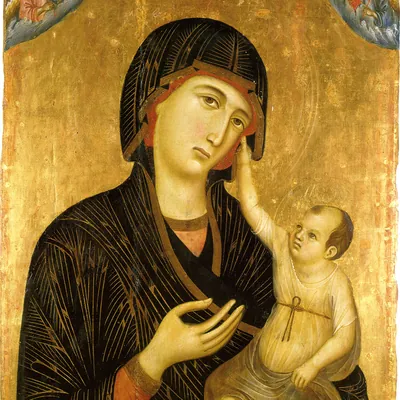 August 15
The Blessed Virgin Mary
mother of Jesus and Mother of God, honored by the Church as the first of the saints
-
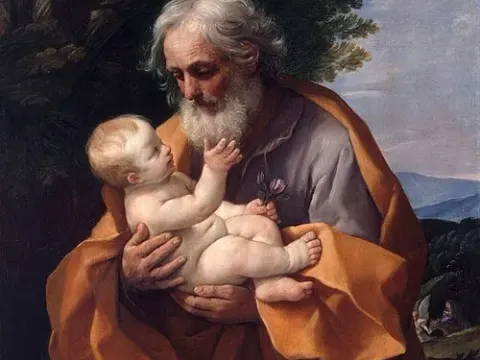 March 19
Saint Joseph
husband of the Virgin Mary, foster father of Jesus and patron of the universal Church
-
 September 23
Saint Elizabeth, Mother of John the Baptist
wife of the priest Zechariah, relative of the Virgin Mary and mother of Saint John the Baptist
-
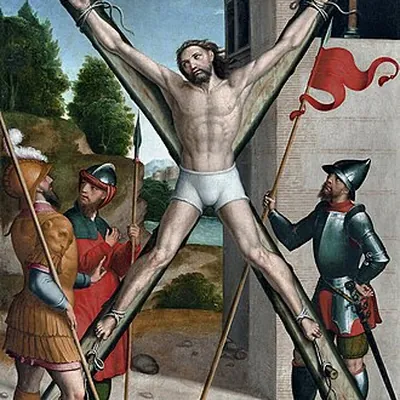 November 30
Saint Andrew the Apostle
fisherman of Bethsaida, brother of Simon Peter, the first disciple called by Jesus according to the Gospel of John, patron saint of Scotland
-
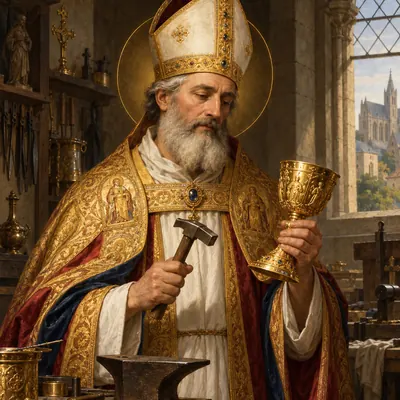 December 1
Saint Eligius (Saint Eloi)
goldsmith and adviser to King Dagobert, bishop of Noyon and Tournai, patron saint of metalworkers
-
 December 1
Saint Charles de Foucauld
converted officer and explorer, priest and hermit in the Sahara, universal brother killed in Tamanrasset
-
 December 3
Saint Francis Xavier
Jesuit priest from Navarre, companion of Ignatius of Loyola, missionary in India and Japan, patron saint of the missions
-
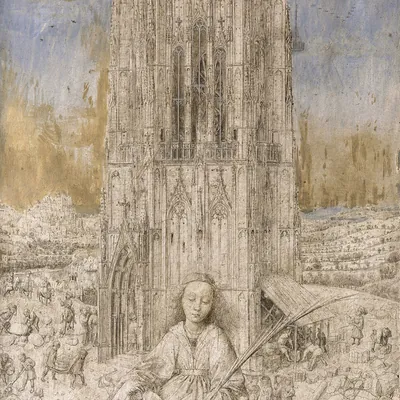 December 4
Saint Barbara, Virgin and Martyr
virgin and martyr of the early centuries, whose legend made her the patron saint of firefighters, miners and artillerymen
-
 December 7
Saint Ambrose of Milan
fourth-century Bishop of Milan, Father and Doctor of the Church, hymn writer and teacher of Saint Augustine
-
 December 9
Saint Juan Diego
Nahua man to whom Our Lady of Guadalupe appeared in 1531, the first Indigenous saint of the Americas
-
 December 12
Our Lady of Guadalupe
title of the Virgin Mary who appeared in 1531 to Juan Diego in Mexico, patroness of the Americas
-
 December 13
Saint Lucy of Syracuse
virgin and martyr of Syracuse under Diocletian, invoked for the light of the eyes
-
 December 14
Saint John of the Cross
Spanish Carmelite, reformer with Teresa of Ávila, mystical poet and Doctor of the Church
Novenas to pray during this season
A novena is prayed for nine days in a row, most often ending on the eve of the saint's feast.
- Novena to Saint John the Baptist
- Novena to the Blessed Virgin Mary Before the Assumption
- Novena to Saint Joseph
- Novena to Saint Elizabeth, Mother of John the Baptist
- Novena to Saint Andrew
- Novena to Saint Eligius
- Novena to Saint Charles de Foucauld
- Novena to Saint Francis Xavier
- Novena to Saint Barbara
- Novena to Saint Ambrose of Milan
- Novena to Saint Juan Diego
- Novena to Our Lady of Guadalupe
- Novena to Saint Lucy
- Novena to Saint John of the Cross
Frequently asked questions
When does Advent 2026 begin?
On Sunday, November 29, 2026. In 2027, it begins on Sunday, November 28.
How long is Advent?
Four Sundays, that is between 22 and 28 days depending on the day of the week Christmas falls on.
What is the liturgical color of Advent?
Violet, the color of waiting and conversion. On the third Sunday, called Gaudete Sunday, the priest may wear rose.
Why does Advent begin the liturgical year?
Because the Church's year follows the life of Christ, and that life begins with the waiting for his birth. The First Sunday of Advent is the Church's New Year.
Do you have to fast during Advent?
No, fasting is not required. Advent is a time of joyful preparation, though anyone may freely choose an effort or an act of sharing.
What prayer should I say during Advent?
The Saint Andrew Christmas Novena, said fifteen times a day from November 30 to Christmas, is the best known. The Angelus and the Magnificat also suit this Marian season very well.
The other seasons of the liturgical year
Liturgical year calendar · Christian feasts · Calendar of saints