Saint Pancras of Rome is a young Roman martyr who, according to tradition, died at the age of fourteen during the persecution of Emperor Diocletian, at the beginning of the 4th century. His tomb on the Via Aurelia very early became one of the great pilgrimage sites of Rome, and his cult spread across Europe, as far as England, where the London district of St Pancras still bears his name. In France and Central Europe he is also known as one of the "Ice Saints" of May. His feast day is May 12, shared with Saints Nereus and Achilleus.
Who was Saint Pancras?
Little is known for certain about Pancras. A young Christian of that name was put to death in Rome during the persecutions and buried on the Via Aurelia, west of the city, where his tomb was venerated from ancient times.
Everything else comes from a Passion (an account of his martyrdom) written later, probably in the 6th century, and taken up in the 13th century by Jacobus de Voragine in The Golden Legend. This account has the value of an edifying tradition more than of a historical record.
According to this tradition, Pancras was born around 289 in Phrygia, in Asia Minor, into a noble and wealthy family. Orphaned, he was entrusted to his uncle Dionysius, with whom he moved to Rome. There both of them discovered the Christian faith and were baptized; the Passion credits their conversion to Pope Saint Caius.
"The heart of an old man"
The Passion tells that after his baptism Pancras was denounced and brought before Emperor Diocletian. The emperor, who was said to have known his father, tried to win him over gently: if he gave up this "folly," he would be treated like a son.
The boy replied that he was a child in body, but carried within him the heart of an old man, and that the power of Christ kept him from all fear. He refused to sacrifice to the gods and was beheaded. A Christian woman named Octavilla took up his body and buried it.
The story highlights both the fragility of a boy and the firmness of his faith. Pancras thus joins the company of the young martyrs of Rome, such as Saint Agnes and Saint Tarcisius.
The saint of oaths
In the 6th century, Bishop Gregory of Tours reported that people came to swear oaths at his tomb, and that anyone who swore falsely there was punished at once. From this comes Pancras's reputation as a protector of good faith and of the given word.
Saint Pancras in England
At the end of the 6th century, according to tradition, relics of Pancras traveled with the mission sent to England by Pope Saint Gregory the Great, and Saint Augustine of Canterbury dedicated a church to him. The London district of St Pancras, with its famous railway station, takes its name from a very old church dedicated to him, St Pancras Old Church.
Why is Saint Pancras the patron saint of children?
Because he gave his life for Christ at the age of fourteen, Pancras has long been a patron of children and teenagers. Young people facing mockery or pressure because of their faith find in him a companion of their own age. In Corsica he was the saint of shepherds; elsewhere he was invoked for domestic animals or against rheumatism. His tomb's link with oaths also made him a patron of honesty and of keeping one's promises.
One of the "Ice Saints"
In France, Pancras forms with Saint Mamertus (May 11) and Saint Servatius (May 13) the trio of the "Ice Saints." Gardeners knew from experience that late frosts could still occur at that time of year, and old sayings advised waiting until these days had passed before planting tender crops. This popular tradition has kept his name alive in the countryside.

Symbols and how to recognize Saint Pancras in art
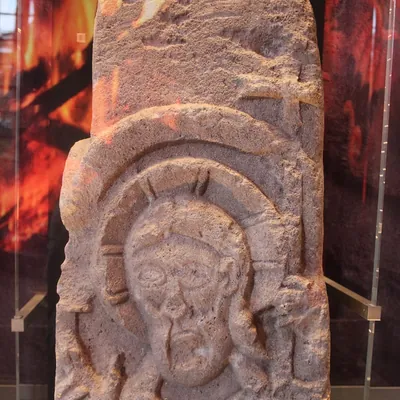
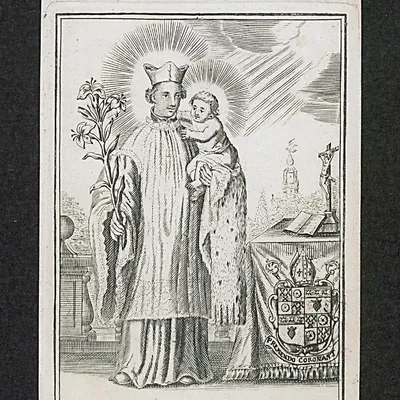
Saint Pancras is shown as a young man, often dressed as a Roman soldier, holding a sword and the palm of martyrdom. Older paintings show him as a youth with his eyes raised to heaven. The statue in Barcelona Cathedral is a well-known example of the soldier type.
What his holiness teaches us
What history guarantees about Pancras fits in a few words: a young Christian chose to die rather than deny Christ, and the Church of Rome lovingly kept his tomb. Tradition added words and details that say the same thing: faith does not depend on age. Catholics pray to him for children and teenagers, for young people who face ridicule because of their faith, and for faithfulness to one's word. Parents and godparents can also entrust to him a child preparing for First Communion or Confirmation.
To pray with him, see the prayer to Saint Pancras and the novena to Saint Pancras.

Where to pray to Saint Pancras
- Rome: the Basilica of San Pancrazio, on the Janiculum Hill, built over his tomb.
- London: St Pancras Old Church, one of the oldest Christian places of worship in England.
- Castellare-di-Casinca (Corsica, France): the church of Saint Pancras and its feast on May 12.
- Villar-Saint-Pancrace (Hautes-Alpes, France), of which he is the patron.
Discover also
- Saint Tarcisius, another young martyr of Rome.
- Saint Agnes, a teenage martyr venerated on the Via Nomentana.
- Saint Sebastian, a soldier martyred in the same persecution.
- Saint Servatius, another of the Ice Saints of May.
- Saint Caius, the pope to whom tradition credits his conversion.