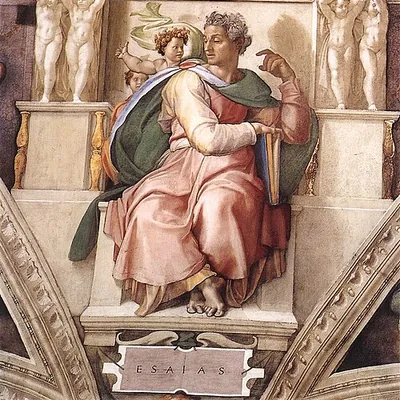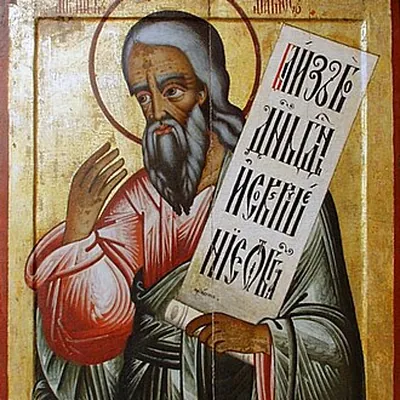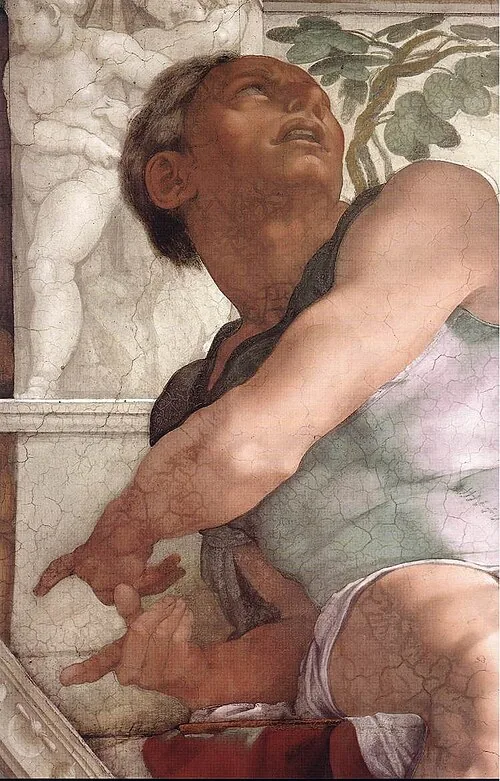
Jonah is the prophet who said no to God. Sent to preach in Nineveh, the great enemy city of Israel, he fled in the opposite direction, on a ship bound for Tarshish. Thrown into the sea during a storm, he was swallowed by a great fish and spent three days and three nights in its belly, from where he cried out to God. Cast up on the shore, he finally went to Nineveh, which repented and was spared by God. Jesus made him a sign of his own resurrection. The Roman Martyrology commemorates him on September 21.
Who was the prophet Jonah?
A prophet named Jonah, son of Amittai, from Gath-hepher in Galilee, is mentioned under King Jeroboam II in the eighth century BC (2 Kings 14:25). The book of Jonah, one of the twelve minor prophets, tells his story as a short tale full of humor and depth, probably written later, after the exile. His name means "dove." His message is universal: God also loves Israel's enemies and wants all to repent and live.
The flight and the storm
"The word of the Lord came to Jonah: Set out for the great city of Nineveh, and preach against it; for their wickedness has come before me" (Jonah 1:1-2). Jonah sets out, but to flee to Tarshish, at the other end of the known world. The Lord hurls a great wind upon the sea. The terrified sailors each pray to their god; Jonah is asleep below deck. He finally admits that he is fleeing the Lord and tells them: "Throw me into the sea." As soon as he is thrown in, the sea grows calm, and the sailors come to fear the true God.
Three days in the belly of the fish
"The Lord sent a great fish to swallow Jonah, and he remained in the belly of the fish three days and three nights" (Jonah 2:1). The Bible does not speak of a whale but of a "great fish"; tradition made it a whale. From the depths of his distress Jonah prays: "Out of my distress I called to the Lord, and he answered me... You brought my life up from the pit, O Lord, my God." The fish spews him out onto dry land.
Nineveh repents
A second time, God sends him to Nineveh. This time Jonah obeys. He walks through the city crying out: "Forty days more and Nineveh shall be overthrown!" Against all expectations, the people believe God, fast and put on sackcloth, from the greatest to the least; the king himself sits in the ashes. "When God saw by their actions how they turned from their evil way, he repented of the evil he had threatened to do to them" (Jonah 3:10).
The lesson of the gourd plant
Jonah, for his part, is furious: he knew that God is "gracious and merciful, slow to anger, abounding in kindness," and he would have liked to see Nineveh punished. He sits in the shade of a gourd plant that God makes grow, then wither. Jonah grieves over the plant. God answers him: "You are concerned over the gourd plant... And should I not be concerned over the great city of Nineveh, in which there are more than a hundred and twenty thousand persons?" (Jonah 4:10-11). The book ends on this question, left to the reader.
Why do Catholics honor the prophet Jonah?
Jonah is like us: he runs away, he sulks, he would like a God less merciful toward others. But God does not let him go, and even makes use of his disobedience. Jesus speaks of "the sign of Jonah": "Just as Jonah was in the belly of the whale three days and three nights, so will the Son of Man be in the heart of the earth three days and three nights" (Matthew 12:40). The first Christians painted Jonah in the catacombs as an image of the resurrection. People pray with him in distress, to answer a call they are running from, and for the conversion of sinners.
To pray with him, read the prayer with the prophet Jonah, or follow the novena with the prophet Jonah.
Discover also
- The prophet Elijah, another prophet who once wanted to flee his mission.
- The prophet Jeremiah, who also tried to resist God's call.
- Noah, saved from the waters in the ark.
- Job, who also cried out to God from the depths of distress.