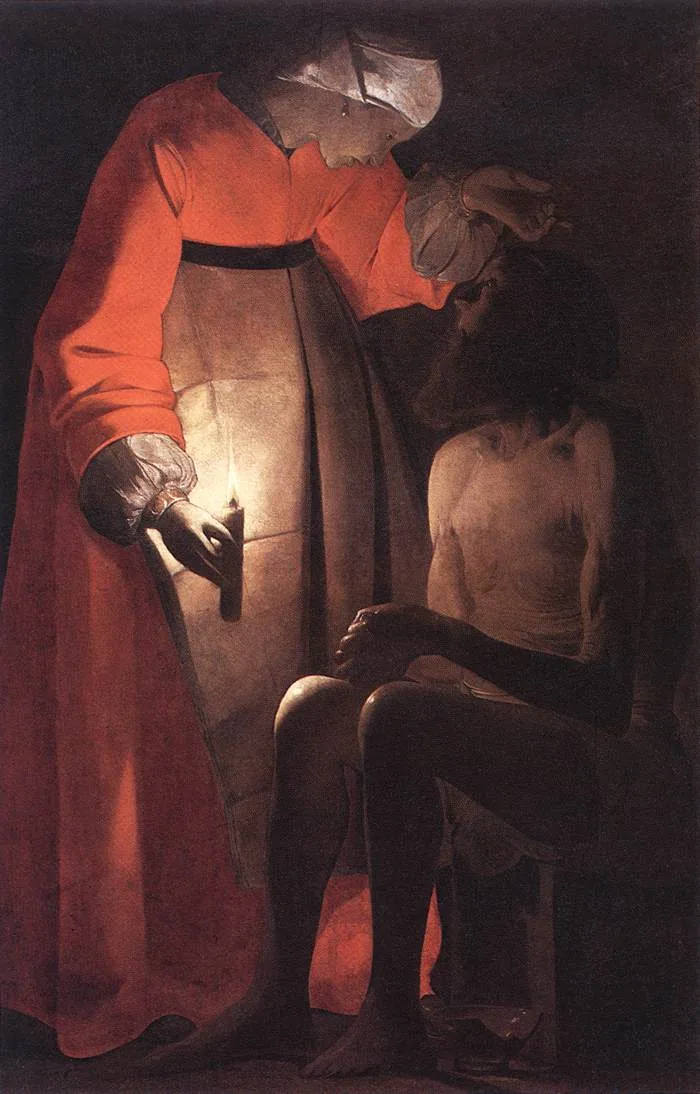
Job is the hero of the biblical book that bears his name, one of the masterpieces of world literature. A righteous and wealthy man of the land of Uz, he loses in a few days his flocks, his servants and his ten children, then is struck by an illness that covers him with sores. He does not curse God: "The Lord gave, the Lord has taken away; blessed be the name of the Lord!" But he dares to cry out his suffering and to question God. A model of patience and faith in trial, he is honored by the Church as a saint of the Old Testament; the former Roman Martyrology commemorated him on May 10.
Who was Job?
The book of Job does not present itself as a historical chronicle but as a great wisdom poem, probably written around the fifth century BC. Its hero is not even an Israelite: he lives in the land of Uz, to the east. He is "blameless and upright, fearing God and avoiding evil" (Job 1:1). The book asks the hardest question of all: why does the righteous person suffer? It refuses ready-made answers, and that is its strength.
The test
The prologue stages a conversation in heaven: the Satan, the accuser, claims that Job loves God only because he has been showered with blessings. God allows the test. In a single day, messengers follow one another: the oxen and donkeys are stolen, the sheep burned, the camels raided, and a storm brings down the house where his sons and daughters were feasting. Job tears his cloak, shaves his head, falls to the ground and worships: "Naked I came forth from my mother's womb, and naked shall I go back there. The Lord gave and the Lord has taken away; blessed be the name of the Lord!" (Job 1:21).
Then Job is struck with severe sores from the soles of his feet to the crown of his head. Sitting on the ashes, he scrapes himself with a potsherd. His wife tells him: "Curse God and die!" He answers: "We accept good things from God; should we not accept evil?"
Job's cry and his friends
Three friends, Eliphaz, Bildad and Zophar, come to console him. At first they stay seven days in silence beside him, which is their finest gesture. Then Job curses the day of his birth, and his friends speak up: if you suffer, it is because you have sinned; repent and God will restore your happiness. Job rejects this explanation: he knows he has not deserved such misfortune. He protests, demands a trial with God, cries out his incomprehension. But in the depths of his night he also says: "I know that my redeemer lives" (Job 19:25), words the Church reads at funerals.
God answers from the whirlwind
At the end, God speaks to Job "out of the storm." He gives him no explanation but makes him contemplate creation: "Where were you when I founded the earth?" The stars, the sea, the wild animals all speak of a wisdom beyond human understanding. Job falls silent: "By hearsay I had heard of you, but now my eye has seen you" (Job 42:5). God proves the friends wrong, for they spoke badly of him, and Job right, for he was honest. Job prays for his friends, and God gives him back twice what he had.
Why do Catholics honor Job?
Job teaches that we can tell God all our suffering, even our revolt, without ceasing to believe. He also shows that suffering is not a punishment, contrary to what his friends thought. Christians see in him a figure of Christ, the righteous one who suffers, and an answer that comes only from the cross. People pray with Job for the sick, for those who have lost everything, for patience in trial and to know how to accompany those who suffer, first of all by a silent presence.
To pray with him, read the prayer with Job in times of trial, or follow the novena with Job.
Discover also
- King David, who also cries out his distress to God in the psalms.
- The prophet Jeremiah, another righteous man in trial who dared to voice his complaint.
- Saint Bernadette, who lived through illness in faith.
- Saint Padre Pio, who united his sufferings with those of Christ.