Saint Cedd was an Anglo-Saxon monk from Northumbria, trained by the Irish monks of Lindisfarne, who became in the seventh century the apostle of the East Saxons, in what is now Essex. A bishop and founder of monasteries at Bradwell-on-Sea, Tilbury and Lastingham, he served as interpreter at the famous Synod of Whitby in 664 and died of the plague that same year. The brother of Saint Chad, he is celebrated on October 26.
Who was Saint Cedd?
Almost everything we know about Cedd comes from Saint Bede the Venerable, who devotes several chapters of his Ecclesiastical History of the English People to him. Bede drew his information from the monks of Lastingham, the monastery Cedd founded, which gives his account great value.
Cedd was born in Northumbria, the great kingdom of the north of England. He had three brothers, Chad, Cynibil and Caelin, who all became priests; Chad would also become a bishop and a saint. The four boys were trained at Lindisfarne, the island monastery founded by Saint Aidan, an Irish monk who had come from Iona. There they received the tradition of the Celtic monks: prayer, self-denial, the study of Scripture and itinerant preaching.
Missionary to the Middle Angles
In 653, Peada, king of the Middle Angles, became a Christian in order to marry a daughter of the Christian king Oswiu of Northumbria. He asked for priests to teach his people. Cedd was sent with three companions, Adda, Betti and the Irishman Diuma. Their preaching bore fruit, and many asked for baptism.
Bishop of the East Saxons
Soon afterward, Sigeberht, king of the East Saxons, who had been baptized at Oswiu's court, asked for missionaries in turn. Cedd was chosen. After a first successful mission, he was consecrated bishop at Lindisfarne by Bishop Finan.
He returned to Essex, where he founded churches, ordained priests and deacons, and established two monasteries: one at Ythancaestir, today's Bradwell-on-Sea, and the other at Tilbury, on the Thames. The little chapel of Bradwell, built on the walls of an old Roman fort, still stands today.
Bede reports a dramatic episode. A nobleman of the court was living in an unlawful marriage; Cedd excommunicated him and forbade anyone to eat at his house. King Sigeberht ignored the ban. Shortly afterward, this nobleman and his brother murdered the king, blaming him for being too forgiving toward his enemies. Cedd later baptized Sigeberht's successor, Swithhelm.
The founder of Lastingham
Cedd kept his ties with his native Northumbria. King Œthelwald of Deira gave him land to found a monastery where he could pray and where he would be buried. Cedd chose a wild spot in the moors of Yorkshire, at Lastingham.
Following the custom of Lindisfarne, he spent an entire Lent there in fasting and prayer to consecrate the place before building on it. He later entrusted the monastery to his brother Chad.
The Synod of Whitby and his death
In 664, King Oswiu gathered a synod at Whitby, in the monastery of Saint Hilda, to decide between Irish and Roman customs, especially the date of Easter. Cedd, who knew both traditions and spoke the languages of both parties, served as interpreter. The synod adopted the Roman customs, and Cedd accepted its decision.
That same year, a great plague struck England. Cedd died of it at Lastingham on October 26, 664. Bede tells that when news of his death reached Essex, about thirty of his monks came to Lastingham to live and die near his tomb; all of them died of the plague except one young boy. Cedd was first buried in the open air, and later in the stone church built there.
Why is Saint Cedd honored in Essex and Yorkshire?
Cedd has no official patronage, but two regions of England keep his memory alive. In Essex he was the first bishop of the East Saxons and planted the Church there; the Anglican cathedral of Chelmsford is dedicated to Saint Mary, Saint Peter and Saint Cedd. In Yorkshire, Lastingham was his chosen place of prayer and his burial place. Christians of different traditions in England look to him as a missionary and a builder of unity.
What can we learn from Saint Cedd?
Cedd was a bridge between peoples and traditions. Formed by Irish monks, he brought the Gospel to the East Saxons, then helped the Church in England find its unity at Whitby by accepting a decision that changed the customs he had grown up with. His little chapel at Bradwell, still standing after more than thirteen centuries, bears witness to the strength of his work. He can be invoked for missionaries, for Christian unity and for the Church in England.
Symbols and how to recognize Saint Cedd in art
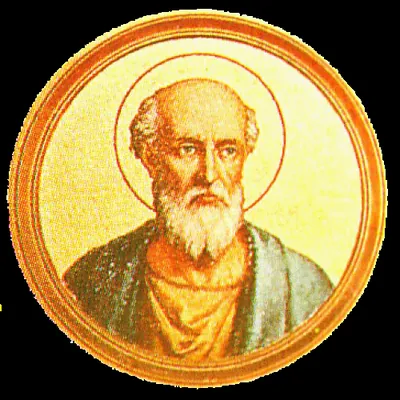
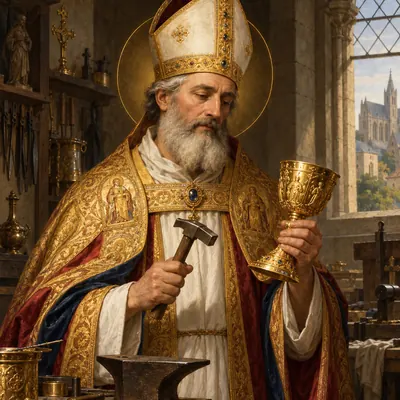
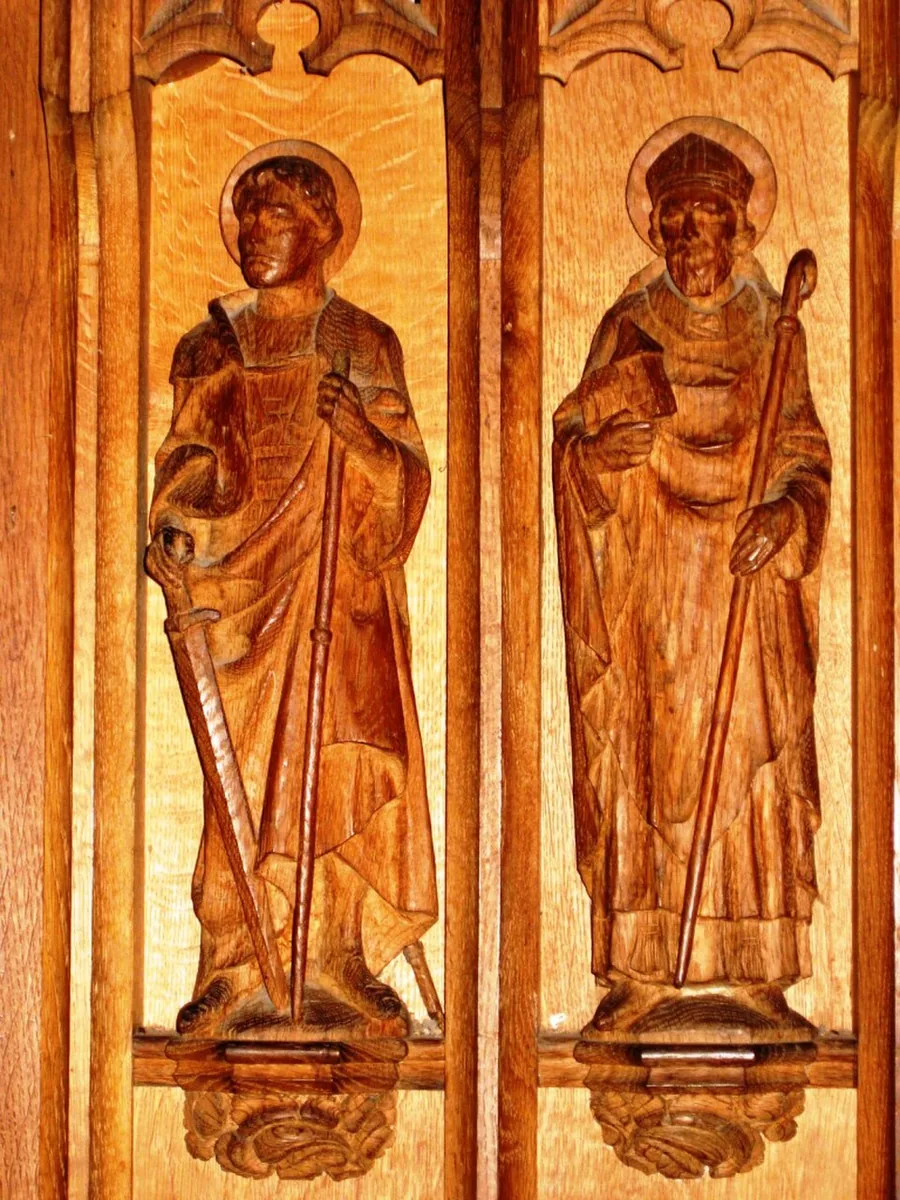
Cedd is generally shown as a bishop, with miter and crozier, sometimes holding a small church that recalls the chapel of Bradwell or the monastery of Lastingham. He is often depicted in modern stained glass in Essex and Yorkshire, and sometimes alongside his brother Chad.
Where to pray to Saint Cedd
- Bradwell-on-Sea (Essex): the Chapel of Saint Peter-on-the-Wall, the last remnant of his monastery, which still draws pilgrims.
- Lastingham (North Yorkshire): Saint Mary's Church and its crypt, on the site of his monastery and tomb.
- Chelmsford (Essex): the Anglican cathedral dedicated to Saint Mary, Saint Peter and Saint Cedd.
To pray with him, Saintspedia offers a prayer to Saint Cedd and a novena to Saint Cedd ending on October 26.
Discover also
- Saint Chad, his brother, bishop of the Mercians.
- Saint Aidan of Lindisfarne, his teacher.
- Saint Hilda of Whitby, the abbess who hosted the synod of 664.
- Saint Wilfrid, defender of the Roman customs at Whitby.
- Saint Bede the Venerable, who told his story.