Monk: definition
A monk is a man who has left ordinary life to devote himself entirely to God in prayer, work and common life, most often in a monastery and under a monastic rule. He commits himself to it through religious vows taken for life.
Where does the word monk come from?
The word comes from the Greek monachos, built on monos, "alone" or "unified." A monk is one who wants to live for God alone, with an undivided heart. He may live in community (he is then called a cenobite) or in solitude, like the hermit.
Christian monasticism was born in the 3rd century in the deserts of Egypt. Saint Anthony the Great, who withdrew there around 270 after giving his goods to the poor, is often called the "father of monks." In the West, Saint Martin of Tours founded at Ligugé, around 361, the first known monastery in Gaul.
The life of a monk today
A monk's day is shaped by the Liturgy of the Hours: the brothers gather in church several times a day, from the night office to Compline, by way of Vespers and Mass. Between these times of prayer come work (farm, workshop, welcoming guests, study) and lectio divina, the prayerful reading of the Bible.
A monk is not necessarily a priest: many remain brothers all their lives. Among the Benedictines, monks are given the title "Dom," short for the Latin dominus, lord.
Monks who became saints
The history of the Church is full of monks: Saint Benedict of Nursia, father of Western monasticism, Saint Bernard of Clairvaux, who spread the influence of the Cistercians, and Saint Bede the Venerable, a scholarly monk of Northumbria. Pope Saint Gregory the Great had himself been a monk before his election.
Saints to know
-
 January 17
Saint Anthony the Great
fourth-century Egyptian hermit, regarded as the father of Christian monasticism
Withdrawn into the Egyptian desert, he is considered the father of all monks.
-
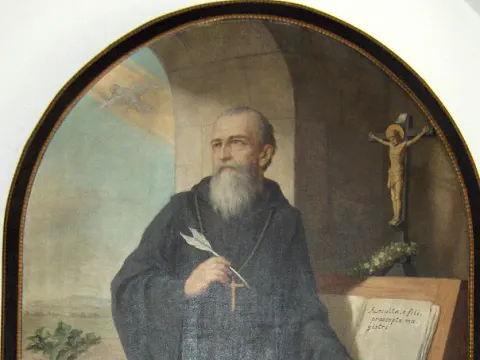 July 11
Saint Benedict of Nursia
father of Western monasticism, author of the Benedictine Rule and patron saint of Europe
His Rule has shaped the life of Western monks for fifteen centuries.
-
 November 11
Saint Martin of Tours
Roman soldier who became a monk and bishop of Tours, apostle of the countryside of Gaul, patron saint of soldiers
Founder of Ligugé and then Marmoutier, the first monasteries of Gaul.
-
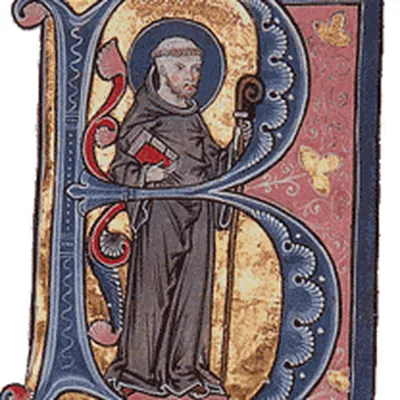 August 20
Saint Bernard of Clairvaux
Cistercian monk, founder and abbot of Clairvaux, Doctor of the Church known as the Mellifluous Doctor
Cistercian monk and abbot of Clairvaux, he attracted hundreds of vocations.
Frequently asked questions
What is the difference between a monk and a religious?
Every monk is a religious, but not every religious is a monk. A monk lives with stability in a monastery, whereas other religious, such as the Franciscans or the Jesuits, are sent on mission in the world.
Can a monk leave his monastery?
Yes, but it is rare and serious: he must ask the Holy See to be released from his vows. For a simple trip, the permission of his abbot is enough.
What is a woman monk called?
She is called a nun. The word refers to a contemplative religious woman who lives in a monastery, within the cloister.