Benedictines: definition
The Benedictines are the monks and nuns who live according to the Rule of Saint Benedict of Nursia, written in the 6th century. United in the Order of Saint Benedict (OSB), they lead a life of prayer, work and hospitality in self-governing abbeys.
From Benedict to Cluny
Born in Nursia around 480, Benedict first lived as a hermit at Subiaco, then around 529 founded the Abbey of Monte Cassino, where he wrote his Rule. His sister, Saint Scholastica, led a similar life with nuns. Pope Saint Gregory the Great made his life known, and monks such as Saint Augustine of Canterbury and Saint Boniface carried this way of life to England and Germany.
In 910 the Abbey of Cluny was founded in Burgundy; under abbots such as Saint Odo, Saint Odilo and Saint Hugh it became the head of a vast network of monasteries. The Benedictines copied ancient manuscripts, cleared land and developed Gregorian chant, which led Saint Paul VI to proclaim Saint Benedict patron of Europe in 1964.
The Benedictines today
There is no single superior general: each abbey is self-governing, and the abbeys are grouped into congregations, which since 1893 have been federated in a confederation headed by an abbot primate in Rome. In France, Solesmes, refounded in 1833 by Dom Guéranger, is famous for its Gregorian chant. Benedictines wear a black habit and add to their vows the vow of stability in their monastery.
Their day follows the balance Benedict desired between the Liturgy of the Hours, lectio divina and work. You can entrust yourself to their founder through the novena to Saint Benedict or wear the Saint Benedict medal.
Saints to know
-
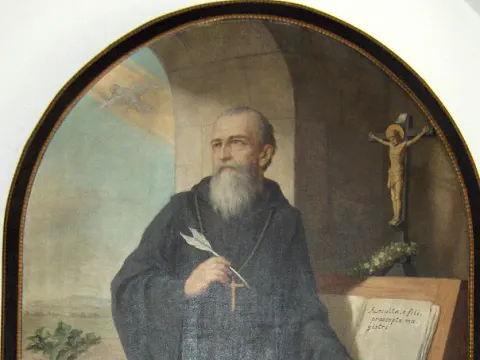 July 11
Saint Benedict of Nursia
father of Western monasticism, author of the Benedictine Rule and patron saint of Europe
Founder and lawgiver of the Benedictines, patron of Europe.
-
 January 1
Saint Odilo of Cluny
fifth abbot of Cluny, promoter of the Peace of God and founder of the commemoration of All Souls
Abbot of Cluny at the height of its influence.
-
 April 21
Saint Anselm of Canterbury
monk of Bec, archbishop of Canterbury, Doctor of the Church and father of scholasticism
Monk of Bec, archbishop and Doctor of the Church.
-
 September 17
Saint Hildegard of Bingen
twelfth-century Benedictine abbess from the Rhineland, visionary, composer and Doctor of the Church
Benedictine abbess, mystic and Doctor of the Church.
-
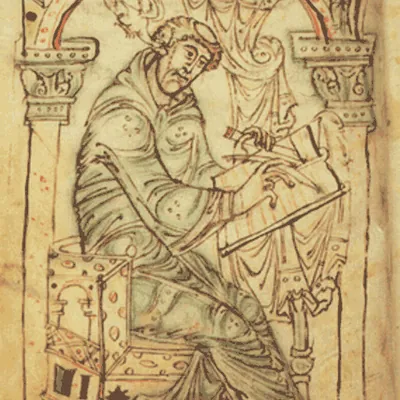 May 25
Saint Bede the Venerable
monk of Jarrow, historian of Christian England and Doctor of the Church
Benedictine monk, historian of Christian England.
Frequently asked questions
What is the difference between Benedictines and Cistercians?
Both follow the Rule of Saint Benedict, but the Cistercians, who arose in 1098, sought to live it with greater simplicity and austerity. Today they form separate orders.
What does OSB mean?
This Latin abbreviation, Ordo Sancti Benedicti, means Order of Saint Benedict. Monks add it after their names.
Who is the most famous Benedictine saint?
After Saint Benedict himself, people often name Saint Anselm, Saint Bede the Venerable or Saint Hildegard of Bingen, all three Doctors of the Church.