Abbot: definition
An abbot is the superior of an abbey of monks, elected by his brothers to guide them; his female counterpart is the abbess, who governs an abbey of nuns. In France, the word "abbé" is also used informally for any diocesan priest.
A father for the community
The word comes from the Aramaic abba, "father," the very word Jesus used when praying to God. According to the Rule of Saint Benedict, the abbot "holds the place of Christ" in the monastery: he must teach more by example than by words, adapt himself to each person's character and give an account to God for the souls entrusted to him.
The abbot is elected by the professed monks of the community, for a term that varies by congregation: for life, until an age limit, or for a set mandate. He then receives a solemn blessing and insignia close to those of a bishop: the ring, the crosier and often the miter (see miter and crosier).
The abbess
The abbess has the same spiritual authority over a community of nuns and also receives a blessing and a crosier. Some played a major role: Saint Hilda of Whitby hosted the synod of 664, Saint Hildegard of Bingen founded two monasteries and corresponded with popes and emperors, and Saint Gertrude of Nivelles and Saint Odile were abbesses as early as the 7th century.
Why are French priests called "abbé"?
Under the French Old Regime, many clerics held the title of abbé without living in a monastery, and the custom spread to all secular priests. In France a parish priest is still sometimes called "l'abbé," but this is only a courtesy title, unrelated to the office of a monastic abbot.
Saints to know
-
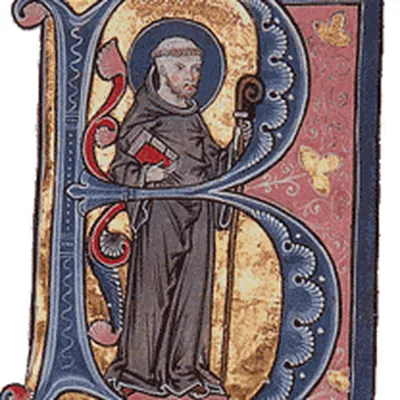 August 20
Saint Bernard of Clairvaux
Cistercian monk, founder and abbot of Clairvaux, Doctor of the Church known as the Mellifluous Doctor
Abbot of Clairvaux from 1115 until his death in 1153.
-
 January 1
Saint Odilo of Cluny
fifth abbot of Cluny, promoter of the Peace of God and founder of the commemoration of All Souls
Abbot of Cluny, he introduced the commemoration of all the faithful departed in his monasteries.
-
 September 17
Saint Hildegard of Bingen
twelfth-century Benedictine abbess from the Rhineland, visionary, composer and Doctor of the Church
A Benedictine abbess of many talents and a Doctor of the Church.
-
 November 17
Saint Hilda of Whitby
Anglo-Saxon princess who became abbess of the double monastery of Whitby, patron saint of education
Abbess of a double monastery where a decisive synod for England was held.
Frequently asked questions
What is the difference between an abbot and a prior?
The abbot governs a self-governing abbey. The prior leads a priory, or assists the abbot within an abbey, in which case he is called the claustral prior.
Does an abbot have to be a priest?
In most men's orders, yes: the abbot is chosen from among the monks who are priests. The abbess, of course, is not ordained: her authority comes from her office, not from the sacrament of ordination.
How do you address an abbot?
You say "Father Abbot" or "Father," and "Mother Abbess" or "Mother" for an abbess. In formal letters, an abbot is often addressed as "The Right Reverend."