Abbey: definition
An abbey is a self-governing monastery of monks or nuns, led by an abbot or an abbess. The word refers both to the community and to all its buildings: the abbey church, the cloister, the chapter house, the refectory and the cells.
Abbey, monastery, priory
Every abbey is a monastery, but not every monastery is an abbey. The title of abbey is reserved for an independent community, large and stable enough to elect its own abbot. A priory, by contrast, is often a smaller house led by a prior, sometimes attached to a mother abbey.
An abbey is organized around the cloister, a square courtyard lined with galleries that links the church, the chapter house where the community meets, the refectory and the workplaces. This plan, inherited from the early Middle Ages, is found from Ireland to Italy.
Great abbeys in history
The Abbey of Monte Cassino, founded around 529 by Saint Benedict, is the cradle of the Benedictines; his tomb can still be venerated there. In France, the Abbey of Lérins was founded in the early 5th century by Saint Honoratus on an island off Cannes. Cluny, founded in 910, became the head of a vast network of monasteries, and Clairvaux, founded in 1115 by Saint Bernard, spread the Cistercians across Europe.
For centuries, abbeys were centers of prayer but also of culture: monks copied manuscripts, cleared land, and welcomed pilgrims and the poor. The Rule of Saint Benedict asks that every guest be received "as Christ himself."
Visiting an abbey today
Many abbeys are still inhabited and welcome visitors to the services or for a spiritual retreat. Others, closed during the French Revolution or the Reformation, are now only monuments. You can find living communities in the places of worship pages of the site.
Saints to know
-
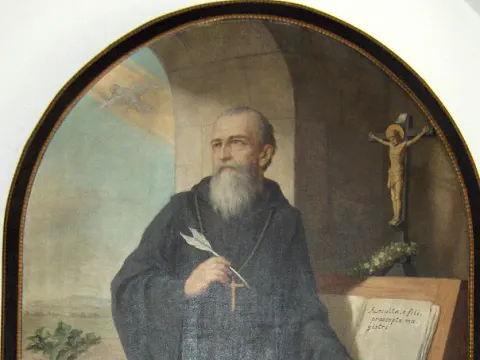 July 11
Saint Benedict of Nursia
father of Western monasticism, author of the Benedictine Rule and patron saint of Europe
Founder of the Abbey of Monte Cassino, the model for every abbey in the West.
-
 January 16
Saint Honoratus of Arles
founder of the monastery of Lérins around 400, then bishop of Arles from 427 to 430
Founder of the Abbey of Lérins, a nursery of saints and bishops.
-
 January 1
Saint Odilo of Cluny
fifth abbot of Cluny, promoter of the Peace of God and founder of the commemoration of All Souls
Abbot of Cluny for more than half a century, at the height of the abbey's influence.
-
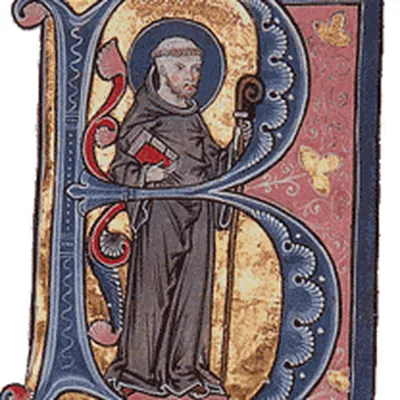 August 20
Saint Bernard of Clairvaux
Cistercian monk, founder and abbot of Clairvaux, Doctor of the Church known as the Mellifluous Doctor
First abbot of Clairvaux, whose monks spread throughout Europe.
Frequently asked questions
What is the difference between an abbey and a monastery?
Monastery is the general term for any house of monks or nuns. An abbey is a self-governing monastery led by an abbot or an abbess.
Are there still abbeys today?
Yes. Hundreds of abbeys and monasteries around the world are still home to Benedictine, Cistercian and other communities, not counting the many abbeys that survive only as historic monuments.
Can you stay overnight at an abbey?
Yes. Most living abbeys have a guesthouse that welcomes, for a few days, anyone who wishes to pray or to rest in silence.