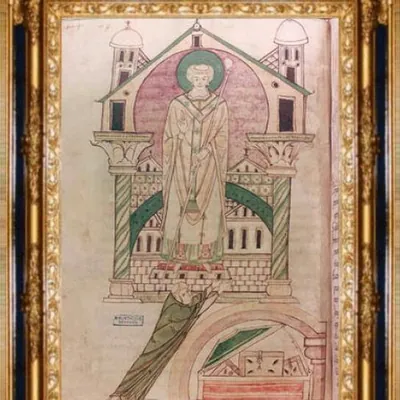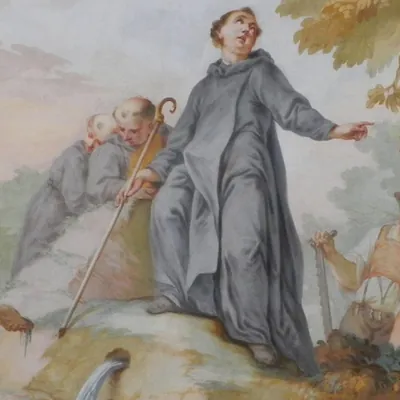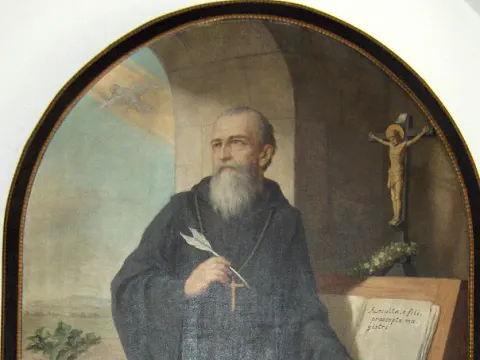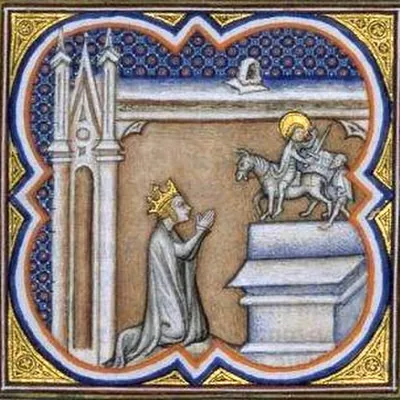
Saint Teilo (Teliaw in Welsh, Théleau, Telo or Thélo in Brittany) was a Welsh monk and bishop of the 6th century. Born in south Wales around 485, he is said to have spent several years in Brittany with Saint Samson of Dol, before returning home to found the monastery of Llandeilo Fawr, where he died around 560. Honored both in Wales and in Brittany, where he is shown riding a stag, he is celebrated on February 9.
Who was Saint Teilo?
Teilo belongs to the great generation of Breton and Welsh saints who, in the 5th and 6th centuries, traveled between Britain and Armorica, founding monasteries and parishes on both sides of the Channel. What we know of him comes from two late Latin Lives: one, in the form of a homily, is attributed to a priest named Geoffrey of Llandaff; the other is found in the Book of Llandaff, compiled in the 12th century under Bishop Urban. These texts were written above all to enhance the prestige of the Church of Llandaff, of which Teilo is one of the patrons. They must therefore be read with caution: the dates and several episodes remain uncertain, and Breton tradition has added its own legends. The Roman Martyrology commemorates him on February 9.
A Welsh monk with Saint Samson
According to the Lives, Teilo was the son of Ensic and Guenhaff and grew up in Wales, where he embraced monastic life; the details of his training vary from one account to another. When a severe epidemic, called the "yellow plague", struck the country in the middle of the 6th century, he crossed the sea with other monks. He was welcomed in Armorica by Saint Samson, at Dol. One of his sisters, Anauued, is said to have married Budic, a prince of Breton Cornouaille, which also explains his ties with the peninsula.
The two men became very close. Samson, often kept far from his monastery, especially at the court of the Frankish king Childebert I, entrusted it to Teilo during his absences. Tradition says that together they planted, in the valley of Dol, an orchard three miles long to feed the poor; a place called "the orchard of Teilo and Samson" still keeps the memory of it. Teilo is said to have stayed about seven years in Brittany.
Founder of Llandeilo and bishop of Llandaff
Back in Wales with his nephew Oudoceus, Teilo founded the monastery of Llandeilo Fawr, in Dyfed, in the south-west of the country. The very name Llandeilo means "the holy enclosure of Teilo". The Book of Llandaff makes him the successor of Saint Dubricius in the see of Llandaff, and Oudoceus his own successor. Historians debate this point, since the 12th-century authors had an interest in linking the great saints of south Wales to Llandaff. What remains is that Teilo was very probably an influential abbot and bishop, at the head of a network of churches: twenty-five places in Wales still bear his name.
He died around 560 in his monastery at Llandeilo. A charming legend tells that at his death three churches, Penalun, Llandeilo Fawr and Llandaff, disputed his body, and that the body multiplied so as to satisfy all three.
The saint on the stag in Brittany
In Brittany, the memory of Teilo took on very popular colors. According to one legend, he wanted to settle in the forest of Landeleau, but the dogs of the lord of Châteaugal attacked him. To make amends, the lord promised him all the land he could go around in a given time; a stag then appeared, and the saint, mounted on the animal, went around a vast estate. This is why he is almost always shown riding a stag. Another tradition, recorded in the 20th century, made him the patron of Breton horsemen. Some authors have seen in this image the legacy of ancient Celtic cults linked to the stag; this is a hypothesis that the sources do not allow us to verify.
It is not certain that Teilo himself ever came to Lower Brittany, but he has long been venerated there. Landeleau bears his name and keeps relics attributed to him; no one knows how they got there. The 14th-century church of Leuhan and the fine 16th-century chapel of Saint-Théleau at Plogonnec are dedicated to him in Finistère, as is a former chapel at Dinéault. The abbey of Daoulas keeps a 13th-century painted wooden statue of him, and the Grande Troménie of Locronan passes by a cross of Saint Teilo. He is also found at Saint-Thélo and Plédéliac (Côtes-d'Armor), and at Landaul and Montertelot (Morbihan), where local tradition credits him with defeating a dragon.

Devotion and relics
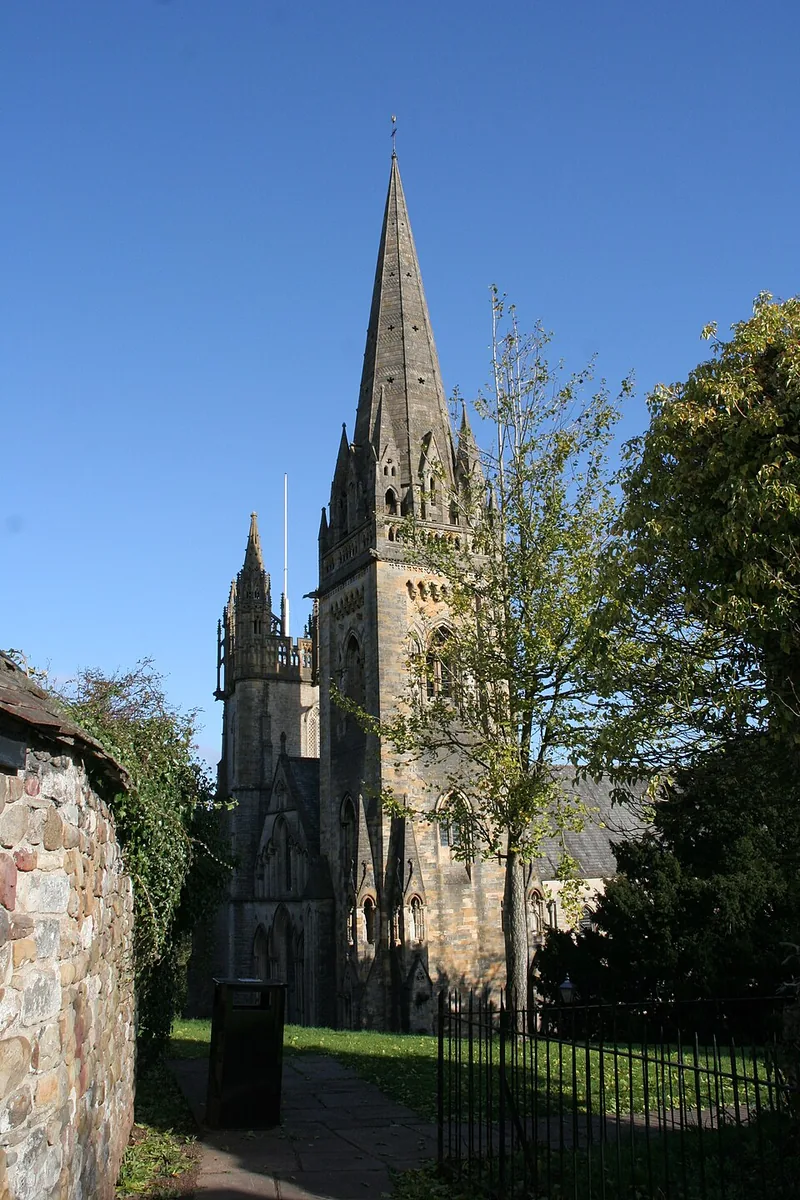
In Wales, Teilo is one of the patrons of Llandaff Cathedral, near Cardiff. His tomb is thought to be the one south of the high altar: during an inquiry in 1736, the remains of a bishop, recognizable by his crozier, were reportedly seen there, and the tomb was reopened in 1850. Near Llandeilo, a well of Saint Teilo once drew pilgrims, who drank its water, said to heal paralysis; at the end of the 19th century, the water was still drawn in a skull attributed to the saint. The well is no longer in use today.
In Brittany, the great expression of his cult is the troménie of Landeleau, attested as early as 1703: at Pentecost, a long procession, the "tour of the relics", carries the saint's reliquary through the countryside, and the faithful pass beneath the relics at each stage. At Plogonnec, the pardon of the chapel of Saint-Théleau is held in summer.
What can we learn from Saint Teilo?
Teilo is a man of both shores. Driven into exile by an epidemic, he found in Brittany a brother in faith, Saint Samson, and served him faithfully before returning home to build. The legend of the orchard planted for the poor expresses the spirit of these monks well: to pray, to work the land, and to feed the hungry. Behind the wonder of the stag, we find a pastor who traveled his country to found communities. You can pray to him for exiles and refugees, for friendship between the Celtic peoples, for rural parishes and for horse riders.
To pray with him, see the prayer to Saint Teilo and the novena to Saint Teilo.
Where to pray to Saint Teilo
- Landeleau (Finistère): the church of Saint-Théleau, which keeps his relics, and the Pentecost troménie.
- Plogonnec (Finistère): the chapel of Saint-Théleau, a listed historic monument, and its calvary.
- Leuhan (Finistère): the parish church dedicated to him.
- Llandeilo and Llandaff (Wales): the site of his monastery and the cathedral where his tomb is located.
Discover also
- Saint Samson of Dol, who welcomed him in Brittany and entrusted his monastery to him.
- Saint Dubricius of Llandaff, one of the fathers of the Welsh Church, whom he is said to have succeeded.
- Saint Oudoceus, his nephew, who went back with him from Brittany.