Vigil: definition
A vigil is a celebration held on the evening before, or during the night preceding, a great feast, to prepare for it by keeping watch in prayer. The most important is the Easter Vigil, during the night from Holy Saturday to Easter Sunday.
Keeping watch in expectation
The word comes from the Latin vigilia, wakefulness, the time when one stays awake. Jesus often invited his disciples to keep watch: "Stay awake, for you do not know on which day your Lord will come." The first Christians spent the night in prayer before the great feasts and the anniversaries of the martyrs, waiting for dawn.
The mother of all vigils is the Easter Vigil. It begins at night with the new fire and the Paschal candle, continues with many readings from the Bible, the singing of the Alleluia, baptisms and the Eucharist. It is the heart of the Easter Triduum.
Vigil Masses
Several great feasts have their own Mass on the evening before, with readings different from those of the day: Christmas, Pentecost, the Assumption, the Nativity of Saint John the Baptist and the feast of Saints Peter and Paul. For Christmas, the Church even offers four Masses: the Vigil Mass, Mass during the Night, Mass at Dawn and Mass during the Day.
By extension, the anticipated Mass on Saturday evening, which fulfills the Sunday obligation, is sometimes called a vigil Mass, because the liturgical day of a Sunday or a solemnity begins the evening before.
The vigils of monks
In monasteries, the night office is called Vigils, formerly Matins. Saint Benedict asks his monks to rise in the middle of the night to sing the psalms. Today, in the Liturgy of the Hours, this office has become the Office of Readings, which can be prayed at any hour of the day.
Saints to know
-
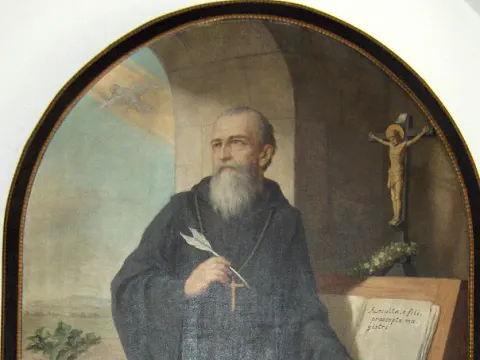 July 11
Saint Benedict of Nursia
father of Western monasticism, author of the Benedictine Rule and patron saint of Europe
His Rule sets the office of Vigils in the middle of the night.
-
 August 28
Saint Augustine of Hippo
bishop of Hippo, Father and Doctor of the Church, author of the Confessions
He called the Easter Vigil "the mother of all holy vigils."
Frequently asked questions
What is the difference between a liturgical vigil and a prayer vigil?
A vigil in the liturgical sense is an official celebration. A prayer vigil is freer: songs, adoration, testimonies, often organized on the eve of a pilgrimage or a feast.
Does Saturday evening Mass count for Sunday?
Yes. A Mass celebrated on Saturday evening fulfills the Sunday obligation, even if it follows the Sunday readings.
What time does the Easter Vigil begin?
It must begin after nightfall and end before dawn on Sunday. Parishes often celebrate it around 9 p.m., sometimes early in the morning.