Liturgy: definition
The liturgy is the official, public prayer of the Church: all the celebrations, such as the Mass, the sacraments and the Liturgy of the Hours, through which the Christian people worship God and receive his grace. It follows precise rites set by the Church.
Where does the word come from?
Liturgy comes from the Greek leitourgia, which among the Greeks meant a public service rendered to the people, such as maintaining a ship or organizing a festival. Christians took it up to speak of the service of God: in the liturgy, it is Christ himself who prays to his Father with his Church and sanctifies people.
The Second Vatican Council, in its 1963 constitution Sacrosanctum Concilium, presents it as the summit toward which all the Church's activity is directed and the source from which all her power flows. So it is not a mere ceremony: it is the place where God and his people meet.
One faith, many rites
The Catholic Church does not celebrate in the same way everywhere. The Roman Rite is the most widespread, but there are others: the Ambrosian Rite of Milan, named after Saint Ambrose, and the many rites of the Eastern Churches united with Rome, such as the Byzantine, Maronite or Coptic Rite. All express the same faith with different languages, chants and gestures.
In the Roman Rite, Saint Gregory the Great gave his name to Gregorian chant. Saint Pius V published in 1570 a missal common to the whole Latin Church, after the Council of Trent, and Saint Paul VI promulgated in 1969 the missal that came out of Vatican II, celebrated today in the vernacular.
The rhythm of time
The liturgy gives Christian time its rhythm: the day with the Liturgy of the Hours, the week with Sunday, the year with the liturgical year and its feasts. Each day, the calendar also offers one or more saints to celebrate, whom you will find in the saint of the day.
Saints to know
-
 September 3
Saint Gregory the Great
pope from 590 to 604, monk, Father and Doctor of the Church, apostle of the English
Tradition attributes to him the organization of the liturgical chant of Rome, called Gregorian.
-
 December 7
Saint Ambrose of Milan
fourth-century Bishop of Milan, Father and Doctor of the Church, hymn writer and teacher of Saint Augustine
He gave his name to the Ambrosian Rite, still celebrated in Milan.
-
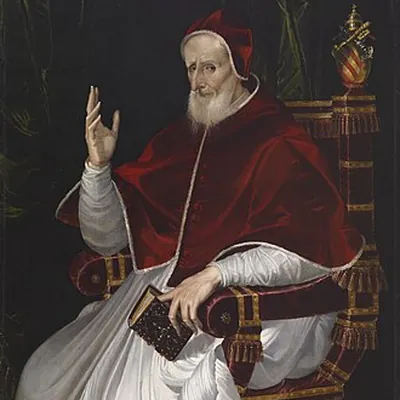 April 30
Saint Pius V
Dominican pope from 1566 to 1572, who put the Council of Trent into practice
In 1570 he published the Roman Missal that came out of the Council of Trent.
-
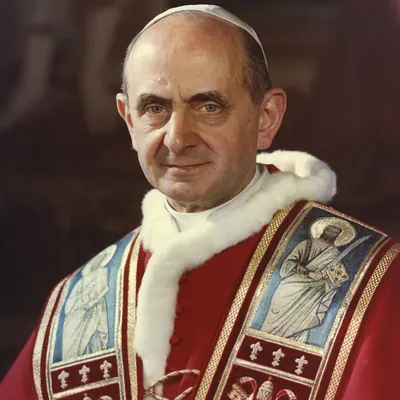 May 29
Saint Paul VI
pope from 1963 to 1978, who brought the Second Vatican Council to its close
He promulgated the liturgical reform called for by Vatican II.
Frequently asked questions
What is the difference between liturgy and personal prayer?
Personal prayer is free and intimate. The liturgy is the prayer of the whole Church, celebrated according to common texts and rites, even when only one believer takes part.
Who sets the rules for the liturgy?
The pope and the Holy See for the whole Latin Church, then the conferences of bishops and each bishop in his diocese, within the limits provided.
Is the liturgy still celebrated in Latin?
Yes, Latin remains the official language of the Roman Rite, but since Vatican II Mass is most often celebrated in the vernacular. Certain pieces, such as the Kyrie or the Agnus Dei, are still often sung in Latin or Greek.