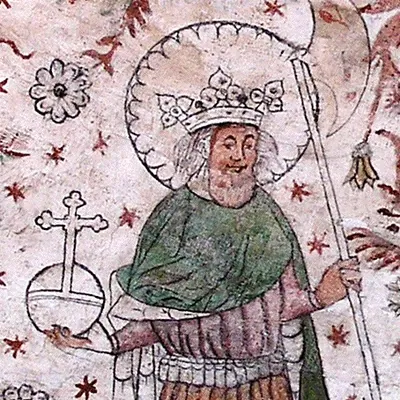
Saint Stephen IX, born Frederick of Lorraine, was pope for only eight months, from August 1057 to March 1058. A monk, abbot of Monte Cassino and a close collaborator of Pope Leo IX, he belonged to the generation of great 11th-century reformers who wanted a Church that was freer and more faithful to the Gospel. He died in Florence and is honored as a saint on March 29, although his cult has always remained discreet.
Who was Saint Stephen IX?
Frederick was born around 1020, probably at Dun-sur-Meuse, into a family of the highest nobility: he was the brother of Godfrey, Duke of Lower Lorraine. Destined for the Church, he became a canon and then archdeacon of Liège, one of the great intellectual centers of the time. There he discovered the spirit of reform that was then sweeping through Lorraine.
When Bruno, Bishop of Toul, became pope under the name of Leo IX in 1049, he called several trusted men from Lorraine to Rome. Frederick became his chancellor. He shared the pope's struggles, up to the unhappy campaign of 1053 against the Normans of southern Italy.
A note on his name: in some lists he is called Stephen X. The difference comes from an earlier Stephen, elected in 752, who died before being consecrated and is not always counted among the popes. Most references today call Frederick of Lorraine Stephen IX.

The legate of 1054
Early in 1054, Leo IX sent three legates to Constantinople, Frederick among them, to try to settle a conflict with Patriarch Michael Cerularius, who had closed the Latin churches of the city. The patriarch refused to receive them. In July 1054, the legates laid on the altar of Hagia Sophia a sentence of excommunication against him, even though the pope who had sent them was already dead. The patriarch replied with an anathema against the legates.
A symbolic date
This episode has remained in textbooks as the symbolic date of the separation between the Christian East and West, often called the Great Schism. Historians today point out that its immediate impact was more limited, and that relations between Rome and Constantinople continued for a long time afterward. In 1965, Pope Paul VI and Patriarch Athenagoras together lifted these mutual excommunications, a gesture of reconciliation that still marks Catholic and Orthodox relations.
Abbot of Monte Cassino, then pope
Back in Italy, Frederick became a monk at Monte Cassino, the abbey founded by Saint Benedict, and was elected its abbot in 1057. A few weeks later, when Pope Victor II died, the clergy and people of Rome elected him as successor. They did so without waiting for the approval of the German imperial court, then governed by Empress Agnes in the name of the young Henry IV. This choice was a turning point: the papacy was beginning to free itself from the control of the emperors.
A short but decisive pontificate
His pontificate was very brief, but it shaped the future. He named Peter Damian, a great ascetic and ardent reformer, cardinal bishop of Ostia. He surrounded himself with men who would mark the rest of the century, such as the monk Hildebrand, the future Gregory VII, who gave his name to the Gregorian Reform.
That reform aimed at a few simple goals: priests who live chastely, Church offices that are not bought and sold, and bishops and popes chosen by the Church rather than imposed by princes. Stephen IX did not have time to carry it out, but he put the right people in place.
A mysterious death in Florence
While staying in Tuscany, Stephen IX died in Florence at the end of March 1058. The ancient chronicles speak of illness; several more recent historians consider the possibility of poisoning, against the background of rivalries among the Roman aristocracy.
After the episode of the antipope Benedict X, the reformers had Nicholas II elected. In 1059, Nicholas reserved the election of the pope to the cardinals, a development Stephen IX had hoped for. This rule, refined over the centuries, is still the basis of the conclave today.
Why is Stephen IX honored as a saint?
Little is known of the inner life of Stephen IX, and the sources report neither miracles nor spiritual writings by him. His cult was never the subject of a formal canonization: it was handed down mainly in calendars linked to the Benedictine tradition. He has no traditional patronage.
What history remembers is a monk who became pope and placed his brief authority at the service of the freedom of the Church and the reform of the clergy. His life is a reminder that a person can bear fruit far beyond the length of his days. He can be invoked for the unity of Christians, for the pope and for those who serve the Church in positions of responsibility.
To pray with him, see the prayer to Saint Stephen IX and the novena to Saint Stephen IX.
Symbols and how to recognize Saint Stephen IX in art
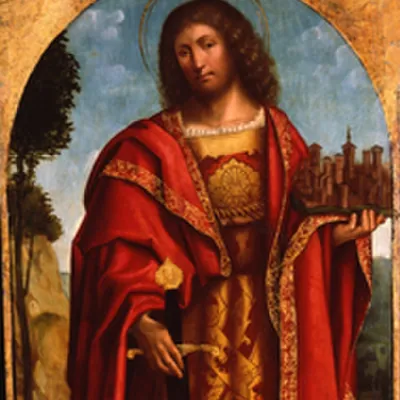
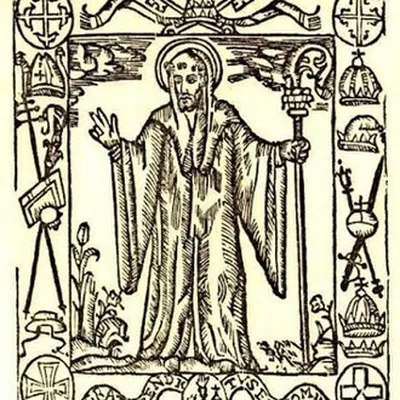
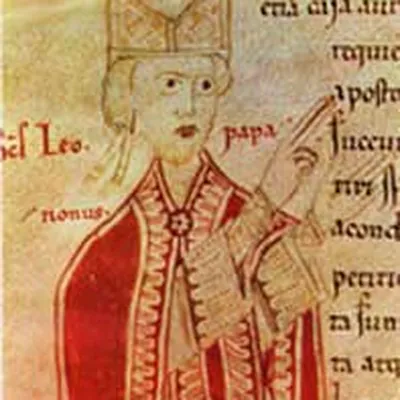
Images of Stephen IX are rare and imaginary. He appears as a pope wearing the tiara in the woodcuts of the Nuremberg Chronicle (1493), and in a mosaic medallion in the series of papal portraits of the Basilica of Saint Paul Outside the Walls in Rome, made in the 19th century. A Benedictine habit or a reference to Monte Cassino can recall his monastic life.
Where to pray to Saint Stephen IX
- Monte Cassino (Italy): the abbey of Saint Benedict, where he lived as a monk and served as abbot.
- Florence (Italy): the city where he died in 1058.
- Rome: the Basilica of Saint Paul Outside the Walls, where his portrait appears among those of the popes.
Discover also
- Saint Leo IX, the pope from Lorraine whom he served as chancellor.
- Saint Peter Damian, whom he made cardinal bishop of Ostia.
- Saint Gregory VII, the Hildebrand of his circle, who gave his name to the Gregorian Reform.
- Saint Benedict of Nursia, founder of Monte Cassino.
- Saint Stephen, the first martyr, whose name he took.