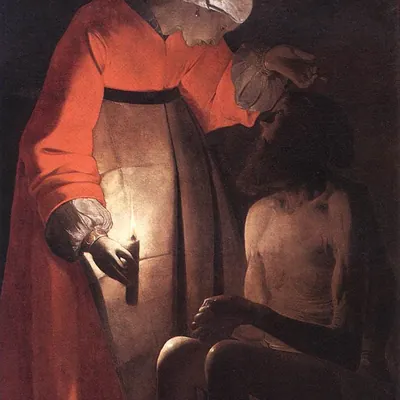
Esther is the heroine of the biblical book that bears her name. A young Jewish orphan raised by her cousin Mordecai in Susa, the Persian capital, she becomes the wife of King Ahasuerus without revealing her origins. When the minister Haman obtains a decree to exterminate all the Jews of the empire, Esther fasts and prays for three days, then risks her life by going before the king without being summoned. Her courage saves her people. Jews celebrate this rescue every year at Purim, and Christians see in Esther a figure of the Virgin Mary interceding for her own.
Who was Queen Esther?
The book of Esther is set in the time of the Persian empire, under a king called Ahasuerus, often identified with Xerxes I (fifth century BC). Like the books of Judith and Tobit, it is a story that hands on a teaching more than a historical chronicle. Its heroine's Hebrew name is Hadassah, "myrtle"; Esther is her Persian name, which evokes a star. The Catholic Bible contains the longer Greek text of the book, with the prayers of Mordecai and Esther.
From orphan to queen
King Ahasuerus deposes Queen Vashti, who refused to appear before his guests, and has the whole empire searched for a new wife. Esther, "beautifully formed and lovely to behold," is brought to the palace. She wins everyone's favor, and the king loves her more than all the others: he places the royal crown on her head. On Mordecai's advice, she says nothing about her people. Soon after, Mordecai uncovers a plot against the king and has it foiled through Esther.
Haman's decree
Haman, the chief minister, demands that everyone bow down before him. Mordecai refuses. Furious, Haman obtains a decree from the king: all the Jews of the empire will be massacred on the same day, chosen by lot, "pur," the thirteenth day of the month of Adar. Mordecai begs Esther to intervene. But anyone who goes in to the king without being summoned is put to death, unless he holds out his golden scepter. Mordecai insists: "Who knows but that it was for a time like this that you obtained the royal dignity?" (Esther 4:14).
Fasting and prayer
Esther answers: "Fast on my behalf; do not eat or drink for three days. I and my maids will fast in the same way. Then I will go to the king, contrary to the law. If I perish, I perish." She takes off her royal garments, covers herself with ashes and prays: "My Lord, our King, you alone are God. Help me, who am alone and have no help but you" (Esther 4:17). The Church reads this prayer at Mass at the beginning of Lent.
The rescue of her people
On the third day, Esther puts on her royal robes and comes before the king. He holds out his golden scepter: "What is it, Queen Esther? Even if you ask for half my kingdom, it shall be granted you." Skillfully, she invites him to two banquets with Haman, then reveals that she belongs to the threatened people and names Haman as the enemy. Haman is hanged on the gallows he had prepared for Mordecai; a new decree allows the Jews to defend themselves, and mourning is turned into celebration. This is the origin of the Jewish feast of Purim.
Why do Christians honor Queen Esther?
Esther shows that one person, who seemed to have no power, can change the course of history when she prays and dares. She relies not on her beauty or her position but on God, and she prepares her step with fasting. Christians have seen in her a figure of the Virgin Mary, the queen who intercedes for her people before the King. People pray with her in danger, before a difficult step, for the courage to speak and for the persecuted.
To pray with her, read the prayer with Queen Esther, or follow the novena with Queen Esther.
Discover also
- The Blessed Virgin Mary, the queen who intercedes for her children.
- The prophet Daniel, another faithful Jew at the court of a foreign king.
- Saint Joan of Arc, a young woman who saved her people through faith and courage.
- King David, another great figure of trust in God in the face of danger.