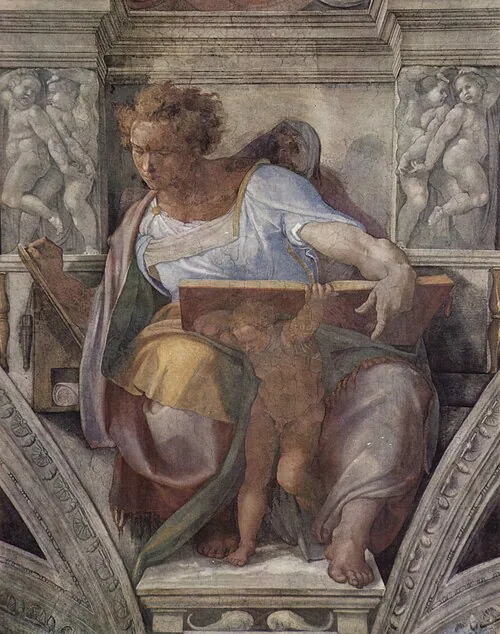
Daniel is the hero of the biblical book that bears his name. A young Jew of noble family, he was deported to Babylon in the sixth century BC, after Nebuchadnezzar took Jerusalem. At the king's court, he stayed faithful to God and to the Law of his people, interpreted the dreams of rulers and read the mysterious writing on the wall at Belshazzar's feast. Thrown into the lions' den for praying to his God, he came out unharmed. His visions announce the coming of a "Son of Man," a title Jesus would take up. The Roman Martyrology commemorates him on July 21.
Who was the prophet Daniel?
The book of Daniel has two parts: stories of Daniel and his companions at the court of Babylon, then visions of the end of time. The Catholic Bible also contains passages preserved in Greek: the song of the three young men in the furnace, the story of Susanna and that of Bel and the dragon. His name means "God is my judge." Scholars date the final writing of the book to the second century BC, during the persecution of Antiochus Epiphanes, to encourage believers to stay faithful.
Faithful at the court of Babylon
With his companions Hananiah, Mishael and Azariah, Daniel was chosen to learn the language and wisdom of the Chaldeans. They were given Babylonian names and food from the royal table. Daniel asked to eat only vegetables and drink only water, so as not to defile himself: after ten days, they looked healthier than all the other young men. God gave them understanding and wisdom, and Daniel received the gift of interpreting dreams.
Nebuchadnezzar dreamed of a huge statue of gold, silver, bronze and iron, with feet mixed with clay, struck down by a stone cut from the mountain. Daniel explained that human kingdoms would pass away, but that God would set up a kingdom that would never be destroyed. The phrase "feet of clay" comes from this story.

The furnace and Belshazzar's feast
The king set up a golden statue and ordered everyone to worship it. Daniel's three companions refused and were thrown into a blazing furnace. But they were seen walking in the flames with a fourth figure, "like a son of the gods," singing God's praise. This song of the three young men, "Bless the Lord, all you works of the Lord," is sung every Sunday in the Church's Morning Prayer.
Years later, King Belshazzar gave a great feast and drank from the sacred vessels taken from the Temple in Jerusalem. A mysterious hand then wrote on the wall: "Mene, Tekel, Parsin." Only Daniel could read it: God has numbered your reign, you have been weighed and found wanting, your kingdom is divided. That very night, Babylon fell.
In the lions' den
Under King Darius, officials jealous of Daniel had a law passed forbidding for thirty days any prayer to anyone but the king. Daniel, his windows open toward Jerusalem, kept praying three times a day. He was thrown into the lions' den. The next morning the king hurried there and called him: "My God has sent his angel and closed the lions' mouths" (Daniel 6:23). Daniel was saved, and the king proclaimed the greatness of Daniel's God.
The Son of Man
In his visions, Daniel saw four monstrous beasts, images of the empires that crush the peoples. Then he saw "coming on the clouds of heaven one like a Son of Man," who received "dominion, glory and kingship": "his kingship shall not be destroyed" (Daniel 7:13-14). Jesus called himself the "Son of Man" and took up these words before the high priest at his trial. The book of Daniel is also one of the first biblical texts to speak clearly of the resurrection of the dead (Daniel 12:2).
Susanna and young Daniel
Chapter 13 tells the story of Susanna, a righteous woman falsely accused of adultery by two elders she had rejected. Condemned to death, she cried out to God. Young Daniel stopped the crowd and questioned the two accusers separately; they contradicted each other about the tree under which they claimed to have seen her. Susanna was saved. This story makes Daniel a model of the wise and upright judge.
Why do Catholics honor the prophet Daniel?
Daniel shows that one can stay faithful to God far from home, in a society that does not share one's faith, without closing oneself off: he served pagan kings loyally but never gave up his prayer. Christians pray to him to stay faithful in trials, to have the courage of their faith at work or at school, and for those persecuted for their faith.
To pray with him, read the prayer to the prophet Daniel, or follow the novena to the prophet Daniel, from July 12 to 20.
Discover also
- The prophet Elijah, another great witness to the one God against idols.
- King David, king and prophet, author of the Psalms.
- Saint John the Baptist, last of the prophets, who announced the Messiah.
- Saint Habakkuk, the prophet whom the Greek account of Daniel sends to feed Daniel in the den.