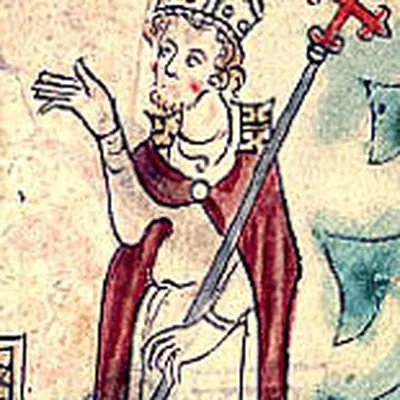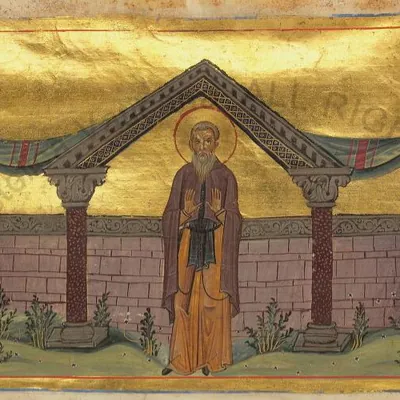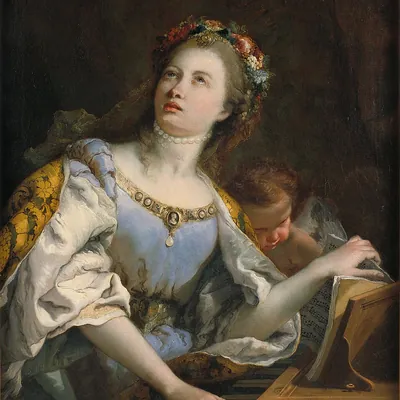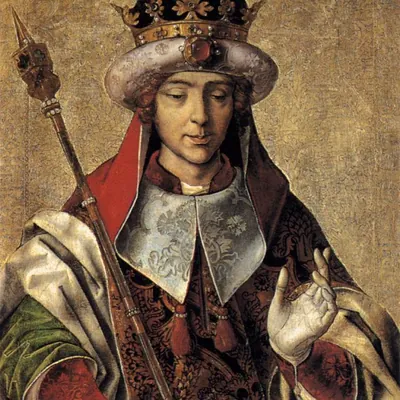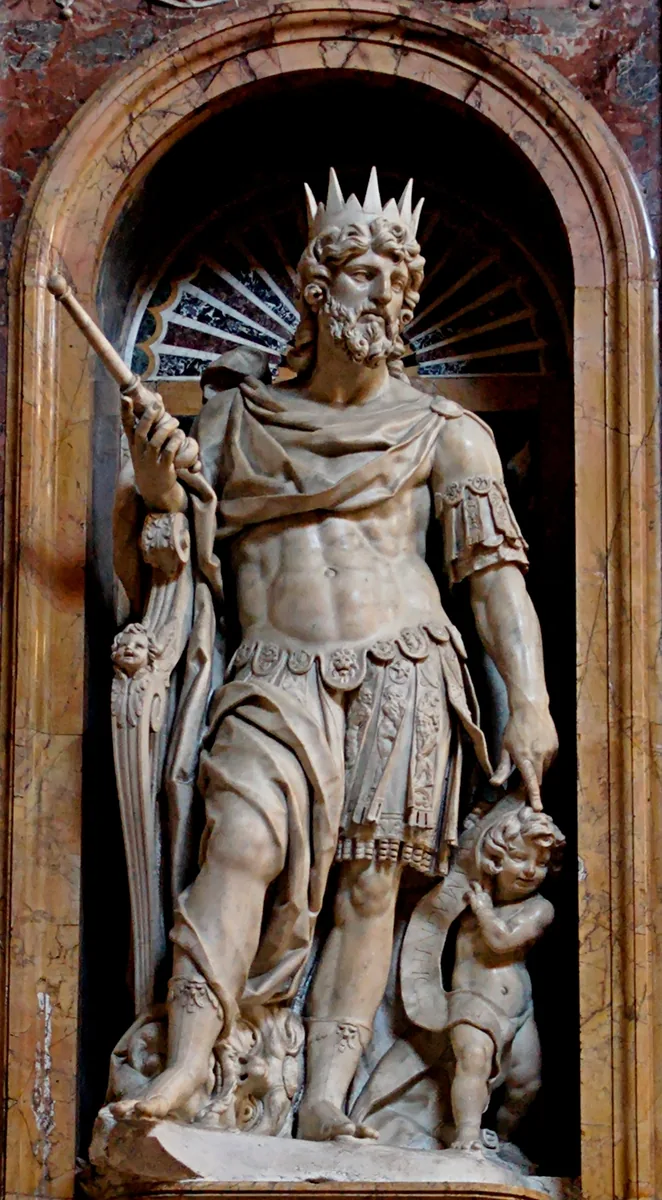
David is the most famous king of Israel. A young shepherd from Bethlehem, he was chosen by God and anointed by the prophet Samuel, struck down the giant Goliath, then became king around 1000 BC and made Jerusalem his capital. Warrior, poet and musician, a sinner who asked forgiveness, he is the traditional author of many of the Psalms. God promised him that his line would reign forever, and the Gospels present Jesus as the "son of David." The Roman Martyrology commemorates him on December 29.
Who was King David?
David's story is told in the two books of Samuel, the first book of Kings and the books of Chronicles. The youngest son of Jesse, of the tribe of Judah, he was tending his father's flocks when God sent for him. He reigned for about forty years, first at Hebron, then in Jerusalem. He is no flawless hero: the Bible tells of his weaknesses frankly. But he always turned back to God, and Scripture calls him "a man after God's own heart" (1 Samuel 13:14).
The shepherd chosen by God
God sent the prophet Samuel to Bethlehem to anoint one of Jesse's sons. The seven eldest passed before him, tall and strong, but none was chosen: "Man looks at appearances, but the Lord looks at the heart" (1 Samuel 16:7). The youngest was sent for from the fields where he kept the sheep. Samuel poured the oil of anointing on his head, "and the spirit of the Lord rushed upon David from that day on."
Soon after, Israel's army trembled before Goliath, a gigantic Philistine warrior who had challenged them for forty days. David, who had come to bring food to his brothers, stepped forward with his sling and five smooth stones: "You come against me with sword and spear and javelin, but I come against you in the name of the Lord of hosts" (1 Samuel 17:45). The first stone struck the giant on the forehead. Ever since, "David and Goliath" has meant the small overcoming the strong.

The king of Jerusalem
King Saul, jealous of David's success, tried to kill him. David fled and lived for a long time as an outlaw in the desert. Twice he had Saul at his mercy and refused to raise his hand against "the Lord's anointed." After the death of Saul and of his friend Jonathan, he became king, first of Judah, then of all Israel. He took the fortress of Jerusalem, which became the "City of David," and brought the Ark of the Covenant there to the sound of trumpets, dancing with all his might before the Lord.
David wanted to build a house for God. Through the prophet Nathan, God answered that he would build David a house, a dynasty: "Your house and your kingdom shall endure forever before me" (2 Samuel 7:16). This promise fed Israel's whole hope for the Messiah, the future king descended from David.
Sin and forgiveness
At the height of his power, David saw from his rooftop a very beautiful woman, Bathsheba, the wife of Uriah, one of his officers. He took her, then, to hide his sin, had Uriah placed where the fighting was fiercest, and he was killed. The prophet Nathan came and told the king the story of a rich man who stole a poor man's only lamb. David was outraged, and Nathan said: "You are the man!" David did not make excuses: "I have sinned against the Lord."
Tradition attributes to him Psalm 51, the Miserere, the most famous prayer of repentance in the Bible: "Have mercy on me, O God, in your goodness... A clean heart create for me, O God." The end of his reign was darkened by family tragedies, above all the revolt and death of his son Absalom, whom he mourned bitterly.
The singer of the Psalms
A musician from his youth, David is the traditional author of seventy-three Psalms. The Psalms voice all of human life before God: trust ("The Lord is my shepherd, there is nothing I lack"), distress, anger, repentance and praise. Jesus prayed them, even on the cross ("My God, my God, why have you forsaken me?", Psalm 22), and the Church sings them every day in the Liturgy of the Hours.
David, ancestor of Jesus
The New Testament opens with these words: "The book of the genealogy of Jesus Christ, the son of David, the son of Abraham" (Matthew 1:1). Joseph is "of the house of David," Jesus is born in Bethlehem, the city of David, and the crowds in Jerusalem acclaim him: "Hosanna to the Son of David!" In Jesus, the promise made to David finds its fulfillment: a king whose reign will have no end.
Why do Catholics honor King David?
David shows that God chooses the little ones, that he looks at the heart rather than appearances, and that sin, even grave sin, does not have the last word when we turn back to him. Christians pray with David for courage before the "giants" in their lives, to ask forgiveness, and to learn to praise God in all circumstances. He is the patron of musicians and poets.
To pray with him, read the prayer with King David, or follow the novena with King David, from December 20 to 28.
Where to remember King David
- Bethlehem: David's birthplace, where Jesus, his descendant, would be born.
- Jerusalem: the City of David, excavated south of the Old City, and Mount Zion, where a medieval tradition places his tomb, beneath the Upper Room.
- Hebron: where he was anointed king and reigned for seven and a half years.
- Florence: Michelangelo's David, in the Galleria dell'Accademia, one of the most famous statues in the world.
Discover also
- Saint Joseph, "son of David," husband of the Virgin Mary.
- The Blessed Virgin Mary, mother of Jesus, the "Son of David."
- Saint John the Baptist, last of the prophets, who announced the Messiah.
- Saint Amos, shepherd and prophet, from Judah like David.