Saint Sané was a monk of Irish origin in the 5th century, presented by tradition as a disciple of Saint Patrick. Having crossed to Armorica with a few companions, he is said to have evangelized the Léon region, around today's Plouzané, near Brest, of which he is the patron and to which he gave his name. He is said to have died around 485. His life is known only through late accounts. His feast day is March 6.
Who was Saint Sané?
Sané is one of the saints from the British Isles who, according to tradition, brought the Christian faith to Brittany. His name appears in that of two towns in Finistère, Plouzané (the "parish of Sané") and Locmaria-Plouzané. The main account of his life was written in the 17th century by the Dominican Albert Le Grand, in his Lives of the Saints of Armorican Brittany, who calls him a "bishop from Hibernia." In the 18th century, the geographer Jean-Baptiste Ogée in turn collected the traditions of Plouzané. These texts, written long after the events, mix local memories and legends; even the dates do not always agree. They must therefore be read with caution. The cult of the saint, however, is well attested in Léon and as far as the Vannes region.
From Ireland to the Léon region
According to Albert Le Grand, Sané, who came from Ireland like Saint Ronan, crossed the sea with a few companions to proclaim the Gospel to a population still attached to the old cults. He landed at the point of Perzell, now called the Pointe de Bertheaume, at the entrance to the Brest narrows. Moving inland, he stopped in the heart of the forest of Lucos, a "consecrated place" where pagan temples stood. With his companions, he made these places Christian sanctuaries: tradition places the first church of Locmaria-Plouzané there.
The place called Ar-Cloastr, "the cloister," near the village of Plouzané, is said to keep the memory of the spot where the small community lived. Tradition also attributes to Sané the spring that still flows there. Some accounts say he was ordained a priest by Saint Ronan, which raises a problem of chronology, since Saint Ronan is usually placed somewhat later.
The crosses and the altar stone
In the 18th century, Jean-Baptiste Ogée reported that the church of Plouzané was believed to have once been a pagan temple, and that Sané was held to be the patron of the place. He mentions near the porch a tall stone cross with illegible inscriptions, and, not far from the church of Locmaria, two great crosses said to have been planted by the saint after the conversion of the region. These crosses were greatly venerated and served as places of asylum: a wrongdoer who took refuge there could not be seized. Ogée also mentions, in the churchyard, an altar stone on which Sané is said to have celebrated his first Mass before the newly baptized.
It is also said that two standing stones, Christianized and now set up in the village of Locmaria-Plouzané, marked the entrance to the "wood of Grace," where any fugitive was assured of not being pursued. These traditions show how the memory of the saint became attached to the landscape and monuments of the region.
Devotion
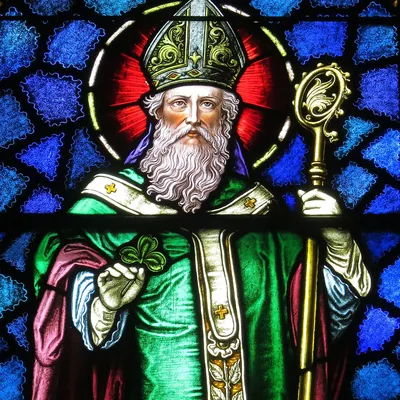
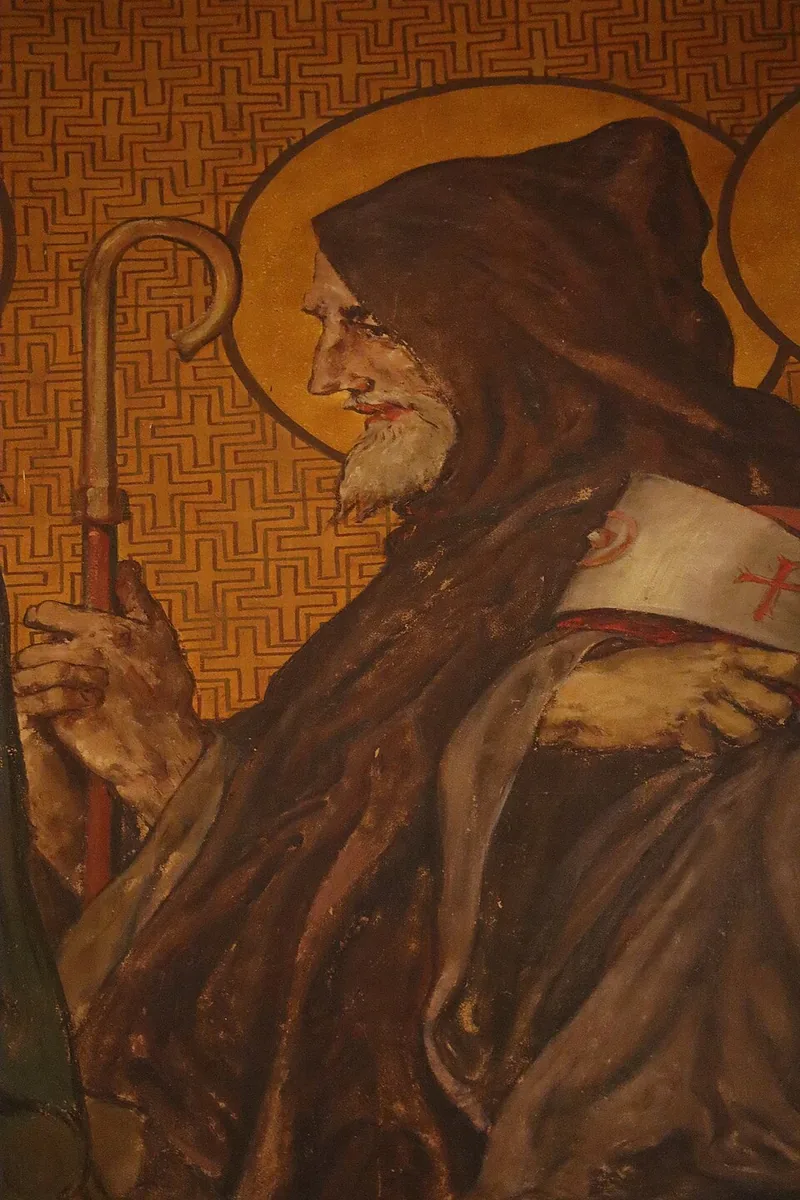
According to the hagiographical dictionary of Abbé Pétin, Sané died around 485 in a solitary place in Armorica. His cult has continued in the former diocese of Léon, at Plouzané, of which he is patron and whose church keeps a reliquary, as well as at Locmaria-Plouzané. It also reached the Vannes region: at Camors, in Morbihan, a hamlet and a church bear his name. His feast is March 6. Stained glass windows show him as a bishop, as Albert Le Grand calls him.

What can we learn from Saint Sané?
Behind accounts that are hard to verify, Saint Sané appears as one of those missionaries who agreed to leave their island for an unknown land. Tradition credits him with a particular way of evangelizing: not destroying, but transforming the old sacred places into places of Christian prayer. It has also kept the image of a protector of the weakest, since his crosses served as places of asylum. You can pray to him for missionaries, for Brittany and for those who seek refuge.
To pray with him, see the prayer to Saint Sané and the novena to Saint Sané.
Where to pray to Saint Sané
- Plouzané (Finistère): the parish church, of which he is patron, with its reliquary, and the spring attributed to him.
- Locmaria-Plouzané (Finistère): the village that bears his name, with its Christianized standing stones.
- Camors (Morbihan): the church of Saint-Sané.
- Saint-Renan (Finistère): the church of Notre-Dame-de-Liesse, where a stained glass window depicts him.
Discover also
- Saint Patrick, the apostle of Ireland, whose disciple Sané is said to have been.
- Saint Ronan, another saint from Ireland in Léon, linked to Sané by tradition.
- Saint Winwaloe, founder of the abbey of Landévennec, another great saint of Finistère.