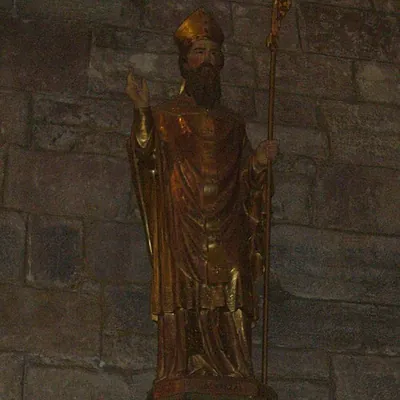
Moses is the greatest figure of the Old Testament. Born in Egypt among the enslaved Hebrew people and drawn from the waters of the Nile, he was called by God in the burning bush to set his people free. He led the Hebrews out of Egypt, crossed the Red Sea with them and guided them for forty years through the desert. On Mount Sinai he received the Ten Commandments from God. He died on Mount Nebo, gazing at the Promised Land without entering it. The Roman Martyrology commemorates him on September 4.
Who was Moses?
His story fills four books of the Bible: Exodus, Leviticus, Numbers and Deuteronomy. Tradition places his life in the thirteenth century BC, under a pharaoh often identified as Ramesses II. The brother of Aaron and Miriam, he was no speaker: he stammered and thought himself unfit. Yet God spoke with him "face to face, as a man speaks to his friend" (Exodus 33:11). He is at once the liberator, the lawgiver and the prophet of Israel.
Drawn from the water
Pharaoh, worried to see the Hebrews multiply, ordered all their newborn boys thrown into the Nile. Moses' mother hid him for three months, then laid him in a papyrus basket among the reeds of the river. Pharaoh's daughter found him, took pity on him and adopted him; she named him Moses, "because I drew him out of the water" (Exodus 2:10). He grew up at the Egyptian court but did not forget his people.
The burning bush
A refugee in the land of Midian, Moses was tending the flocks when he saw a bush on fire that was not consumed. He came closer, and God called him: "Remove the sandals from your feet, for the place where you stand is holy ground." God told him he had seen the misery of his people and sent him to Pharaoh. Moses asked his name: "I am who am" (Exodus 3:14), the divine name that Jews do not pronounce, YHWH. Moses resisted, saying he could not speak; God gave him his brother Aaron as spokesman.

The Passover and the Red Sea
"Let my people go!" Pharaoh refused, and ten plagues struck Egypt. On the last night, each Hebrew family sacrificed a lamb, marked its door with the blood and ate in haste, ready to leave: this was the first Passover, the Lord's "passing over." The Hebrews left Egypt. Overtaken by Pharaoh's army at the edge of the sea, they saw Moses stretch out his hand: the waters parted, they crossed on dry ground, then the sea closed over the Egyptian chariots. Miriam took up her tambourine and sang God's victory.
The Ten Commandments
In the third month, the people reached the foot of Sinai. The mountain smoked, thunder rolled; Moses went up alone to God. He came down with the two tablets of stone engraved with the "ten words": "I am the Lord your God... You shall not have other gods besides me... Honor your father and your mother... You shall not kill..." During his absence, the people made themselves a golden calf. Moses broke the tablets, then interceded for the people, and God renewed the Covenant. When Moses came down, his face shone from having spoken with God.

Forty years in the desert
The journey to the Promised Land lasted forty years. The people often grumbled, longing for the "fleshpots" of Egypt. God fed them with manna, made water gush from the rock, and guided them with a pillar of cloud by day and a pillar of fire by night. Moses interceded without rest. At the end, from the top of Mount Nebo, opposite Jericho, God showed him the whole promised land. He died there at one hundred and twenty, "and to this day no one knows the place of his burial" (Deuteronomy 34:6). Joshua succeeded him.
Moses and Jesus
Moses had announced: "A prophet like me will the Lord, your God, raise up for you" (Deuteronomy 18:15). The Gospels present Jesus as the new Moses: he gives the new Law on the mountain of the Beatitudes, feeds the crowd in the desert, and institutes the Eucharist at the Passover meal. At the Transfiguration, Moses appears beside Jesus with Elijah. The Christian Easter fulfills the Jewish Passover: Christ, the new Lamb, brings humanity from death to life.
Why do Catholics honor Moses?
Moses shows that God hears the cry of the oppressed and chooses people who know they are weak. He is the model of the intercessor, who prays for his people even when they turn away. Christians pray with him to be freed from what enslaves them, to cross the deserts of life, and to receive God's Word as a path to freedom.
To pray with him, read the prayer with Moses, or follow the novena with Moses, from August 26 to September 3.
Where to remember Moses
- Mount Sinai (Egypt): Jebel Musa, "the mountain of Moses," at whose foot stands Saint Catherine's Monastery, which keeps the burning bush of tradition.
- Mount Nebo (Jordan): the Memorial of Moses, cared for by the Franciscans, overlooking the Jordan Valley and Jericho; Saint John Paul II came there in 2000.
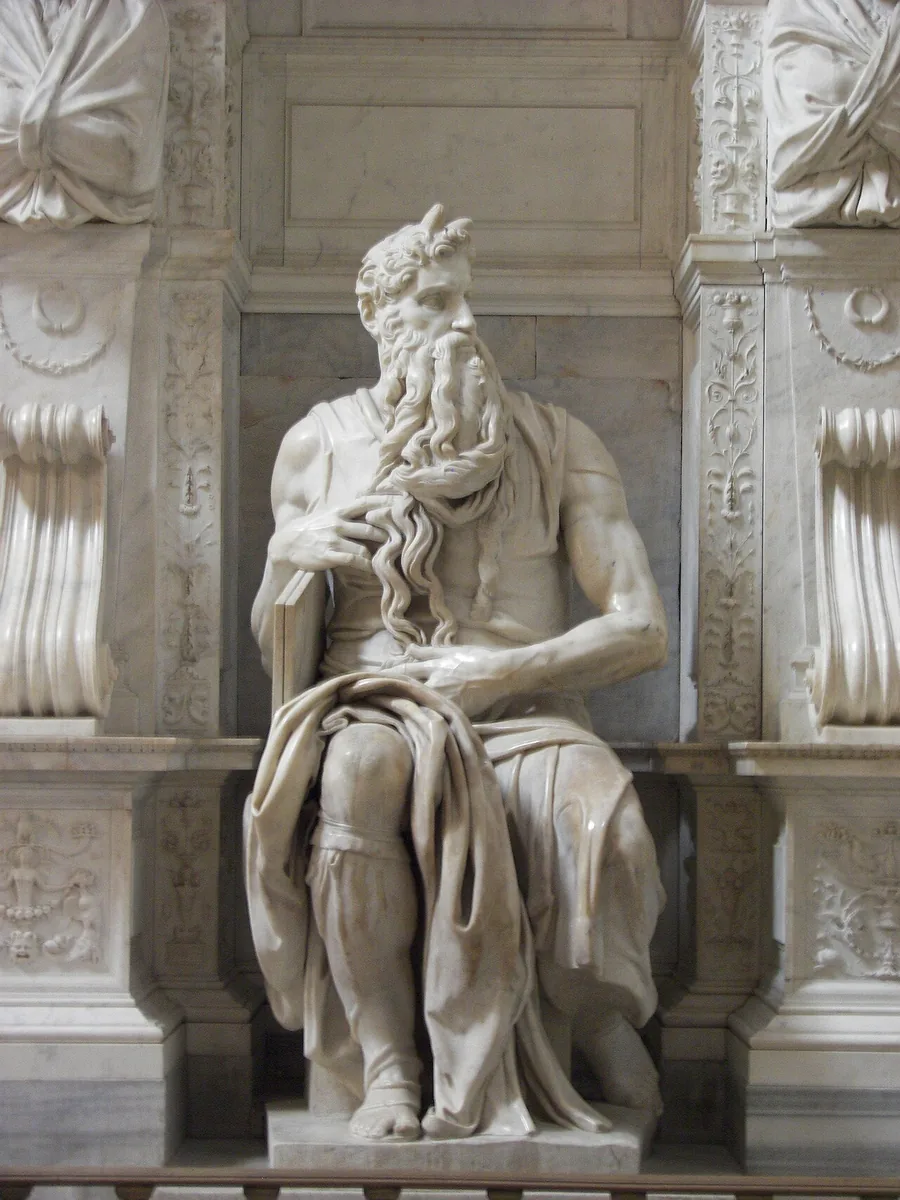
- Rome: Michelangelo's Moses, in the church of San Pietro in Vincoli, on the tomb of Pope Julius II.
Discover also
- Abraham, father of faith, to whom God promised the land toward which Moses led the people.
- The prophet Elijah, who appears with Moses at the Transfiguration.
- King David, king and prophet of Israel.
- Saint John the Baptist, last of the prophets, who prepared the way of the Lord in the desert.