Abraham is the first of the patriarchs of the Bible and the "father of all who believe." Around the nineteenth century BC, according to biblical tradition, God called him to leave his homeland for an unknown land and promised him descendants as numerous as the stars of the sky, though his wife Sarah was barren. Abraham believed, set out, and became the father of the people of Israel. Jews, Christians and Muslims all look to him as a model of faith. The Roman Martyrology commemorates him on October 9.
Who was Abraham?
His story is told in the book of Genesis (chapters 11 to 25). He was first called Abram; God changed his name to Abraham, "father of a multitude." Originally from Ur in Mesopotamia, he settled with his family at Haran, then set out for Canaan, today's Holy Land. A nomadic herdsman, he lived in tents with his flocks. He is no flawless hero: he lies out of fear, grows impatient, sometimes doubts. But he trusts God, and "it was credited to him as righteousness" (Genesis 15:6).
The call: "Go forth from your land"
"Go forth from your land, your relatives and your father's house to a land that I will show you. I will make of you a great nation, and I will bless you... All the communities of the earth shall find blessing in you" (Genesis 12:1-3). Abram was seventy-five years old. He set out, not knowing where he was going, as the letter to the Hebrews would say. This call makes him the model of all who leave their securities to follow God.
The stars and the covenant
The years passed, and Abram still had no child. He complained to God, who brought him out under the night sky: "Look up at the sky and count the stars, if you can... Just so shall your descendants be" (Genesis 15:5). Abram believed. God sealed a covenant with him and changed his name and that of his wife, who became Sarah, "princess." In the meantime, Abraham had a son, Ishmael, by the servant Hagar, whom Muslim tradition regards as an ancestor.

Hospitality at Mamre
One very hot day, Abraham, sitting at the entrance of his tent by the oaks of Mamre, saw three men. He ran to meet them, bowed down and prepared them a meal. His guests announced that Sarah, despite her age, would have a son; Sarah, listening behind the tent, laughed. Christian tradition saw in these three visitors a figure of the Trinity, painted by the Russian iconographer Andrei Rublev in a famous icon. Abraham then pleaded at length for Sodom, bargaining with God for the city's salvation for the sake of a few righteous people.
The sacrifice of Isaac
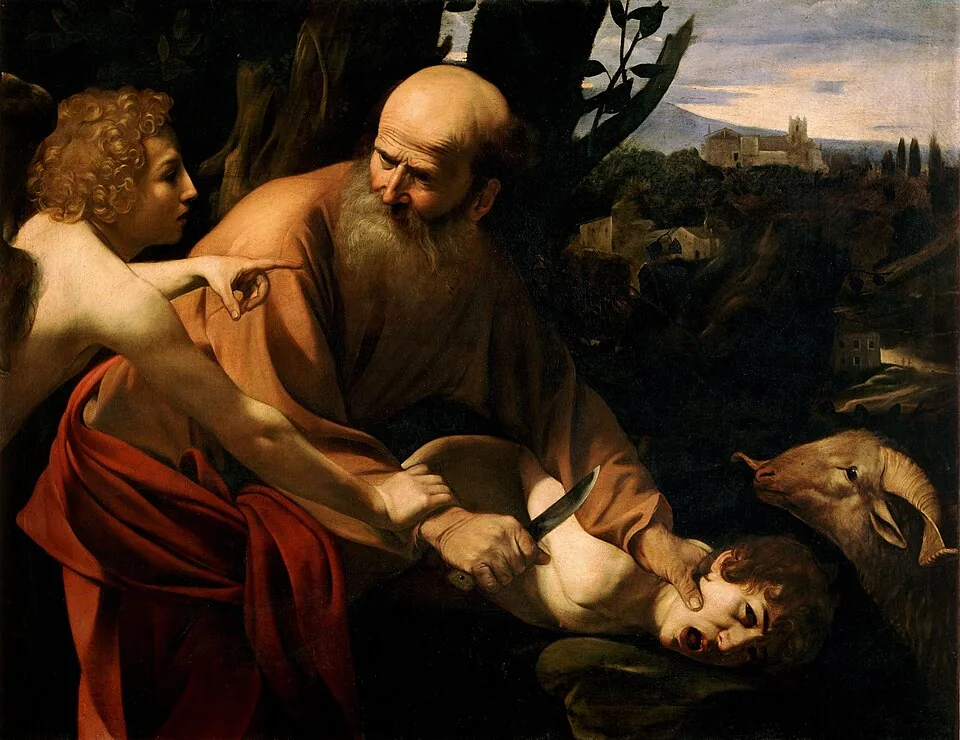
Isaac was born at last, and his name means "he laughs." Then came the hardest trial: God asked Abraham to offer his son as a burnt offering on a mountain in the land of Moriah. Abraham set out, Isaac carrying the wood. "God himself will provide the lamb, my son," he answered his anxious son. At the last moment, the angel stayed his hand, and a ram was offered in Isaac's place. Christians have seen in this story a foreshadowing of the sacrifice of Christ, the only Son, carrying the wood of the cross.
Why do Catholics honor Abraham?
Saint Paul makes Abraham the model of faith: he "hoped against hope" (Romans 4:18), and all who believe are his children. In the First Eucharistic Prayer, the Church still recalls "the sacrifice of Abraham, our father in faith." Jews, Christians and Muslims all claim him: we speak of the "Abrahamic religions." Abraham reminds us that faith is first of all a journey of trust.
To pray with him, read the prayer with Abraham, or follow the novena with Abraham, from September 30 to October 8.
Where to remember Abraham
- Hebron (West Bank): the Tomb of the Patriarchs, over the cave of Machpelah, where tradition places the tombs of Abraham, Sarah, Isaac, Rebekah, Jacob and Leah.
- Mamre: near Hebron, the traditional site of the oak where Abraham received the three visitors.
- Jerusalem: the Temple Mount is identified by tradition with Mount Moriah, the place of Isaac's sacrifice.
Discover also
- King David, descendant of Abraham and ancestor of Jesus.
- Saint Joseph, a man of faith who, like Abraham, set out on a word from God.
- The Blessed Virgin Mary, who sings in the Magnificat of the promise made "to Abraham and to his descendants."
- The prophet Elijah, another great witness to the one God.