Saint Sulpicius the Pious, also called "the Good" or "the Debonair," was Bishop of Bourges from 624 until his death on January 17, 647. Born around 576 at Vatan, in Berry, and once chaplain to King Chlothar II, he is remembered as a poor, charitable shepherd close to the humble. More than three hundred parishes bear his name, including the great church of Saint-Sulpice in Paris. His feast day is January 17.
Who was Saint Sulpicius the Pious?
Sulpicius belongs to the generation of Merovingian bishops who were both close to kings and attentive to the poor. Trained at the palace school, he could have had a brilliant career at court. He chose the service of the Church of Bourges, one of the oldest in Gaul, of which he became bishop. The accounts of his life, written in the centuries after his death, stress his austerity, his charity toward the destitute and the many conversions he brought about. Miracles are also attributed to him. He should not be confused with Sulpicius Severus, the writer and biographer of Saint Martin, nor with Saint Sulpicius I, another Bishop of Bourges at the end of the 6th century.

From the palace school to the Church of Bourges
Born at Vatan around 576, Sulpicius received the education of the young nobles of his time at the palace school, where the future officials of the kingdom were trained. He stayed there until about the age of sixteen. It was there that he came to know Austregisilus, also called Outrille. Having become Bishop of Bourges, Austregisilus called him to his side in 612 and made him archdeacon, that is, his chief assistant for the administration of the diocese and the care of the poor. Sulpicius was ordained a priest in 618.
King Chlothar II, who had reunited the Frankish kingdom, took him as chaplain to his court. This office placed him at the heart of power. But, according to tradition, Sulpicius kept a simple life and great inner freedom amid the honors.
A poor and charitable bishop
In 624, on the death of Austregisilus, Sulpicius became Bishop of Bourges. His Life shows him living in poverty and austerity, despite the official duties his see imposed. He cared for the destitute, visited the sick and preached tirelessly. The accounts credit him with many conversions and healings. It was this kindness that earned him his nicknames of "the Pious," "the Good" or "the Debonair."
In his last years, he was helped by a coadjutor, Florentius, who succeeded him. Sulpicius died in Bourges on January 17, 647. His tomb became a place of pilgrimage, and his cult spread quickly through Berry, then through much of France.
Devotion and art
Sulpicius the Pious is celebrated on January 17, the day of his death; some traditions keep his feast on the 19th. More than three hundred parishes honor him in France, Belgium and Switzerland, about twenty of them in Berry. From the 15th century, a chapel at Vatan, his birthplace, was dedicated to him, and pilgrims came every August 27, the date of a translation of his relics to the Paris church that bears his name. In Essonne, the church of Saint-Sulpice-de-Favières is also a former place of pilgrimage to his relics.
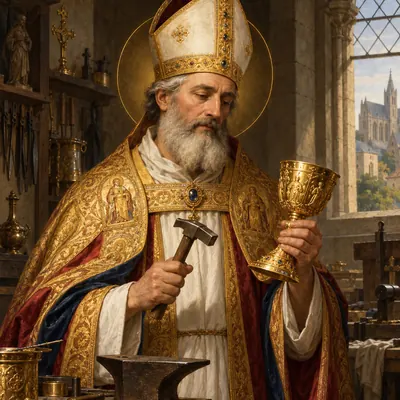
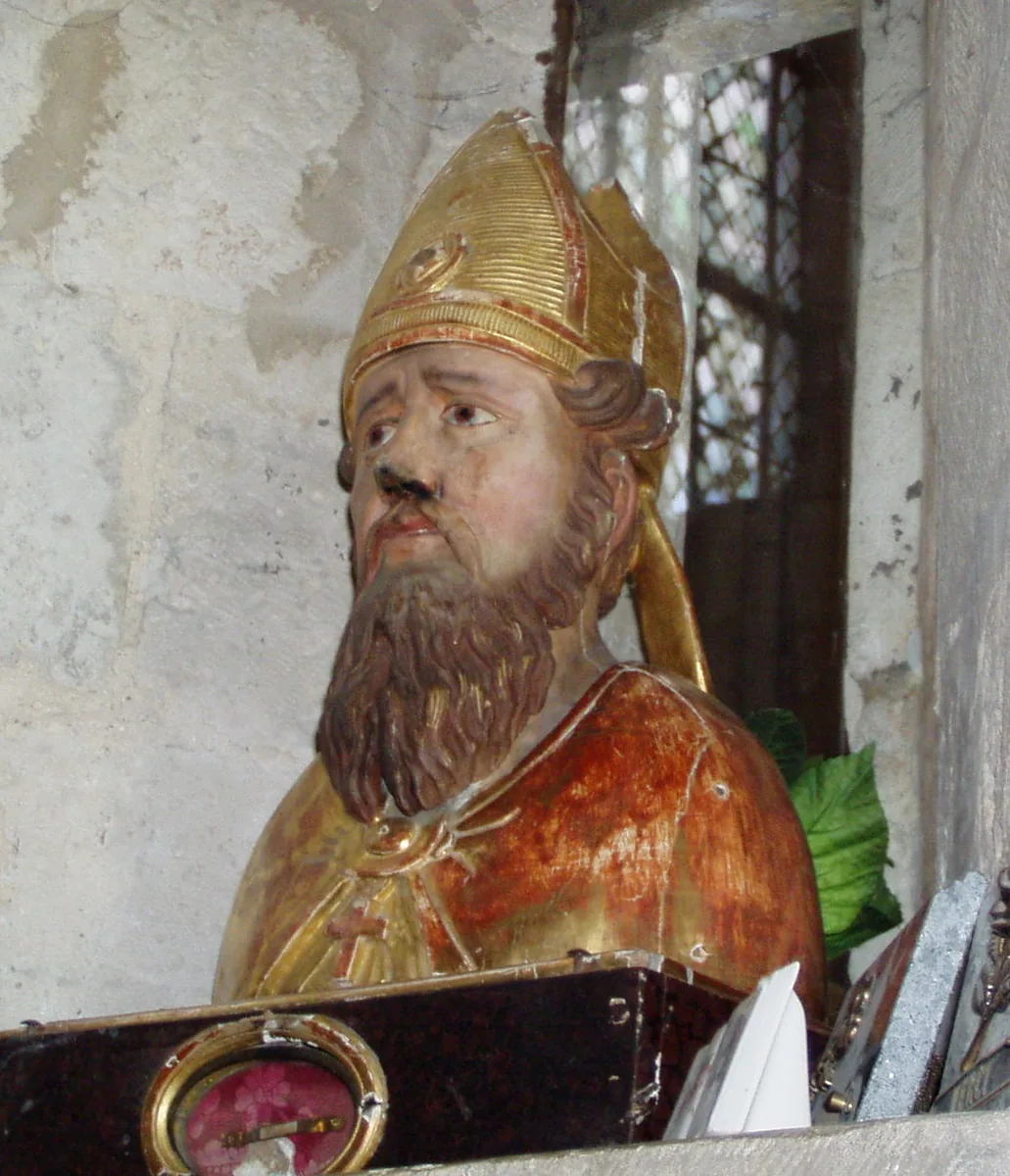
In Paris, the church of Saint-Sulpice, which once depended on the abbey of Saint-Germain-des-Prés, became in the 17th century the cradle of French seminaries: its parish priest, Jean-Jacques Olier, founded there the Society of the Priests of Saint-Sulpice, devoted to the formation of priests. The Sulpicians settled in Bourges in 1679. The composer Louis-Nicolas Clérambault wrote several motets in honor of the saint. He is shown as a bishop, with miter and crozier.

What can we learn from Saint Sulpicius the Pious?
Sulpicius lived among the powerful without letting himself be taken in by a taste for power. What struck his contemporaries was not his influence at court, but his poverty and his kindness toward the least. His name, given to so many churches and to a society of priests who train other priests, reminds us that a shepherd is recognized first by his charity. You can pray to him for bishops and priests, for seminarians, and to learn to serve the poor with simplicity.
To pray with him, see the prayer to Saint Sulpicius and the novena to Saint Sulpicius.
Where to pray to Saint Sulpicius the Pious
- Church of Saint-Sulpice (Paris, 6th arrondissement): the great church that bears his name, cradle of the seminaries.
- Vatan (Indre): his birthplace, where a pilgrimage is attested since the 15th century.
- Saint-Sulpice-de-Favières (Essonne): a Gothic church, a former place of pilgrimage to his relics.
- Bourges (Cher): the city of which he was bishop.
Discover also
- Saint Austregisilus of Bourges, his master, who made him archdeacon.
- Saint Florentius of Bourges, his coadjutor and successor.
- Saint Sulpicius I of Bourges, another Bishop of Bourges, not to be confused with him.
- Saint Eligius, another great saint of the Merovingian court who became a bishop.