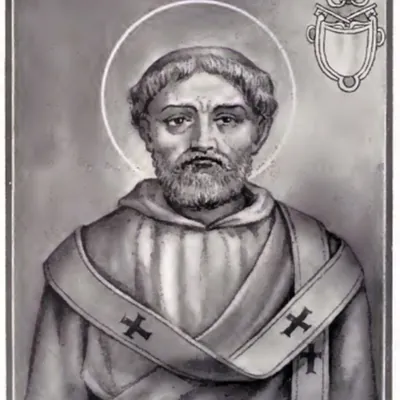
Saint Hegesippus was a Christian writer of the second century, often called the first historian of the Church. Coming from the East, he spent many years in Rome to make sure that the Churches were faithfully handing on the teaching of the apostles, and he wrote five books of "Memoirs." His work is lost, but Eusebius of Caesarea preserved precious extracts from it, especially about the first Christians of Jerusalem and the family of Jesus. His feast day is April 7.
Who was Saint Hegesippus?
Almost everything we know about him comes from the Church History of Eusebius of Caesarea, written in the early fourth century. Hegesippus was probably born at the beginning of the second century in the East, most likely in Palestine. Eusebius considered him a Christian of Jewish origin, because he knew Jewish traditions well and quoted texts in Hebrew and Aramaic. He died around 180.
His name is tied to a journey. Troubled by the spread of new doctrines, especially the Gnostic movements that claimed to possess a secret teaching, Hegesippus set out for the West to check the faith of the great Churches for himself. He passed through Corinth, where he spoke with the bishop, and then arrived in Rome in the time of Pope Saint Anicetus. He stayed there about twenty years, until the time of Pope Saint Eleutherius.
In an age when Christians had no printed Bible, no catechism and no easy way to compare what was preached from one city to another, this kind of patient inquiry mattered a great deal. Hegesippus did not invent a new theology. He went, he listened, he compared, and he wrote down what he found.
Checking the tradition of the apostles
The five books of Hegesippus, called Hypomnemata ("Memoirs"), were not a history in the modern sense. They were rather notes meant to show that the true faith is the one the apostles handed on openly, from bishop to bishop, in each Church. Hegesippus states that he found, in Corinth as in Rome, that people taught what the Law, the prophets and the Lord proclaimed.
He is also said to have drawn up a list of the succession of the bishops of Rome down to Anicetus. Eusebius may have used it, although historians still debate this point. Either way, the idea behind it is clear: a Church can show that its faith is apostolic because it can name the shepherds who received it and passed it on, one after another.
This approach foreshadows the method of Saint Irenaeus of Lyon, who a few years later used the succession of bishops to refute the Gnostics. Hegesippus therefore stands at the very beginning of a way of thinking that became central for Catholics: the faith is not a private discovery but a gift received through the living Church.
The first Christians of Jerusalem
The fragments preserved by Eusebius are especially precious for the history of the Church of Jerusalem. In them Hegesippus tells of the martyrdom of Saint James the Just, "the brother of the Lord" and leader of the Jerusalem community, and describes his life of prayer and self-denial.
He reports that after the death of James and the fall of Jerusalem, the apostles and the relatives of the Lord who were still alive chose Simeon, son of Clopas, to succeed him. Simeon was said to be a cousin of the Savior, because Clopas was the brother of Joseph.
Hegesippus also tells how the grandsons of Jude, another relative of the Lord, were brought before the emperor Domitian. They were simple farmers with hands hardened by work, and the emperor let them go when he saw how poor they were. The historical value of these stories is debated in their details, but they are among the very few ancient witnesses to the family of Jesus and to the Christians of Jewish origin.
What does his holiness teach us?
Hegesippus was neither a martyr nor a known bishop. His holiness is that of a seeker of truth, who traveled far to make sure the Church was faithful to the teaching received from the apostles. He reminds us that the Christian faith rests on a witness passed down from generation to generation.
He is listed in the Roman Martyrology on April 7 and is also honored by the Eastern Churches. For readers today, he is a quiet patron of everyone who studies Church history, checks sources carefully and wants to know what the first Christians really believed.
Is Saint Hegesippus the patron saint of anything?
The Church has not given Saint Hegesippus any official patronage. Because of his work, however, he is naturally invoked by historians, researchers, catechists and students of the early Church, and by anyone who wants to remain faithful to the teaching of the apostles in a time of confusion.
Symbols and how to recognize Saint Hegesippus in art
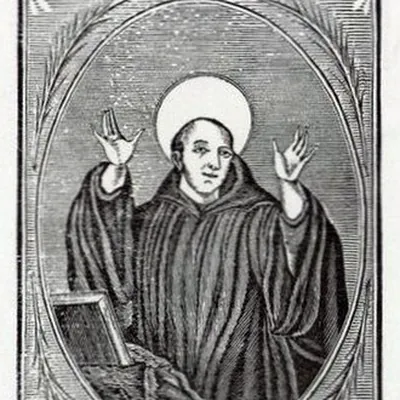
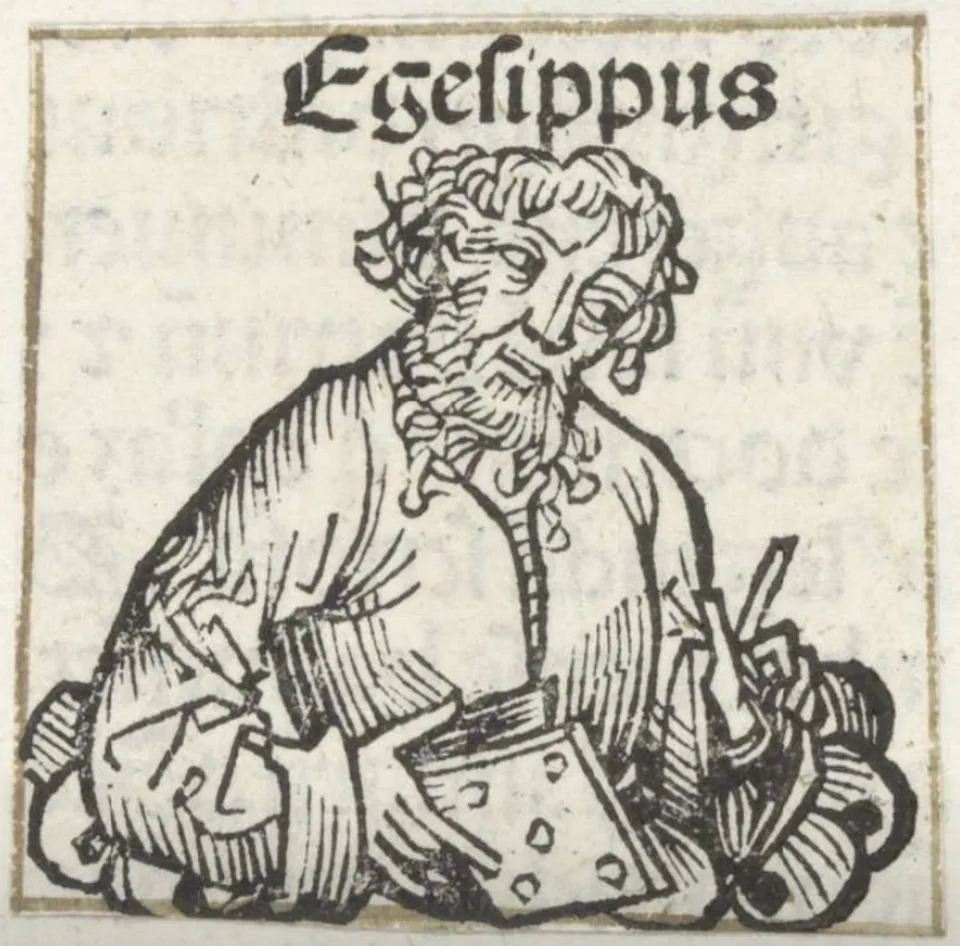
Images of Hegesippus are rare. The best known is the woodcut of the Nuremberg Chronicle (1493), which shows him as a learned man holding a book. That is the simplest way to picture him: a scholar and a witness, with the book of the faith he received and handed on.
Where to pray to Saint Hegesippus
No major shrine or relic of Saint Hegesippus is known. One tradition places his death in Jerusalem, and he lived for some twenty years in Rome, where he gathered his information about the apostolic succession. Wherever you are, the best way to honor him is to read the Scriptures and the writings of the early Church, and to pray with the Church on his feast day, April 7.
You can also pray the prayer to Saint Hegesippus or make the novena to Saint Hegesippus.
Discover also
- Saint James the Just, whose martyrdom he recorded.
- Saint Anicetus, the pope who welcomed him in Rome.
- Saint Eleutherius and Saint Soter, popes during his stay in Rome.
- Saint Justin Martyr, another Christian from Palestine who taught in Rome at the same time.
- Saint Melito of Sardis, his contemporary, also known to us mainly through Eusebius.