Saint Equitius (Equizio in Italian) was a 6th-century Italian abbot, a contemporary of Saint Benedict. A native of the mountainous region of Valeria, in present-day Abruzzo, he founded and led several monasteries and, although he was not a priest, travelled through the countryside preaching the Gospel. We know him almost entirely through the Dialogues of Pope Saint Gregory the Great. He died around 570 in his monastery of Saint Lawrence at Pizzoli, near L'Aquila. His feast day is August 11.
Who was Saint Equitius?
Equitius belongs to the beginnings of monasticism in central Italy, in the troubled period that followed the fall of the Western Roman Empire and saw Goths and Byzantines fight each other. He was born toward the end of the 5th century in the province of Valeria, a mountainous region that today corresponds to the area around L'Aquila, Rieti and Tivoli. His reputation for holiness drew many disciples around him, and he founded several monasteries of men and of women in this province.
His life is known to us through the first book of the Dialogues of Gregory the Great, written around 593-594, which devotes a long chapter to Equitius. Gregory says he had his stories from trustworthy witnesses. As always in the Dialogues, these accounts aim to edify and are full of miracles; they nevertheless keep the memory of a real founder. Some modern accounts make Equitius a disciple of Saint Benedict; others present him rather as an independent founder, a contemporary of Benedict. His monasteries were later attached to the Benedictine order.

The inner struggle
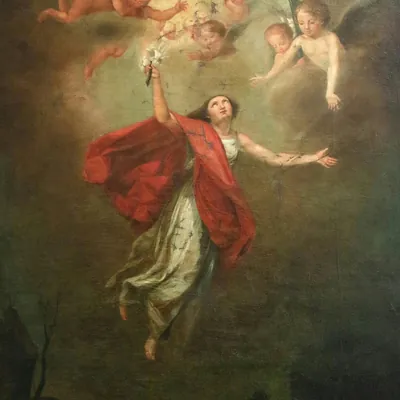
Gregory tells that Equitius, as a young man, suffered violent temptations of the flesh. He prayed all the more to be freed from them. One night, he had a vision in which an angel healed him of this torment, so that he never felt its assault again. Once freed, according to the account, he was able to take charge of monasteries of women as well, while urging his disciples to the greatest prudence. This story, very much of its time in its form, expresses a deep conviction: purity of heart is a gift of God, received in prayer.
A missionary abbot
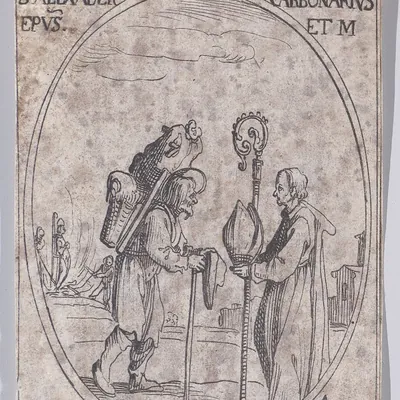
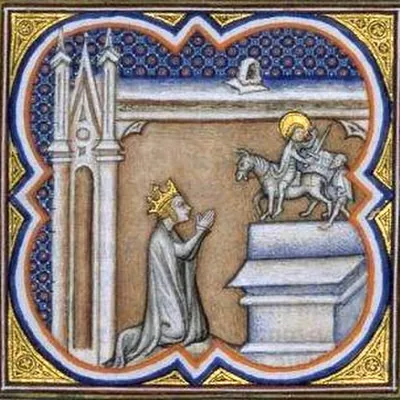
Equitius did not merely govern his monks. He travelled through the countryside of Valeria to proclaim the Gospel, riding a humble mount and carrying the holy books in leather bags. According to Gregory, he lived very poorly, dressed simply, and worked with his hands alongside his brothers. He had not been ordained, and that drew criticism: in Rome, some were indignant that a layman should dare to preach. When questioned, he explained that he had received in a dream the mission to proclaim the Word.
The pope then had a cleric named Julian sent to bring him to Rome. Julian found him busy mowing hay with his monks. But meanwhile the pope was warned in a vision not to trouble the servant of God, and he recalled his envoy. Gregory sees in this episode proof that the authority of the Church recognized the holiness of Equitius.
The miracles reported by Gregory
The Dialogues report several wonders. The best known concerns a nun who, in the monastery garden, ate a lettuce without first making the Sign of the Cross, and was at once tormented by a demon. Equitius, called to help, freed her through his prayer. This story, often quoted in the Middle Ages, was meant to recall the importance of blessing and watchfulness in the simplest actions.
Death and devotion
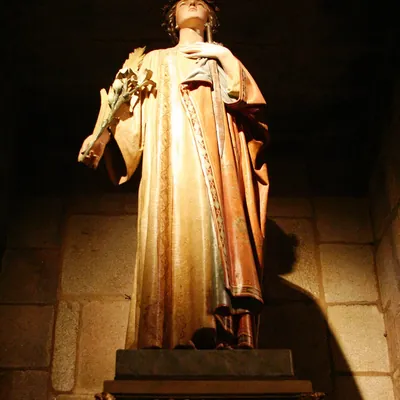
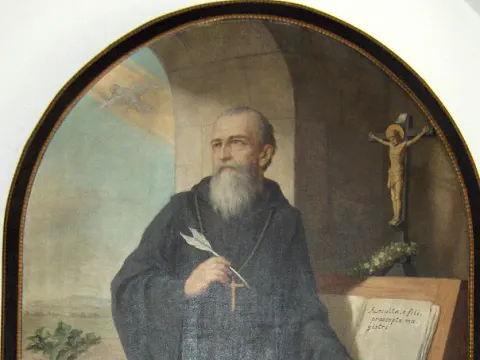
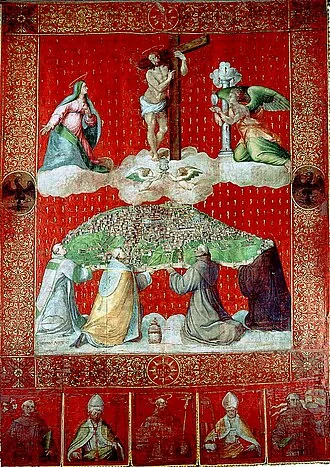
Equitius died around 570 in his monastery of Saint Lawrence at Pizzoli, in the region of L'Aquila. The monks of his congregation were later incorporated into the order of Saint Benedict. His cult is ancient and was not the subject of a canonization in the modern sense. He is celebrated on August 11 and especially venerated in Abruzzo; his relics are reported to be at L'Aquila, in the church of Santa Margherita. He is shown as an abbot, sometimes with the books of his preaching.

What can we learn from Saint Equitius?
Equitius is a figure of zeal and humility. Freed from his temptations through prayer, he founded communities, worked with his hands and went from village to village proclaiming Christ, without seeking honors. He reminds us that proclaiming the Gospel is not reserved to the clergy. You can pray to him for catechists and lay people engaged in mission, for monastic communities and for those who struggle against temptation.
To pray with him, see the prayer to Saint Equitius and the novena to Saint Equitius.
Where to pray to Saint Equitius
- L'Aquila (Abruzzo, Italy): the church of Santa Margherita, where his relics are reported to be.
- Pizzoli (Abruzzo, Italy): the site of his monastery of Saint Lawrence, where he died.
Discover also
- Saint Gregory the Great, the pope who told his life in the Dialogues.
- Saint Benedict of Nursia, his contemporary, whose order later welcomed his monks.