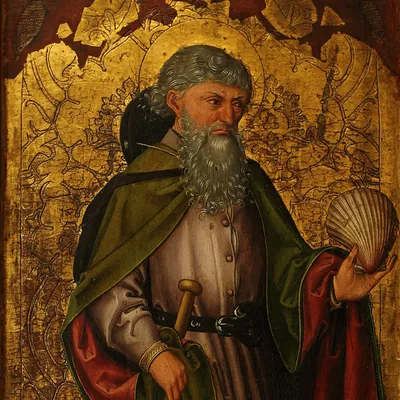
Saint Eldrad (Heldrad, Eldrade in French, Eldrado in Italian) was a Benedictine monk born around 781 at Ambel, in the present-day French department of Isère, who died in the 9th century. A pilgrim to Santiago de Compostela, he entered the abbey of Novalesa, at the foot of the Mont Cenis pass, became its prior or abbot, and worked to protect the travelers who crossed the Alps. His feast day is March 13.
Who was Saint Eldrad?
Eldrad is a saint of the roads and the mountains. The son of a family of the Frankish aristocracy, he gave up his possessions, set out on pilgrimage, then devoted his life to God in a great Alpine monastery. His care for pilgrims, exposed to the dangers of the passes and roads, has left traces even in place names: Le Monêtier-les-Bains, near Briançon, and Monestier-d'Ambel, in Isère, recall the houses of monks founded at his initiative.
We must, however, distinguish history from tradition. The account of his life comes mainly from the monastic tradition of Novalesa and from the local memory of his native village. Archival documents are much rarer: a charter of Emperor Lothair I dated 825 and an arbitration given in 827 mention an Eldrad at the head of the abbey. The sources also hesitate about his title (prior or abbot) and the date of his death.

From the castle of Ambel to the roads of Compostela
Eldrad's parents, Aldradus and Leodda, belonged to the Frankish aristocracy and owned the castle of Ambel. A local tradition links them to Lambesc, in Provence. They gave their son a solid education, both religious and intellectual. Orphaned at about twenty, Eldrad found himself at the head of a large estate. He chose to distribute it to the poor and to pilgrims, then began to work the land like a peasant.
This first renunciation was not enough for him. He left everything and took the road to Santiago de Compostela, crossing Provence and Languedoc. On his return, he went back up toward the Alps and knocked at the door of the abbey of Novalesa, one of the great monasteries of the Carolingian world, on the Mont Cenis route between Gaul and Italy.
Monk and superior of Novalesa
Tradition reports that the abbot, wishing to test the young man's sincerity, gave him back his pilgrim's staff and bag and sent him back to the roads. Eldrad returned, and was admitted in 814. Novalesa followed the Rule of Saint Benedict and was said to count up to five hundred monks at the time. Eldrad stood out for his wisdom and abilities. In 825 he was chosen unanimously to lead the community. Depending on the sources, he was its prior or its abbot.
His main concern was welcoming pilgrims and travelers. The Alpine passes were then fearsome: cold, avalanches, bandits. Eldrad sent monks to found houses of welcome and protection in various places. He is credited in particular with a monastery in the Guisane valley, near Briançon: the village that grew up around it has kept the name Monêtier, today Le Monêtier-les-Bains. Near his native village, another "monestier" gave its name to Monestier-d'Ambel.
Death, devotion and art
Eldrad died in the odor of sanctity. Most sources place his death between 840 and 845; the calendar of the diocese of Gap and Embrun gives March 18, 875, which would make him ninety-four years old. His feast is March 13.
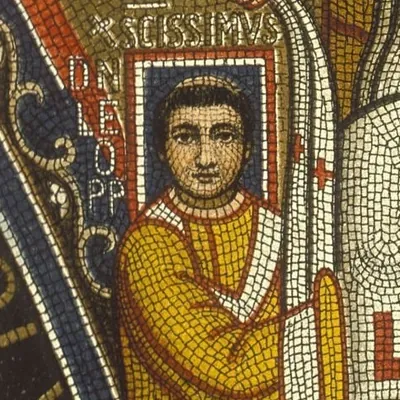
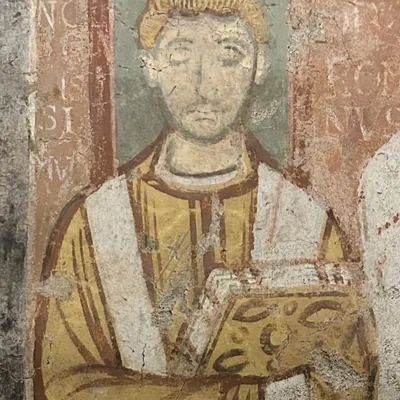
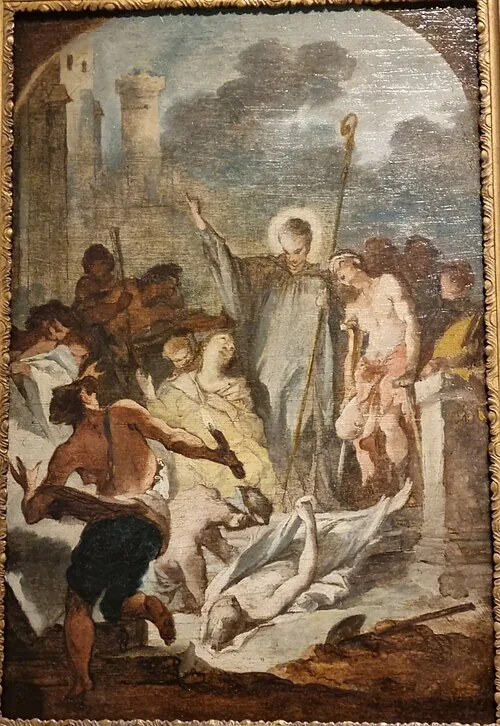
At Novalesa, the chapel dedicated to Saint Eldrad and Saint Nicholas keeps Romanesque frescoes from the second half of the 11th century, of great value for the history of art. They show in particular Eldrad arriving before the abbey and his admission among the monks. In his native region, a statue of the saint stands in the church of Monestier-d'Ambel, and every year, on the second Sunday of July, a pilgrimage links Monestier-d'Ambel to Ambel.

What can we learn from Saint Eldrad?
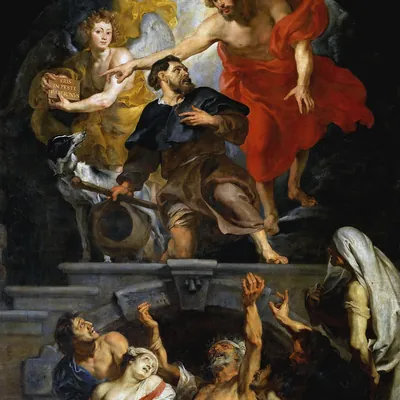
Eldrad was a pilgrim before he was a monk, and he never forgot it. The man who had known the weariness and dangers of the roads made his monastery a place of welcome for travelers. His life unites renunciation, perseverance (he accepted being sent away before being admitted) and concrete service of others. You can pray to him for pilgrims and travelers, for those who work in the mountains, for people seeking their vocation and for all who welcome strangers.
To pray with him, see the prayer to Saint Eldrad and the novena to Saint Eldrad.
Where to pray to Saint Eldrad
- The abbey of Novalesa (Piedmont, Italy): the Benedictine monastery where he lived, with the chapel and frescoes that tell his life.
- Ambel and Monestier-d'Ambel (Isère): his native village and the church with his statue, linked by the pilgrimage on the second Sunday of July.
- Le Monêtier-les-Bains (Hautes-Alpes): the village that grew up around a house of monks founded at his initiative.
Discover also
- Saint James the Greater, to whose tomb Eldrad made his pilgrimage.
- Saint Benedict of Nursia, whose rule was followed at Novalesa.
- Saint Nicholas of Myra, honored with him in the frescoed chapel of Novalesa.