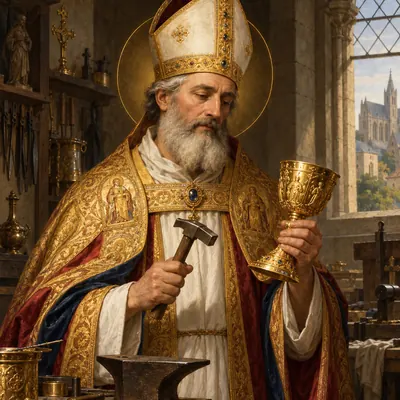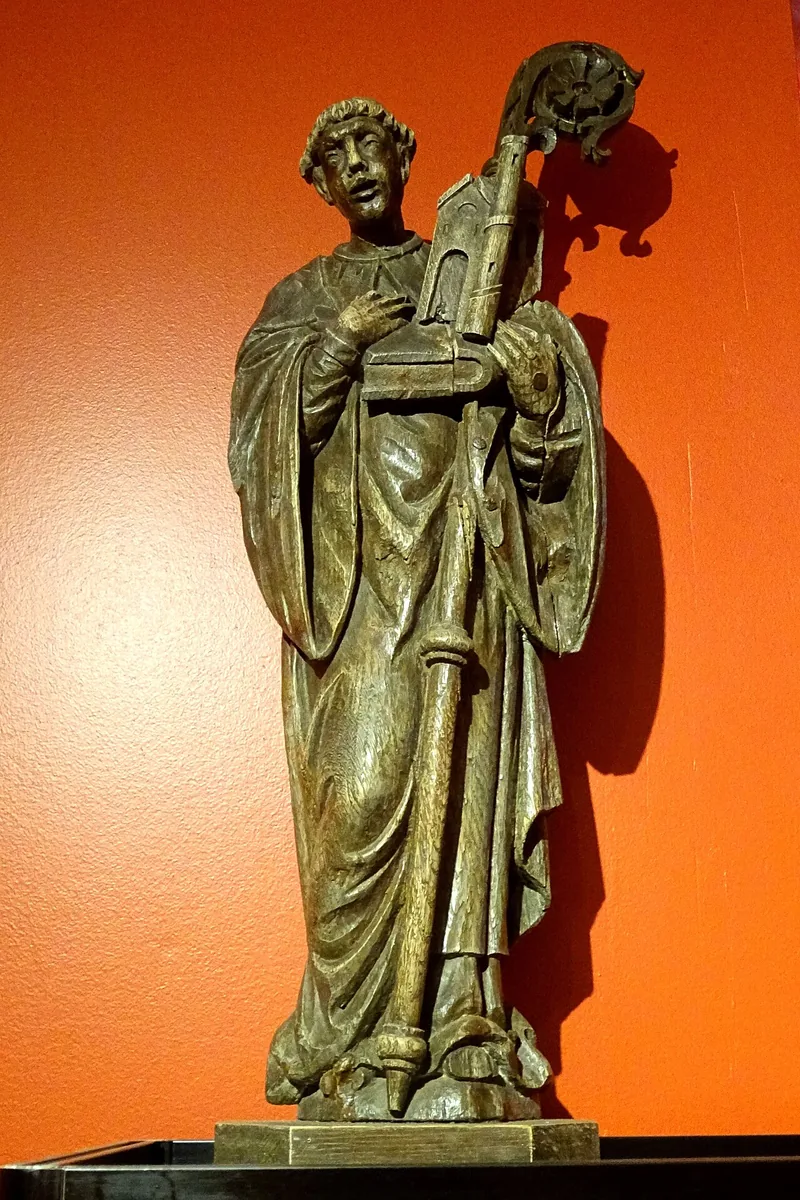
Saint Blimond (Blidemundus in Latin, Blimont in Picard place names) was a 7th-century Frankish monk, disciple and successor of Saint Valery as head of the monastery of Leuconay, today Saint-Valery-sur-Somme in northern France. Healed by his master according to tradition, he rebuilt the abbey after its destruction and died there, probably in 673. A village in the Somme bears his name and keeps his relics. His feast day is January 3.
Who was Saint Blimond?
Blimond belongs to the generation of monks formed in the wake of Saint Columbanus, who made monastic life flourish in northern Gaul in the 7th century. His master, Saint Valery, had founded a monastery at Leuconay, at the mouth of the Somme, around 611. Blimond succeeded him and ensured the survival of this foundation in troubled times.
The sources on his life are few and late, and they do not always agree. The date of his birth is unknown, and even his origin: some traditions have him come from the Dauphiné, while Abbé Jules Corblet, a 19th-century historian of the saints of the diocese of Amiens, says he came from the Oise valley. The date of his death also wavers between 650 and 673. This page keeps to what can be said with caution.
The healed disciple
Tradition reports that Blimond arrived at Leuconay crippled, and that Saint Valery healed him. Grateful, he wished to stay with the one who had raised him up, and became a monk under his guidance. With him he discovered a faith lived in prayer, work and poverty, in the spirit of the monks who had come from Luxeuil. This account, which cannot be checked in detail, expresses well the bond between master and disciple: Blimond owed Valery both his health and his vocation.
The abbot of Leuconay
When Valery died, around 622, Blimond took charge of the monastery. The sources then report that the abbey was destroyed during an invasion. Blimond took refuge at Bobbio, the monastery founded by Saint Columbanus in northern Italy. He was there in 627, when he witnessed the death of Abbot Attalus, Columbanus's successor.
Then he returned to the banks of the Somme. There he raised the abbey from its ruins and gathered the community again. Thanks to him, Saint Valery's foundation survived. He died at Leuconay on January 3, probably in 673, after governing the monastery for many years.
Devotion and memory
Saint Blimond is celebrated on January 3. His name has remained attached to a village about ten kilometers from Saint-Valery-sur-Somme: Saint-Blimont, recorded as early as 1121 in the Latin form Sanctus Blimundus. During the Revolution, the saint's statue, carved in polychrome wood in the 15th century, and his relics were taken there from Saint-Valery. The village church, dedicated to him and rebuilt in the 19th century, keeps this statue and a reliquary, both protected as historic monuments. Stained-glass windows there tell several episodes of his life.

What can we learn from Saint Blimond?
Blimond is a man of faithfulness. Raised up by his master, he took his place; driven away by violence, he knew how to wait; returning to the ruins, he rebuilt. Without him, Saint Valery's work might have disappeared. You can pray to him for those who carry on a work after its founder, for those who must rebuild after a trial, and for the sick who hope for healing.
To pray with him, see the prayer to Saint Blimond and the novena to Saint Blimond.
Where to pray to Saint Blimond
- Saint-Blimont (Somme): the church dedicated to him, which keeps his statue and relics.
- Saint-Valery-sur-Somme (Somme): the former Leuconay, where he was monk and then abbot.
Discover also
- Saint Valery, his master, founder of the monastery of Leuconay.
- Saint Attalus of Bobbio, the abbot whose death he witnessed at Bobbio.
- Saint Columbanus, the founder of Bobbio, spiritual father of these monks.