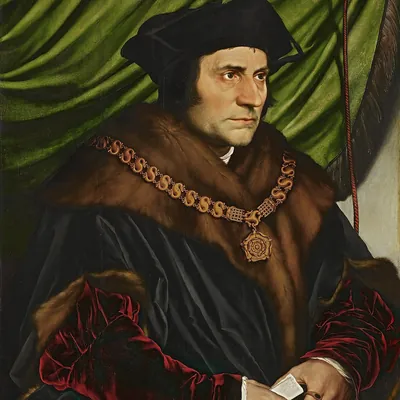
Saint John Boste was an English Catholic priest martyred at Durham on July 24, 1594, during the reign of Elizabeth I. A brilliant Oxford scholar who became a Catholic in 1576, he was ordained a priest at Reims and served the Catholics of northern England for twelve years, always on the run. Betrayed and tortured in London, he was executed at Dryburn, near Durham. Canonized in 1970, he is celebrated on July 24.
Who was Saint John Boste?
John Boste belonged to the group of priests trained at the English College in Reims who secretly returned to England to support the Catholics who had remained faithful to "the old faith." In the north of the country, across Westmorland, Durham and Northumberland, he became one of the priests most wanted by the authorities. His life is known through the memoirs of the martyrs gathered in the 18th century by Bishop Richard Challoner and through the records of his trial.

From Oxford to Reims
The son of a well-to-do Westmorland family, John Boste did brilliantly in his studies at Oxford and became a fellow of Queen's College. He first served in the Church of England. We do not know in detail the path that led him, in 1576, to enter the Catholic Church. That choice came at a price: he had to give up his academic career. In 1580, he went to the English College at Reims, founded by the future Cardinal William Allen to train priests for England. He was ordained there in 1581 and left again almost at once.
Twelve years of secret ministry
In the north of England, many families remained attached to Catholicism despite fines and threats. Boste went from house to house, under a false name, often by night, to celebrate Mass, hear confessions, baptize and bring comfort. Several times he narrowly escaped those searching for him. The authorities considered him one of the most influential priests in the region. His ministry, carried on for more than twelve years, helped many families keep the faith.
Arrest and torture
On July 5, 1593, an informer betrayed him. Soldiers surrounded the house of William Claxton at Waterhouses, in the parish of Brancepeth, and found him in a hiding place behind the fireplace. He was taken to London, where he was put on the rack several times, the instrument of torture that pulls the limbs out of joint, to make him give the names of the families and priests who had helped him. He said nothing.
Sent back to Durham for trial, he remained firm and calm. Another accused man, George Swallowell, a former Anglican minister who had become Catholic, had denied his faith out of fear. Boste encouraged him, and Swallowell publicly repented; Boste gave him absolution in front of the court. Grace Claxton, in whose house he had been arrested, was condemned with him, then spared because she was expecting a child.

Martyrdom at Dryburn
On July 24, 1594, he was led to Dryburn, outside Durham. As he climbed the ladder of the gallows, he prayed the Angelus. Barely hanged, he was cut down while still alive and put to death with great cruelty. Other Catholics were executed in the region that same year, such as the priest John Ingram, tried with him, George Swallowell and the layman John Speed.
Veneration and iconography
John Boste is listed in the Roman Martyrology on July 24. Beatified by Pius XI on December 15, 1929, he was canonized by Saint Paul VI on October 25, 1970, together with the Forty Martyrs of England and Wales, who are also honored together. He is shown as a priest, with the palm of martyrdom, sometimes with the rope or the ladder.
What can we learn from Saint John Boste?
John Boste left a brilliant career to serve hidden families at the risk of his life. Under torture, he protected those who had welcomed him. Before the court, he still found the strength to lift up a companion who had faltered. He is a model for priests, for scholars searching for the truth and for all who must stay faithful without giving up charity.
To pray with him, see the prayer to Saint John Boste and the novena to Saint John Boste.
Where to pray to Saint John Boste
- Durham (England): the city of his trial and of his martyrdom at Dryburn.
- Brancepeth (County Durham): the parish that includes Waterhouses, where he was arrested.
- London: Tyburn Convent, a shrine dedicated to the Catholic martyrs of England.
Discover also
- Saint Henry Walpole, a Jesuit martyred at York a year later.
- Saint Edmund Campion, the best known of the martyr priests of this period.
- Saint Thomas Garnet, another martyr priest, from the following reign.
- Saint Nicholas Owen, builder of the hiding places that protected priests.