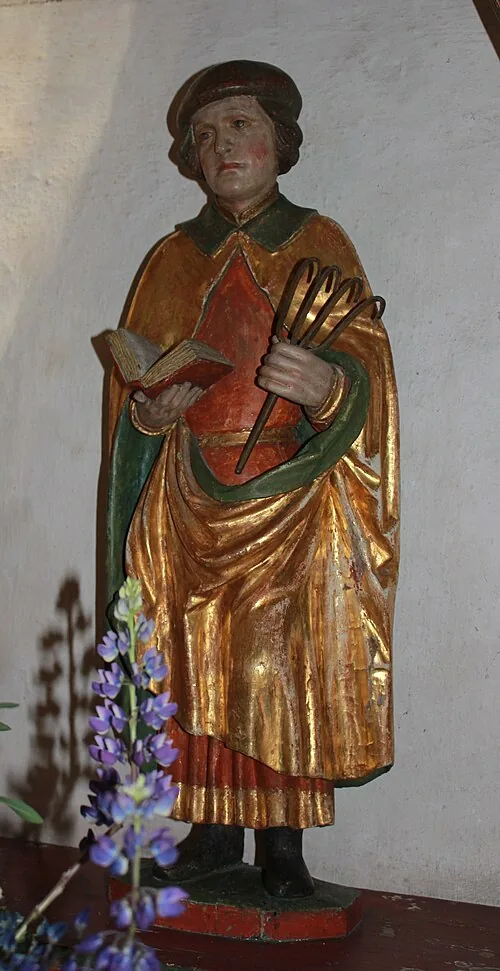
Saint Emilion (Emilianus in Latin, sometimes called Emilian) was a Breton monk and hermit of the 8th century. Born in Vannes, he was first the steward of a count, then a monk at Saujon, near Royan, before withdrawing to a cave near Combes, in Aquitaine, where he died in 767. The town of Saint-Émilion, in the Gironde, grew up around his hermitage and bears his name. His feast day is November 16.
Who was Saint Emilion?
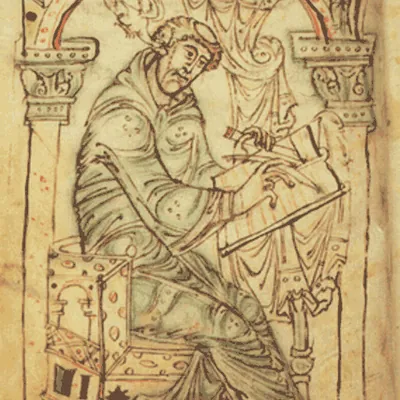
Emilion is one of those saints whose memory has shaped a landscape. What is told about him comes mainly from his Life, whose oldest known version dates from the 12th century, more than three centuries after his death. This account reports many wonders. Historians note that it was also written to draw to Saint-Émilion the pilgrims on their way to Compostela. It must therefore be read with caution. What remains is the memory of a man from Brittany who chose poverty, the service of the poor and solitary prayer, and around whom a community of monks was born.
The steward who fed the poor
Born in Vannes, Emilion entered the service of a count of the town and became his steward. A Breton legend tells that he gave bread to the poor of the region without his master knowing. The count, wishing to catch him, stopped him one day as he was hiding loaves under his cloak and ordered him to open it: the loaves had turned into pieces of wood. This story, found in other forms in the lives of several saints, speaks above all of Emilion's generosity and his love for the poor.
The monk who became a hermit
Emilion then left the world to enter the monastery of Saujon, near Royan, founded by Saint Martin of Saujon. According to his Life, the miracles attributed to him soon drew so many people that he lost the peace he needed for prayer. So he went further south and settled in a natural cave at the foot of a cliff, at Combes, in the Dordogne valley. The Life describes his shelter: an oratory, a bed, a seat, a table and a spring. He lived there in penance and prayer, gradually surrounded by disciples. He died in 767.
The cult and the town of Saint-Émilion
After his death, a community of Benedictine monks grew up around his hermitage. In the late 11th or early 12th century, a vast underground church, the monolithic church, was dug into the hill and dedicated to Saint Emilion, according to an inscription carved on a pillar. In the 13th century, the chapel of the Trinity was built above the cave, which became the crypt where his tomb was venerated. The town that grew up around these sanctuaries took his name. Its jurisdiction has been a UNESCO World Heritage Site since 1999.
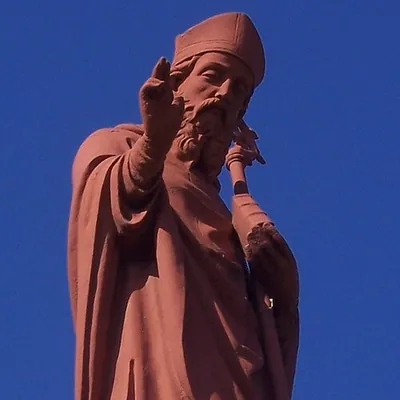
Saint Emilion is the patron of the town that bears his name and, by extension, of wine merchants and traders. In Paris, the metro station Cour Saint-Émilion, in the former wine warehouse district of Bercy, recalls this link. In Brittany his memory lives on: he is the patron of the parish of Loguivy-Plougras, a hamlet of Plévin bears his name, and statues of him stand in Vannes and in the Valley of the Saints at Carnoët.
What can we learn from Saint Emilion?
Emilion first served God in an ordinary job, sharing bread with those who lacked it. Then he left everything to seek silence, to the point of fleeing his own reputation. His life reminds us that charity and prayer go together, and that true greatness lies in humility. You can pray to him for the poor, for those who work in vineyards and wine, and for those who seek inner peace.
To pray with him, see the prayer to Saint Emilion and the novena to Saint Emilion.
Where to pray to Saint Emilion
- Saint-Émilion (Gironde): the hermitage and its cave, the chapel of the Trinity and the monolithic church.
- Vannes (Morbihan): his home town, where a statue shows him near the ramparts.
- Loguivy-Plougras (Côtes-d'Armor): the parish of which he is patron.
- Carnoët (Côtes-d'Armor): his statue in the Valley of the Saints.
Discover also
- Saint Patern of Vannes, first bishop of Emilion's home town.
- Saint Elizabeth of Hungary, another servant of the poor, whose legend tells of a similar miracle.
- Saint James the Greater, toward whose tomb walked the pilgrims who stopped at Saint-Émilion.
- Saint Anthony the Great, the father of hermits.